Brown Patch is a disease caused by the fungus Rhizoctonia solani. Rhizoctonia causes turfgrass disease in western North Carolina mid-July-August. This is the number one disease in home lawns.
Pest Alert - Brown Patch on Fescue
(Updated: Sept. 2, 2021, 6:21 a.m.)
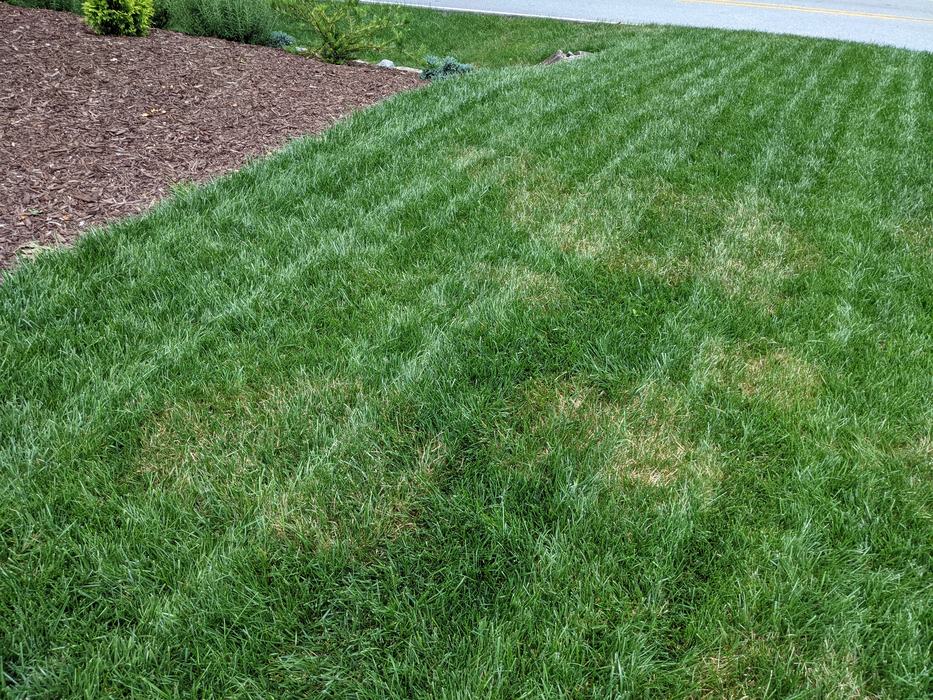
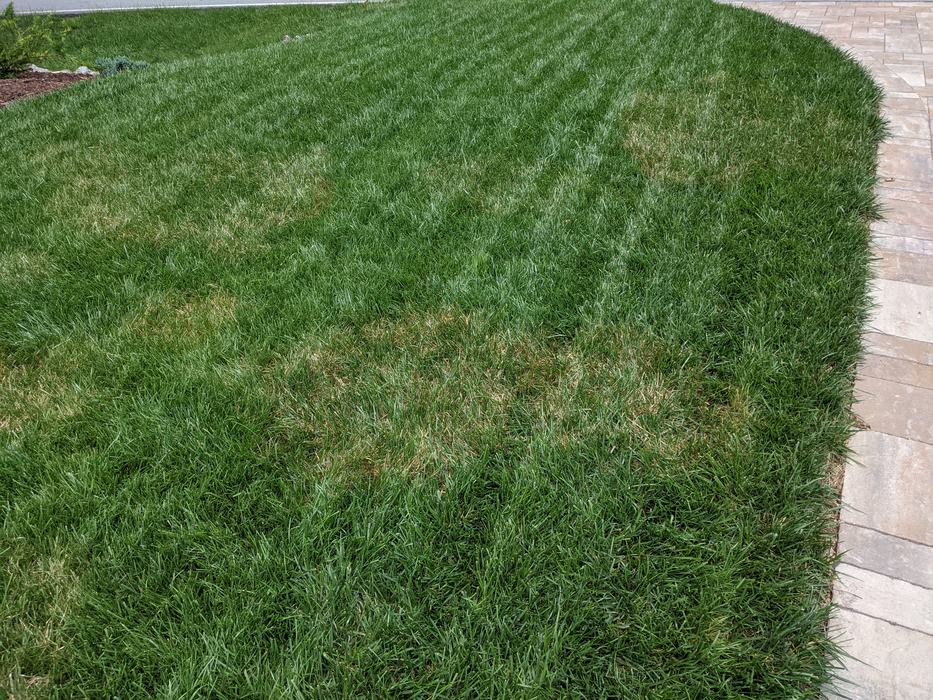
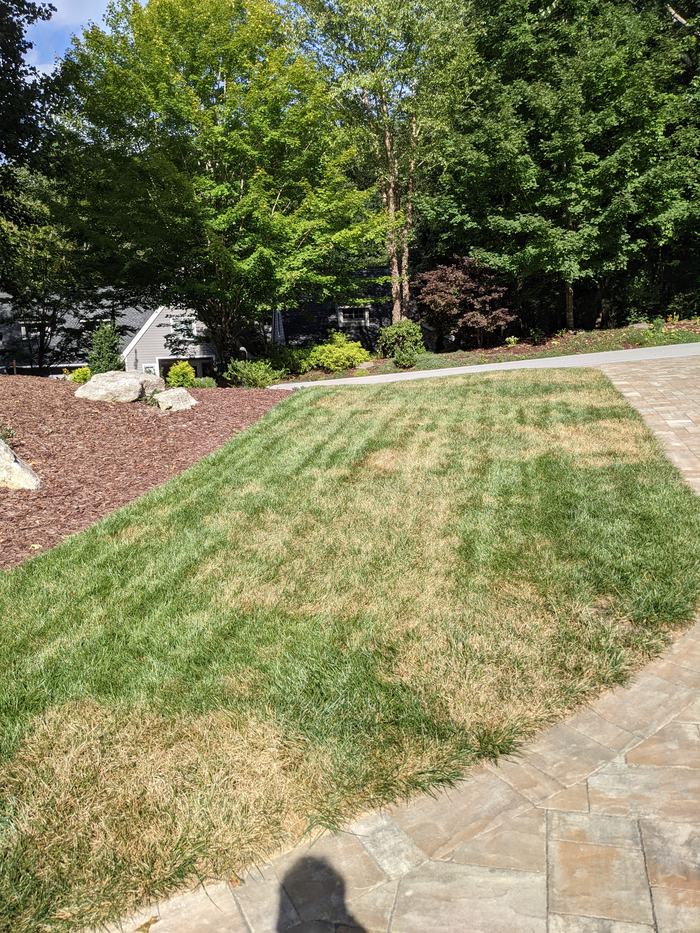
Symptoms of the disease are water soaked, blackened and withered leaves that eventually turn light brown. These light brown patches are roughly circular and can coalesce into irregular patches. Sometimes during periods of high humidity such as early morning, a ring of blackish-purple, mycelium covered, wilting leaf blades called a 'smoke ring' encircles brown patches on cool season turfgrass such as fescue. The ptaches of brown leaves can surround green grass forming a 'wagon wheel' shape. Other symptoms include tan to straw colored leaf spots, and black sclerotia (resistant survival structures) on dead grass and thatch.
Environmental conditions that favor disease development occur in the mid to late summer. Temperatures greater than 77°F are necessary for the fungus to germinate from sclerotia and grow. High humidity is another environmental factor that favors growth. Extended periods of leaf wetness for 10 hours per day for up to three consecutive days often initiates disease symptoms.
Cultural control of the fungus may be achieved by reducing leaf wetness. Less frequent watering, increased drainage and increased airflow may reduce disease incidence. Lower mowing heights seem to increase disease incidents, so raising the mower blades may decrease the chance brown patch will affect turf. Moderating fertility so that excess nitrogen is avoided is also crucial. The fungus is spread by machinery, so washing mowers after cutting diseased turf is critical in reducing disease spread.
Chemical controls for brown patch abound. Some chemicals that will control the disease are thiophanate methyl, chlorothalonil and mancozeb. There are many others as well. These fungicides should be sprayed over the entire turf stand to achieve control. Often a second treatment is necessary within the same season. It is also a good idea to treat the following summer to be on the safe side.
Management Tips:- Use low to moderate amounts of nitrogen, moderate amounts of phosphorous and moderate to high amounts of potash.
- Avoid nitrogen applications when the disease is active.
- Increase the height of cut.
- Increase air circulation.
- Minimize the amount of shade.
- Irrigate turf early in the day.
- Improve the drainage of the turf.
- Reduce thatch.
- Remove dew from the turf early in the day.
Join our mailing list!
Enter your email address to receive updates.
Written By