Learn about growing Japanese maples in your home garden:
Growing Japanese Maples
(Updated: July 13, 2026, 3:46 p.m.)
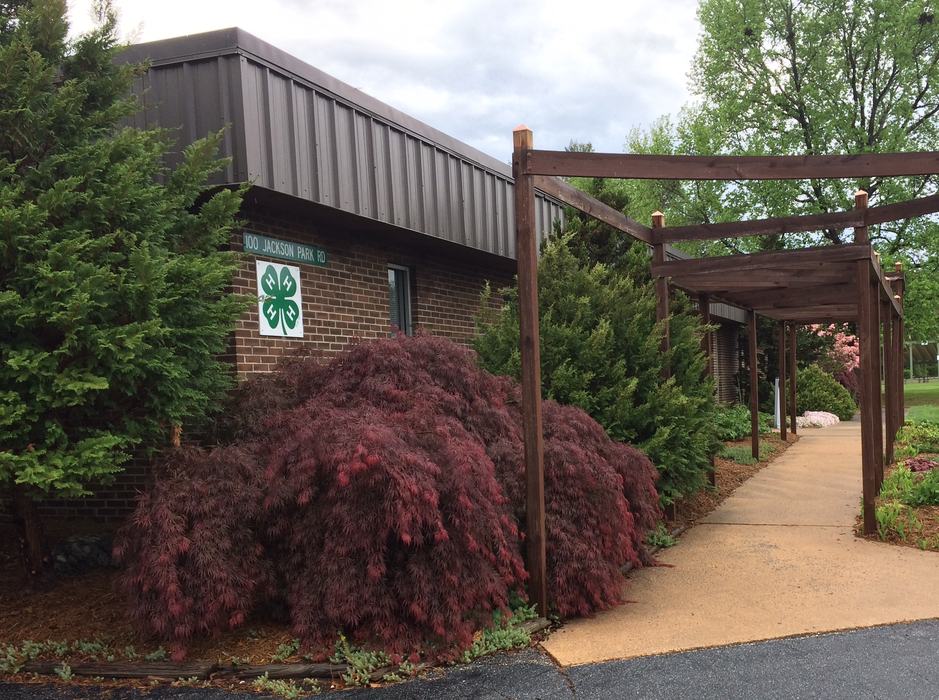
There are two types of Japanese maples; the palmatum group and the dissectum group. The palmatum group has leaves reminiscent of our native maples while the dissectum or cutleaf group has finely serrated deeply lobed leaves. This delicate leaf morphology is colored in shades of either green or red and is the most attractive feature of the cutleaf Japanese maples.
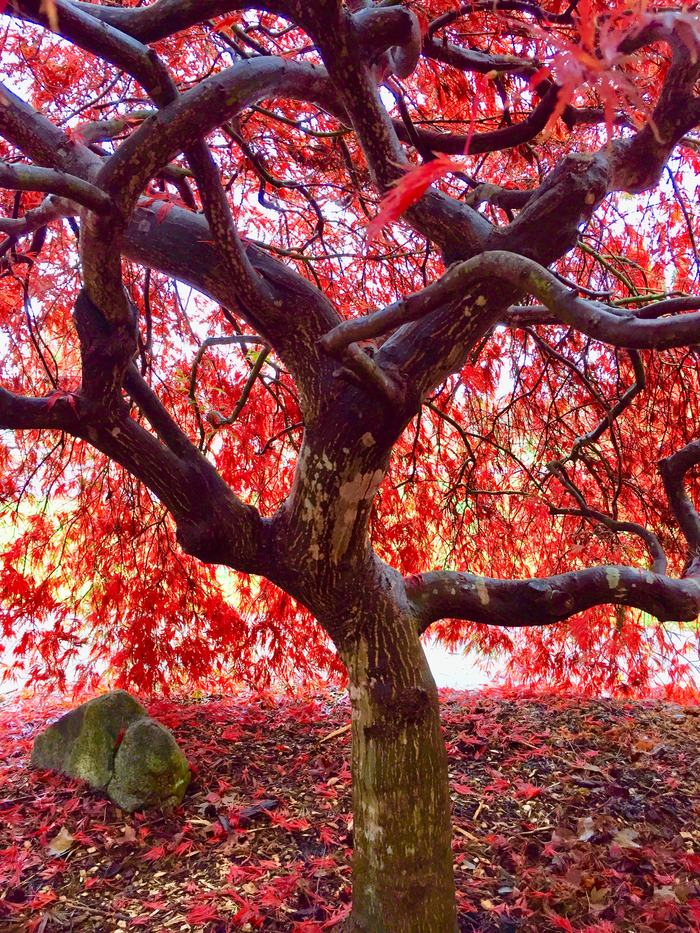
Japanese maples are famous for their beautiful trunk and stems and incredible fall color.
Japanese maples in general are rounded-canopy trees with smooth bark and undulating branches. The cutleaf varieties tend to be small from 3-9 feet in height. Their small size makes them excellent specimen trees near patios, homes, and driveways. The tree can be used as an accent and even as a potted plant.
Japanese maples have specific site requirements. These trees prefer dappled shade, although you can grow them in full sun. Japanese maples in the full sun tend to be stressed and pick up summer leaf spot diseases readily. Cutleaf Japanese maples require evenly moist well-drained soil conditions for best performance. These trees should be protected from winds and winter cold by planting them near structures, large trees or among a planting of other small trees and shrubs.
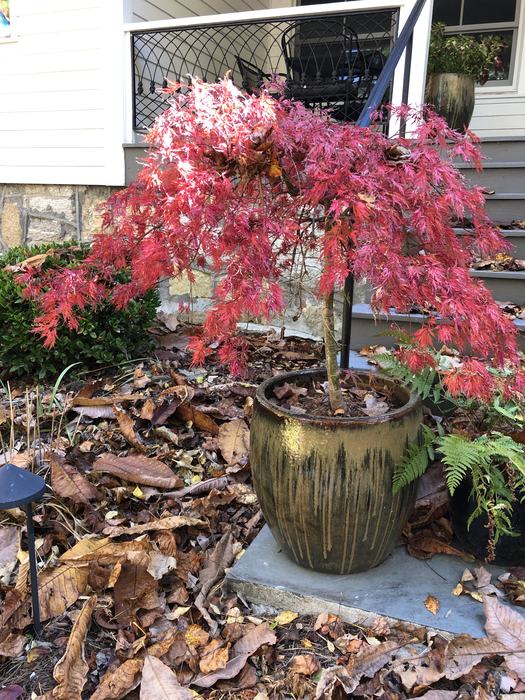
Japanese maples make great container plants.
Some of my favorite Japanese maples are the big red leafed ‘Bloodgood’ Japanese Maple, ‘Sangokaku’ Japanese Maple with its green leaves that fade to yellow in the fall and ‘Glowing Embers’ Japanese Maple an aptly named Japanese Maple with leaves that fade from green to purple then to fluorescent orange or yellow then to fiery red in the fall.
Japanese maples and specialty conifers can be relatively expensive but they are worth the effort. This is because propagating the trees in general is not an easy task. Most conifers are propagated from rooted cuttings while most Japanese maples are grafted. Producers graft the desirable Japanese maple varieties onto rootstocks of other maples to improve their performance in the landscape.
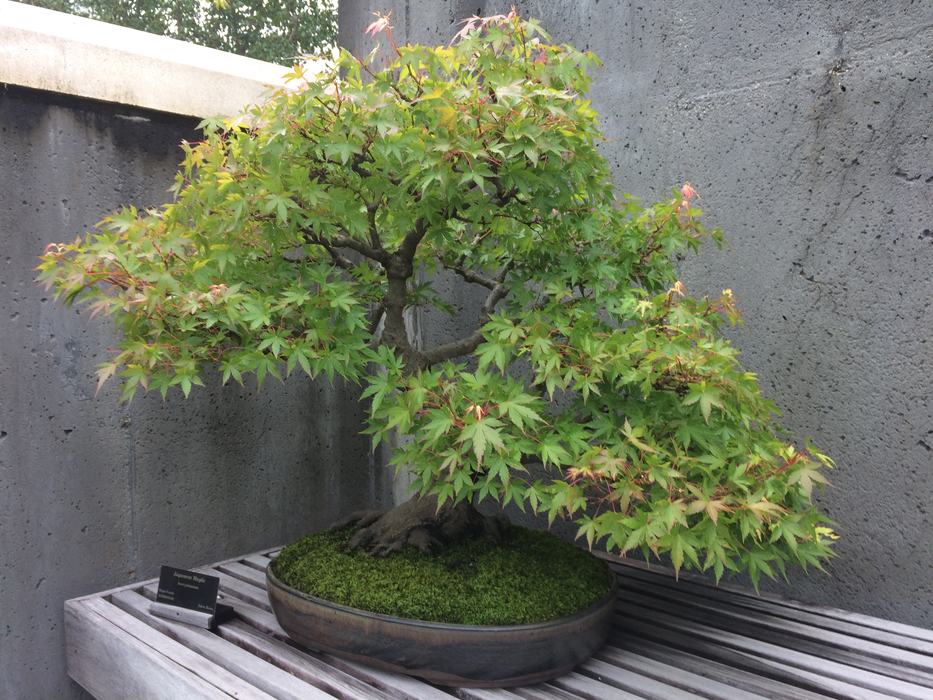
Japanese maple bonsai example located at the NC Arboretum.
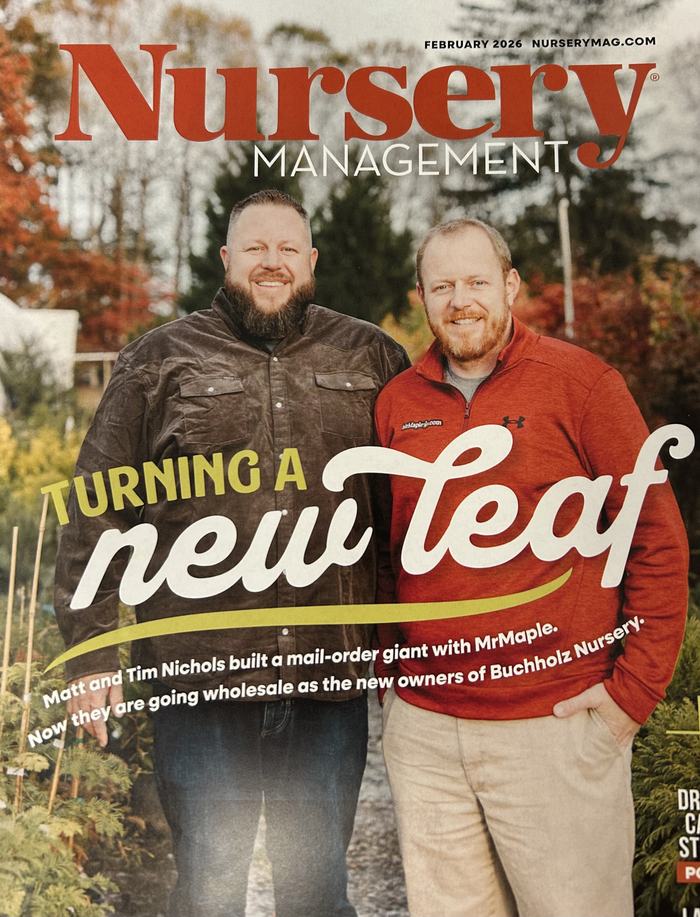
Did you know that Henderson County is home to one of the most famous Japanese maple nurseries in the country? MrMaple is a nursery owned by local brothers who have become world renowned experts. The company distributes Japanese maples through online sales.
Join our mailing list!
Enter your email address to receive updates.
Written By

More About