Many Henderson County residents utilize well water for their drinking water. Well water is usually healthful and has a good flavor. Many people who have used a well would say they prefer it to city-supplied water. The advantages to having your own water source are clear, however, there may be hidden risks.
Municipality supplied water is tested and retested for quality and safety. Most wells are not. If your drinking water comes from a private well, you should test your water annually.
Groundwater is the source for well water. Groundwater begins as rain and slowly percolates through the soil and into bedrock and so is filtered naturally. The water table is the level at which this volume of water stands at a particular time. The water table fluctuates with periodic droughts and rainy periods. Ground water can be subject to contamination from several sources and if not properly monitored and can cause human health risks.
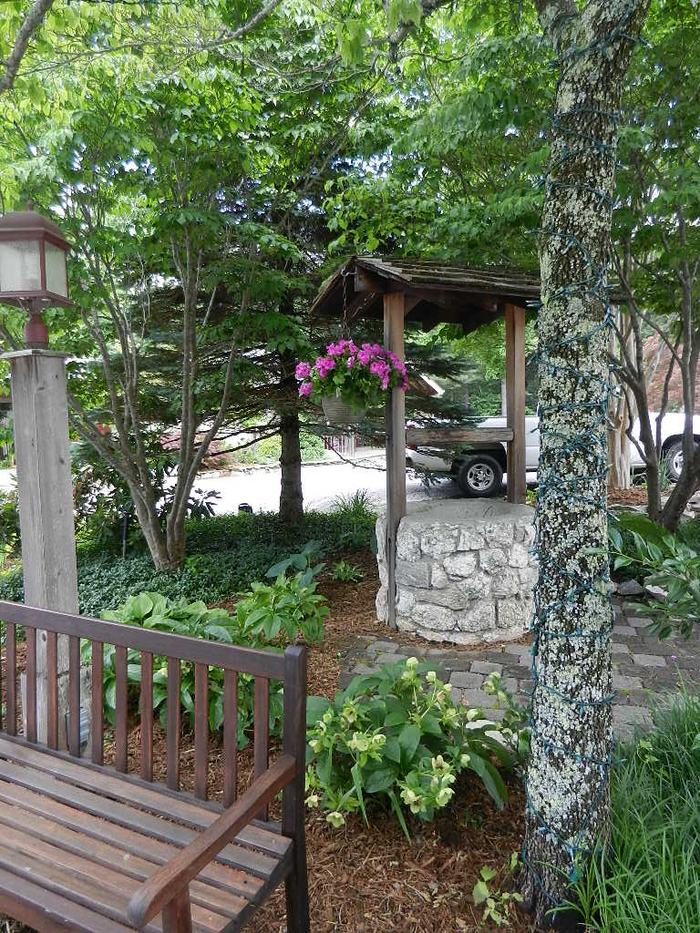
There are two types of wells. The first, a bored well, is a shallow relatively wide hole in the ground. Bored wells can range from 30 to 50 feet deep and 24 inches to 36 inches wide. This type of well usually has a cement casing or wall that allows water to slowly percolate through from the water table. The second type of well is a drilled well. A drilled well is excavated using a 4 or 6 inch drill. These wells are narrow but can reach depths of 500 feet or more and are drilled through the soil into underground bedrock. The water that comes from this type of well is usually cold and has been in the ground for a very long time. Bored wells have steel or plastic casings inserted into the hole that are solid all the way down to the bedrock. The casing seals the well.
Both types of wells are susceptible to contamination from above ground and below ground sources. Bored wells are especially vulnerable to contamination due to their shallow nature. Also, many bored wells are old. If the well was built before regulations governing well design were put in place, the well may not have a casing, a sanitary cap, or be leak proof. This means runoff water from rain at the soil surface can freely flow into the well washing in contaminants. Older bored wells may have casings that have rusted or become compromised by tree roots.
Remember, no water should flow into your well from the surface.
- There should be a casing, a concrete slab above the ground 1-2 feet, and a sanitary seal.
- Any space between the casing and ground should be filled with grout.
- The well should be sited at an elevation above any possible contaminating sources including animal barns and chemical storing sheds.
- Chemicals should never be stored in the well house and there should never be any animals inhabiting the shed.
- Testing your water annually will provide you as a homeowner year-to-year data for comparison and tracking of water quality.
- Test your water any time there is a change in the clarity, texture, color, taste or, smell and keep water test results in your records.
- Henderson county has regulations pertaining to wells (see below).
Henderson County Environmental Health Water and Well ProgramApplications for a well installation, repair, or abandonment may be made Monday through Friday between 8:30 a.m. to 4 p.m. at the Permit Center. An application fee is required. Once the site has been evaluated and approved the permit is issued.
An inspection is required during different stages of construction, repair, or abandonment. When all the inspections are completed and approved a Well Completion Permit is issued.
Henderson County Environmental Health Water Testing
Henderson County Environmental Health provides a variety of water testing services for citizens who are served by well water. Testing for bacteria, chemicals, pesticides, and nitrates. A fee is charged for testing, and the cost will vary depending on the complexity of the test.
Department of Public Health
1200 Spartanburg Hwy.
Suite 100
Hendersonville, NC 28792
Environmental Health
P: (828) 694-6060
Private Lab Water Testing (fee-based)
Clean Water Labs
6343 NC-9, Columbus, NC 28722
828-393-4136
- Testing water for bacteria, lead, nitrates, nitrites, hardness, iron, copper
- Food safety testing
Pace Analytical Lab
2225 Riverside Dr, Asheville, NC 28804
Phone: (828) 254-7176Full Water Testing Laboratory Services for:
- Primary Organics (SOCs, VOCs)
- Primary Inorganics
- Unregulated Contaminants
- Secondary Standards
- Disinfection By-Products (HAAs, TTHMs, Oxyhalides)
- Compliance Water Testing Lab for:
- Consumer Confidence Reporting (CCR)
- Source Wells
- Bottled Water / Beverage Products
- Safe Drinking Water Act
- IBWA Appendices A&B / CBWA
- Bacteriological Testing
- USEPA / FDA / State Compliance
- Unregulated Contaminant Monitoring Rule (UCMR)
- Disinfection By-Products Rules
Specialty Testing for:
- PFAS
- 1,4-Dioxane
- Low-level Hexavalent Chromium
- Perchlorate
- Radiochemistry
- Dioxin by Method 1613
Other well water resources: