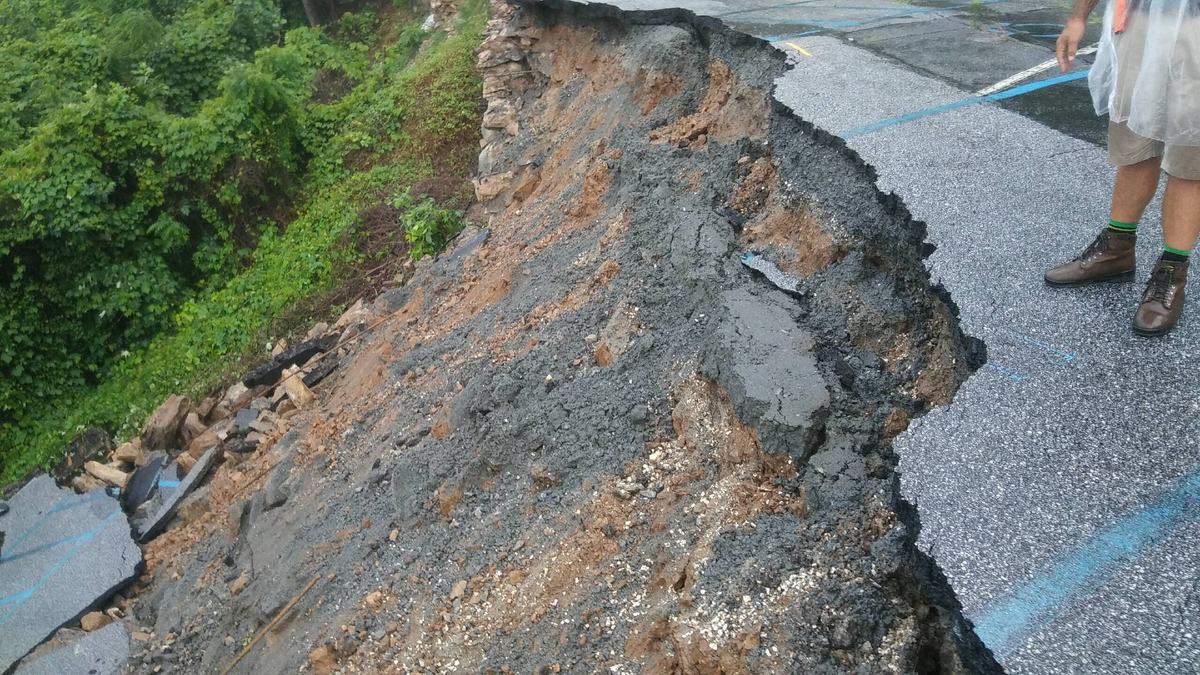
During Hurricane Helene our area was hit with hundreds of landslides. A landslide is basically the downhill movement of soil or rock from an overly steep slope. This movement can happen slowly with the hillside quietly but inexorably moving down slope. Or, the failure can be catastrophic, sending tons and tons of rocks, soil and debris racing downhill as we saw recently during Hurricane Helene.
Landslides, debris flows and rockfalls are part of living in mountains everywhere. Did you know that these Appalachian Mountains that we live in once were the height of the Himalayan Mountains? Mount Mitchell was once as tall as Mount Everest? Where did all that material go? It was eroded away and flushed down the rivers over millions of years. The Appalachians are still eroding away, sometimes slowly, sometimes quickly but always diminishing. Big landslides are just the most visible aspect of this process.
A Problem That is Usually Too Big
If you have a landslide on your property repairing it can be an extensive project and expensive. Even small landslides can cost thousands of dollars to mitigate. Larger landslides can cost hundreds of thousand to millions of dollars to repair. Most homeowners do not have that kind of money. Sometimes insurance companies will not cover repairing landslides. So, many landslides are too big for normal people to mitigate.
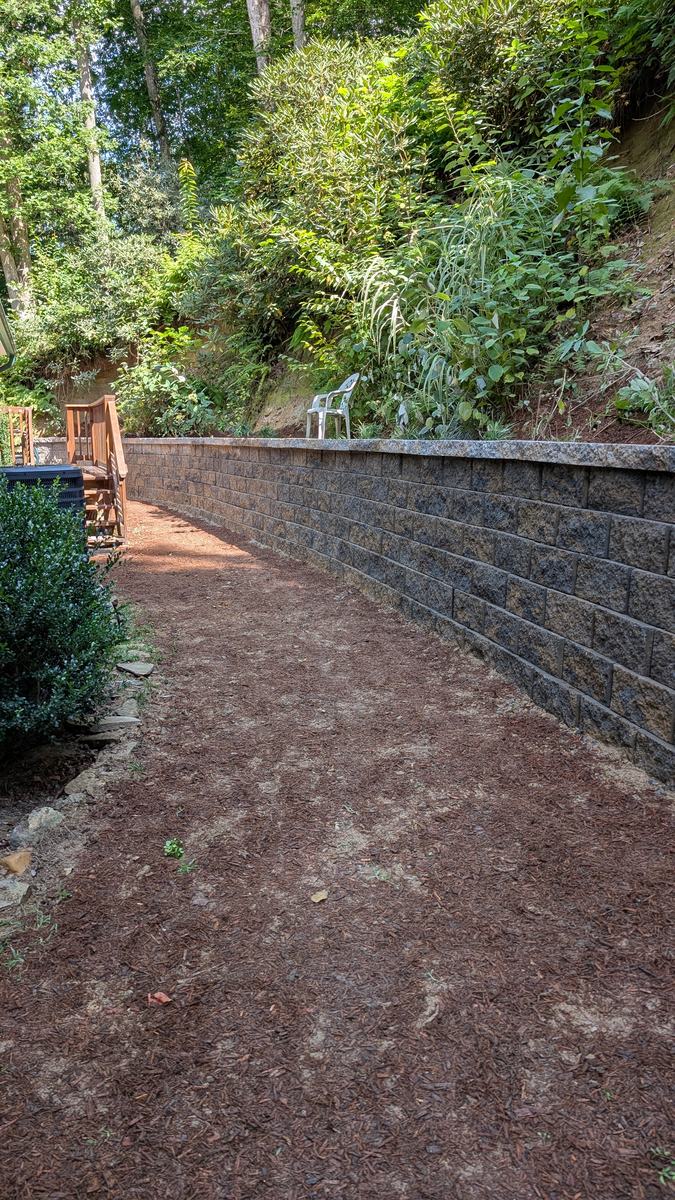
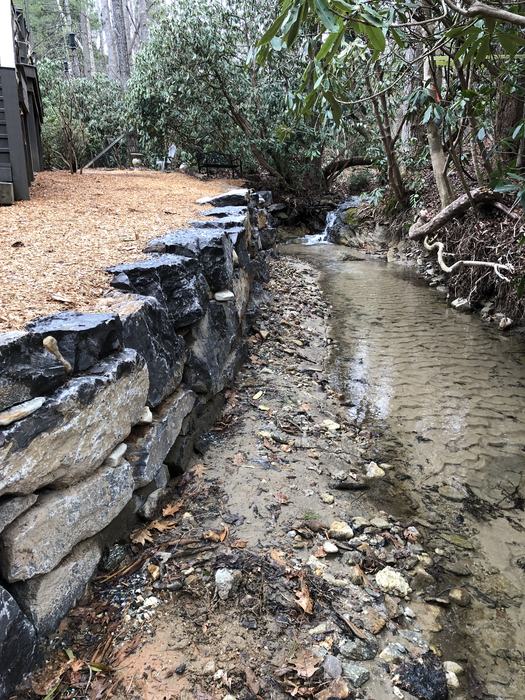
This retaining wall cost $40K. FEMA gave the homeowner money to reimburse her. Property owners who experienced landslides must get a formal mitigation bid from a landscaper to present to FEMA.
Repairing Smaller Landslides
When you have had a landslide or washed out driveway, the first thing to do after a disaster has been declared is to contact your home insurance company. Next, homeowners should apply for FEMA aid. Once this is done, you should repair the damage. Keep your receipts and hope that in the future some agency can help reimburse you. However, this funding is not guaranteed so be prepared financially to cover the expenses yourself.
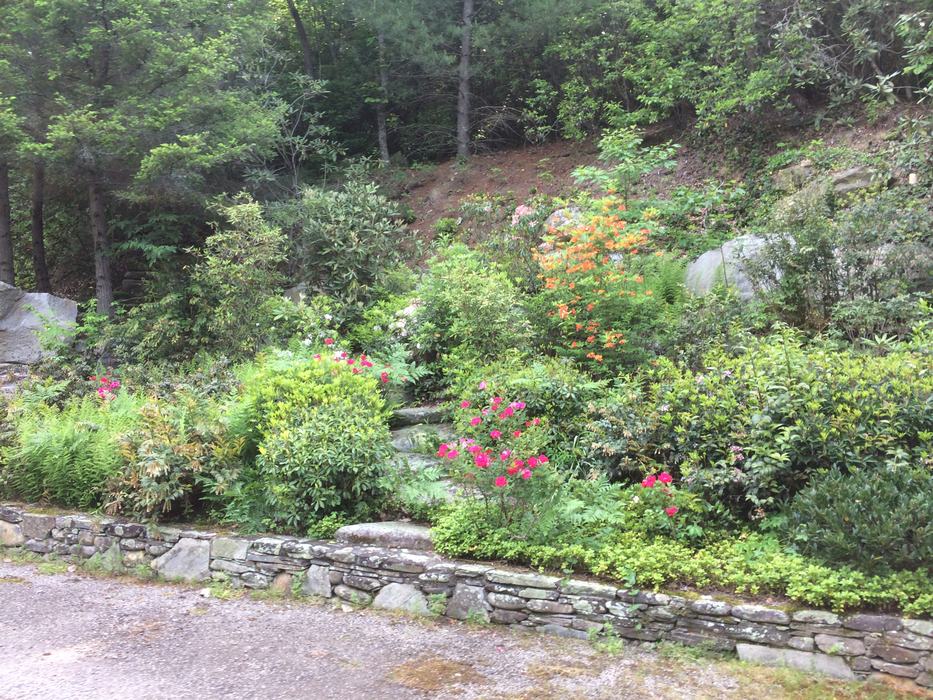
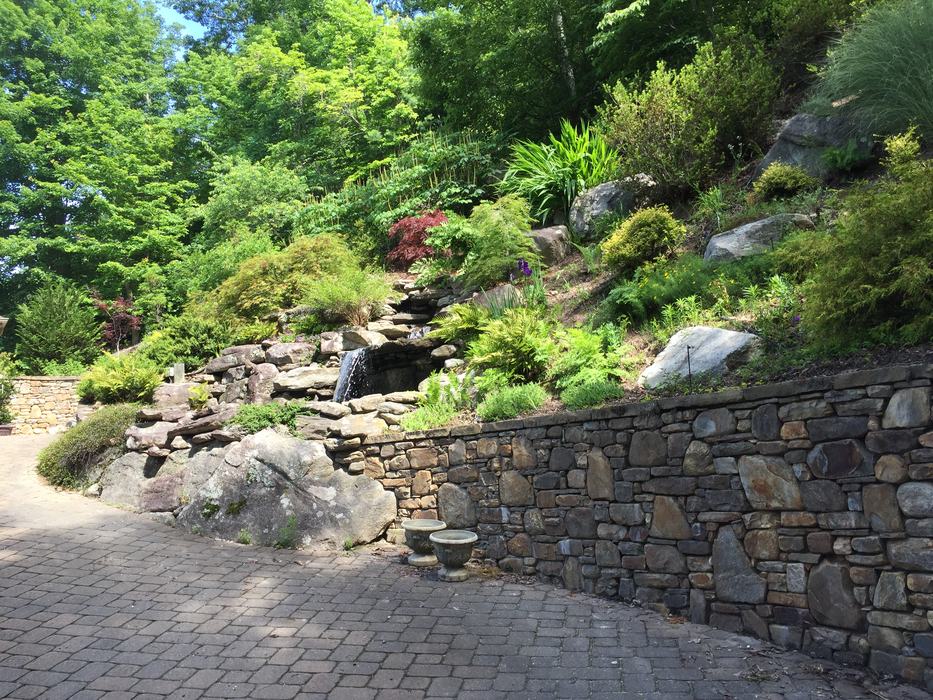
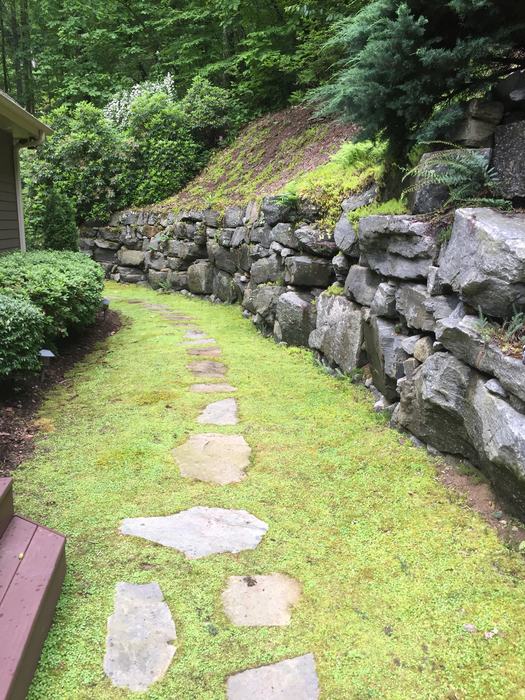
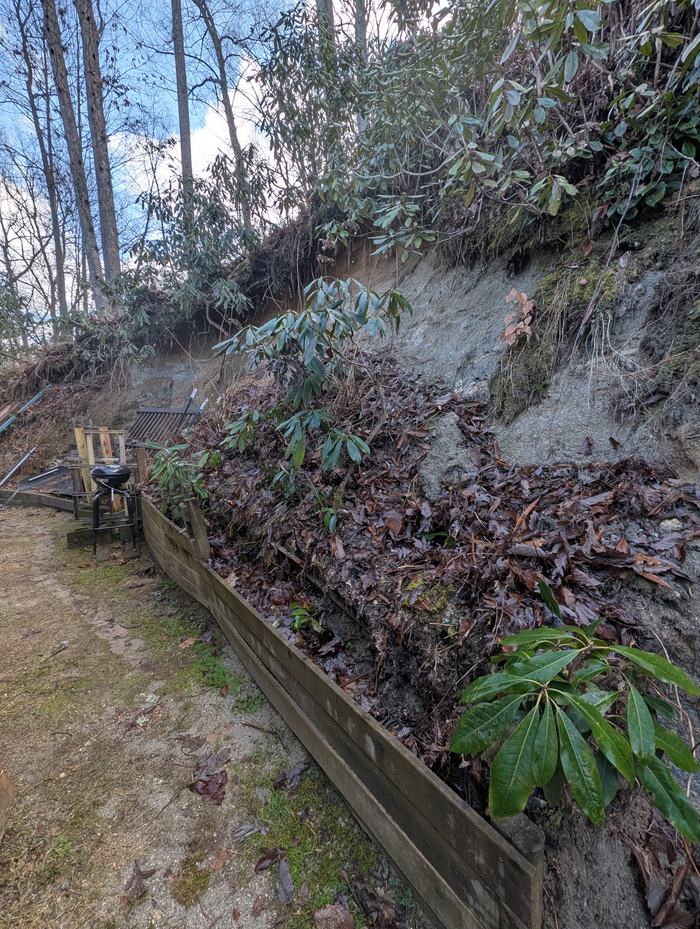
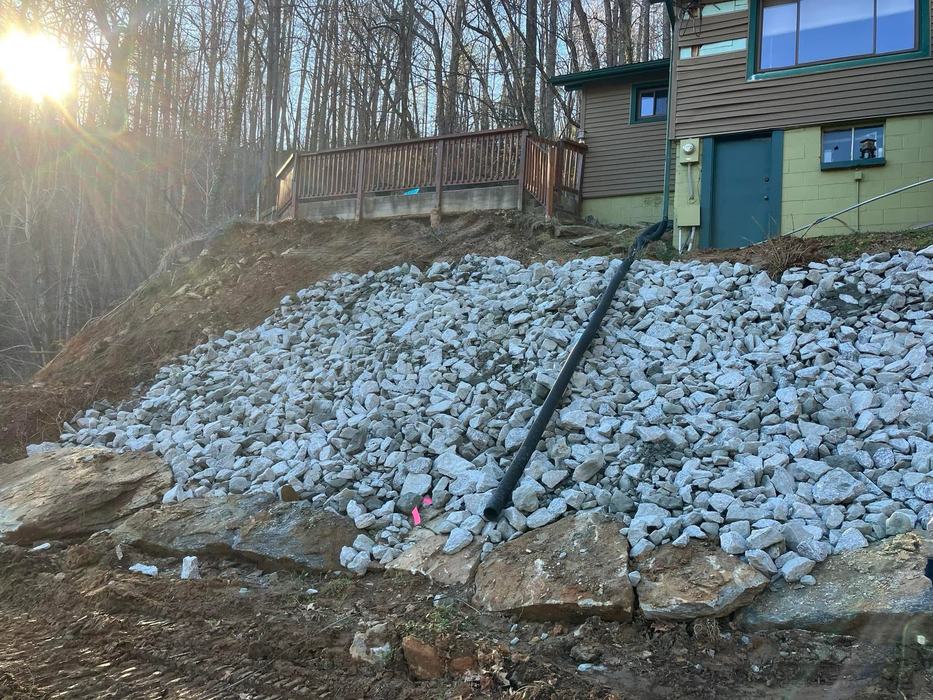
Retaining walls, native plants and boulders can stabilize hills.
After a landslide area or washout has been determined to be stabile enough to enter, in some instances, homeowners or landscapers can mitigate small landslides with soil stabilizing fabrics, native plants and grasses, soil anchors and engineered retaining walls. This article talks about stabilizing soils and this article discusses stabilizing hillsides using attractive native landscaping.
If you cut storm damaged trees on the landscape site, leave the stumps so the roots go on holding the soil together. Use the smaller limb debris strategically to mulch or slow water runoff. Fortunately some trees such as tulip poplars will produce new trunks from the stump. Oaks will not.
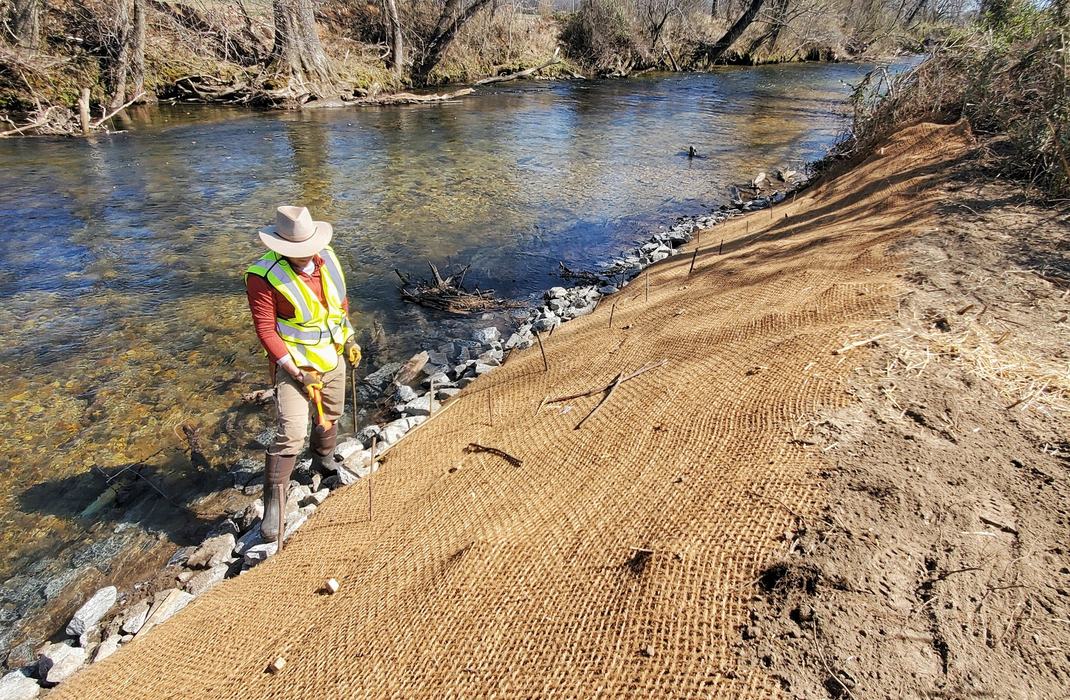
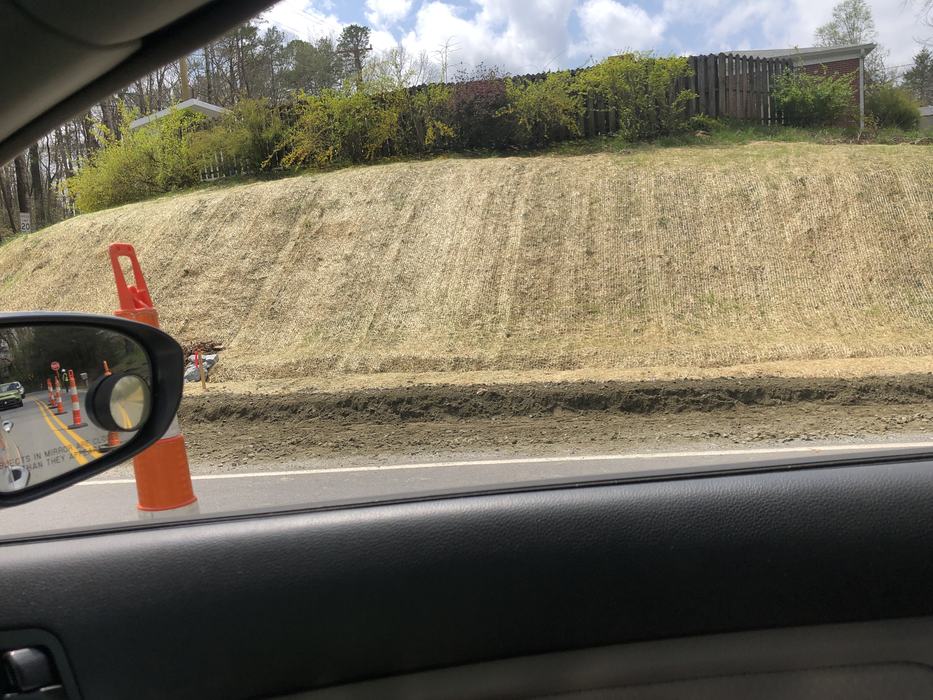
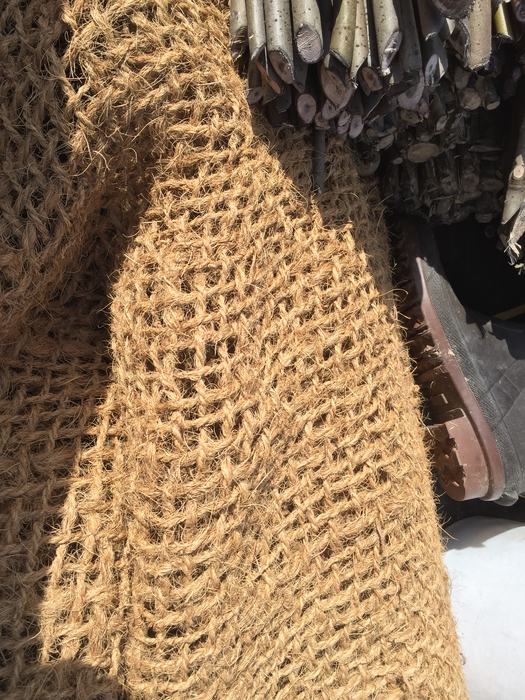
The first thing to do after any toppled trees are cleared is to cover the eroded site in grass seed. The grass will help prevent further erosion while plans are being drawn up for landscaping or a more permanent engineered solution. You can use native grasses. These bunch-type grasses are perennials that look nice and are great at holding slopes intact. Native grass seed mix can be obtained online. Other options for coverage using grass seed is fescue/annual ryegrass mix or no-mow creeping red fescue. Wildflower seed mixes can used as part of the planting as well. In any of these use cases, cover the seeded soil in jute erosion matting.
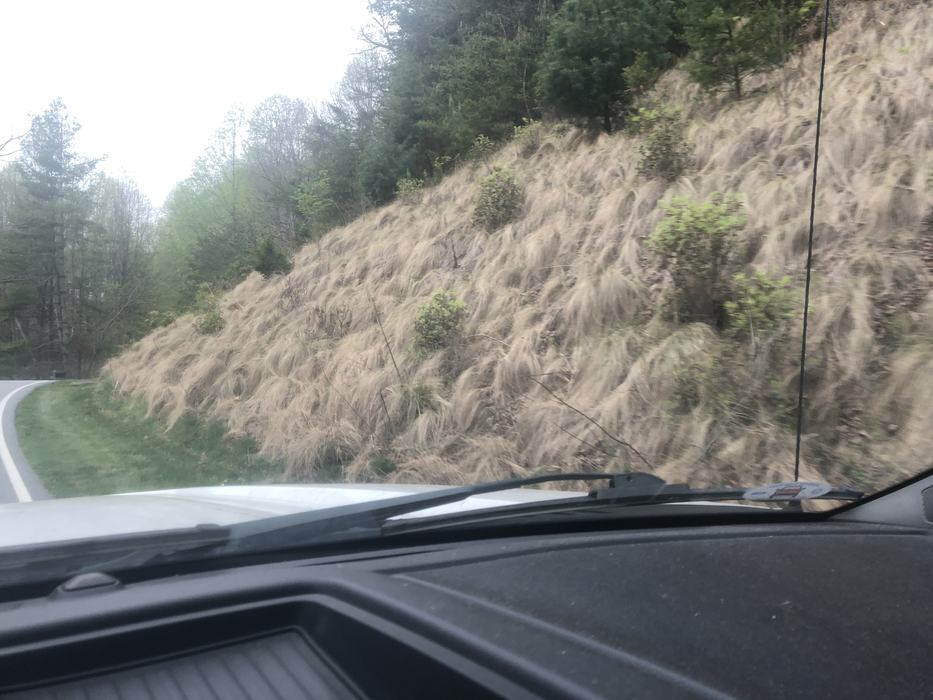
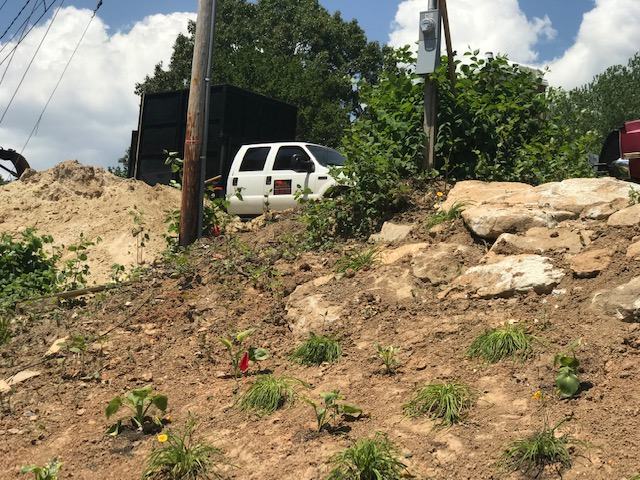
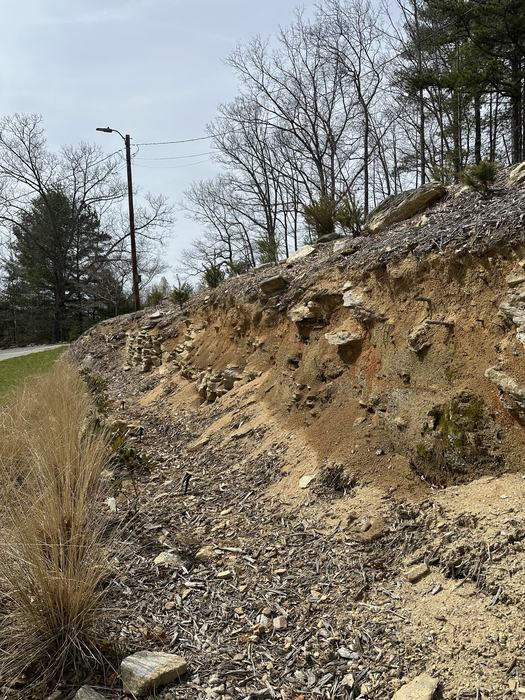
Thei muhly grass slope survived Hurricane Helene. Native bunch grasses are excellent at holding hills together.
For landscaping slopes I suggest mixing native suckering shrubs like virginia sweetspire (Itea), winterberry (Ilex verticillata), ninebark, fothergilla and sweet shrub with native grasses like big bluestem, purple fountain grass and little bluestem then punctuation with a few small native trees such as redbud, dogwood and serviceberry. Then mulch with 3-4 inches of shredded wood mulch.
Landslide repair and slope stabilization can be achieved by 1. grading the slope to less than 40 degrees 2. broadcasting grass seed 3. covering with jute erosion control fabric
Later you can plant trees and shrubs into the mat covered area. Native plant roots can help hold soils together in the future when they mature. Carolina Native Nursery sells native plants appropriate to slopes. Live stakes can be used in wetter areas to establish plants that mitigate erosion. Unfortunately many nurseries got flooded after Hurricane Helene and lost their crops so plants may be hard to find or expensive.
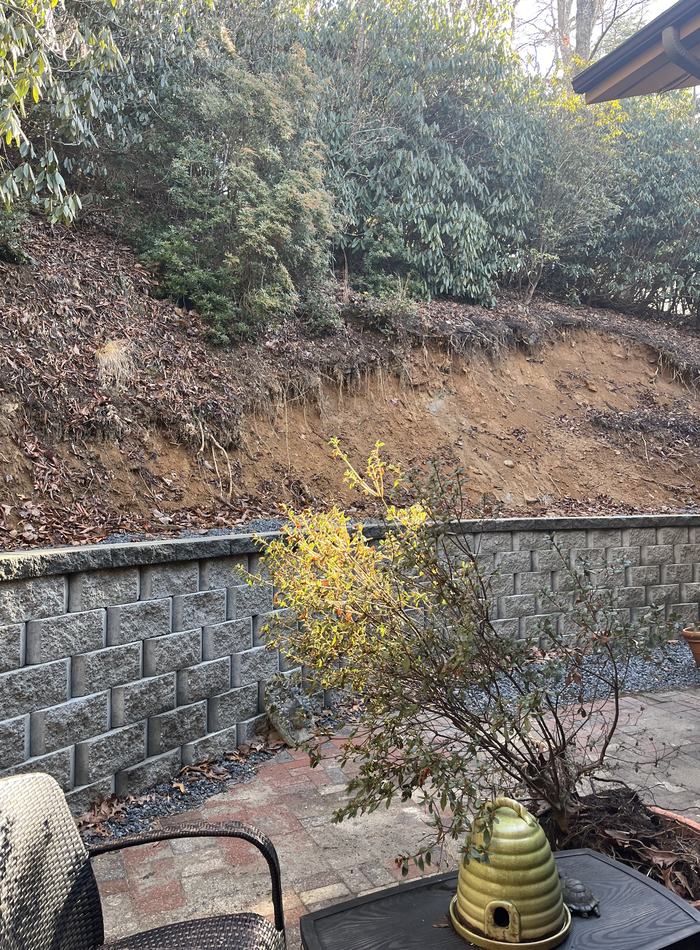
Finally, retaining walls of various designs and materials may be appropriate to stabilize eroding slopes. Homeowners can build smaller retaining walls with supplies such as manufactured stones obtained from retail garden centers. However, there is a limit to the scope of a project that a home gardener can handle. If a project seems to big, get a quote from a qualified landscape contractor. Be sure to confirm with the local zoning office to see if you need a permit. Retaining walls over four feet usually require a building permit.
Repairing Larger Landslides
Repairing large landslides is often going to be outside the abilities of someone to repair on their own. It can be very expensive as well. Eventually, when evaluating a landslide, it will become necessary to employ an engineer. Of course there are many kinds of engineers. A structural engineer or civil engineer are likely the most helpful consultants in this case but maybe a soil engineer will be required as well. Again, check with the local zoning department to see if a building permit is required.
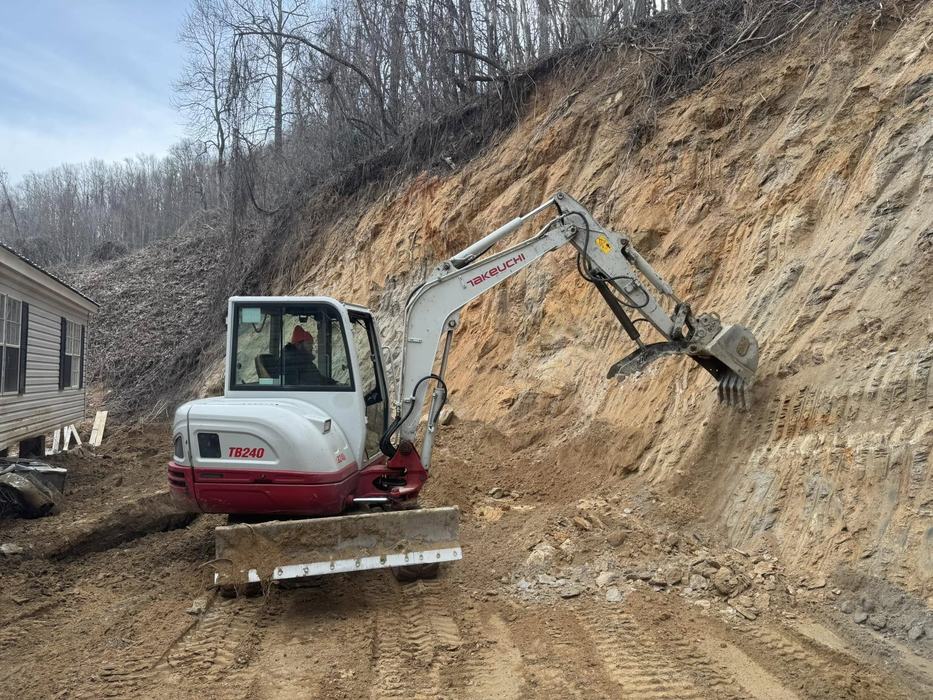
Once the site is evaluated and a plan is engineered, repairs can begin. Typically, robust engineered retaining walls are required. Large equipment and many truckloads of fill dirt are needed. Again, this can all be very expensive.
some slopes should not have been created in the first place and are too steep to repair without a serious monetary investment.
Government Programs May Be Available
According to clients that we have spoken to, property owners who experienced landslides may be eligible for some funds to build retaining walls. One client said she go $40k for her retaining wall construction. Property owners must get a formal mitigation bid from a landscaper to present to FEMA. FEMA case workers will then decide if your problem is eligible for funding.
Will It Happen Again?
In some cases, a slope that has failed will fail again. If you live below a slope that failed during Hurricane Helene, you should have the site evaluated by an engineer or landscape professional as soon as possible. The slope could fail the next time there was a big rain or it could be a hundred years before it fails again. This geologist has been analyzing landslides and clearly demonstrates that many of the areas that slid during Helene have failed in the past.
Hurricane Helene was a terrible event for sure. However, it is not the first time this same amount of rain has fallen on our area. In 1916 The Great Flood demolished most of the same areas. The Center for Cultural Preservation created a wonderful documentary about the 1916 flood. "COME HELL OR HIGH WATER, Remembering the Great Flood of 1916 by award-winning documentary filmmaker David Weintraub tells the story of that terrifying week in July when it seemed the world came crashing down as boulders and trees slid down the mountain, rivers became lakes, and homes were so much debris floating on the oceanic waves of the French Broad and Catawba Rivers. And finally the film highlights what lessons the Flood of 1916 has for us today." Watch the trailer here. Although it was over 100 years since the last big flood this could easily happen again sooner than later.
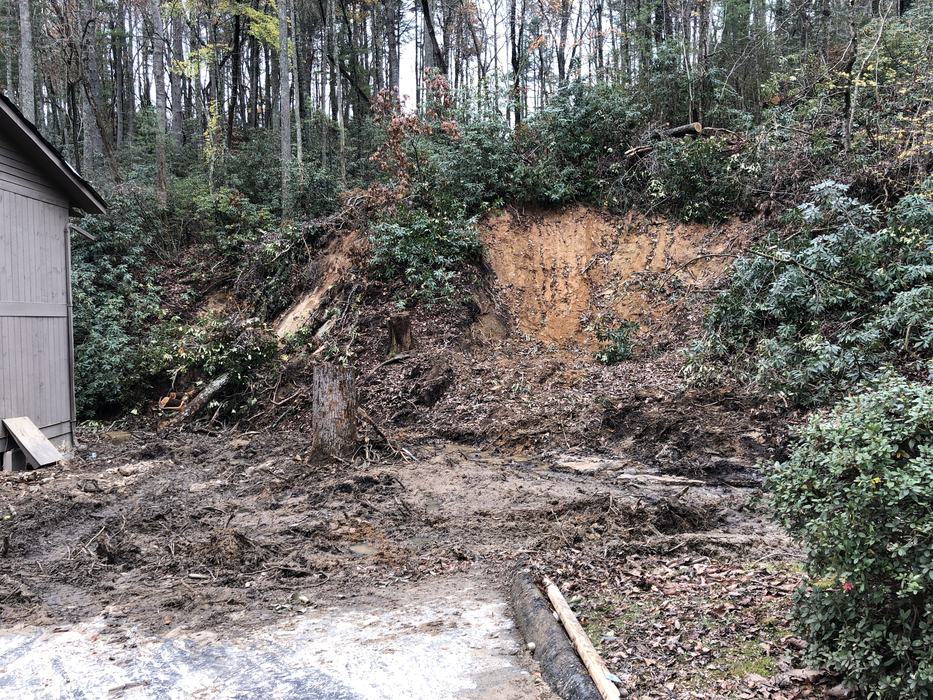
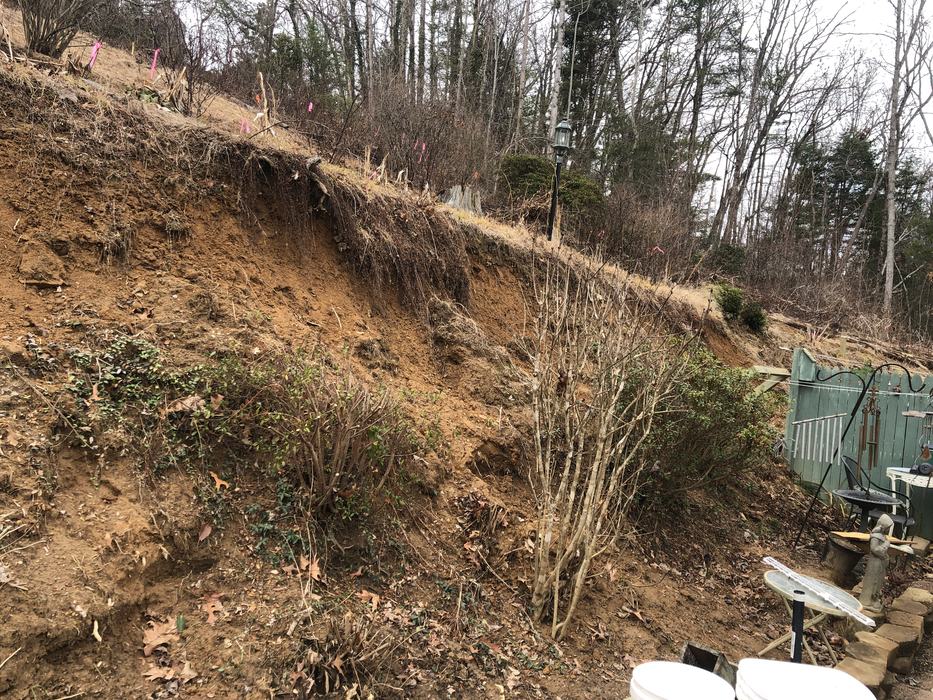
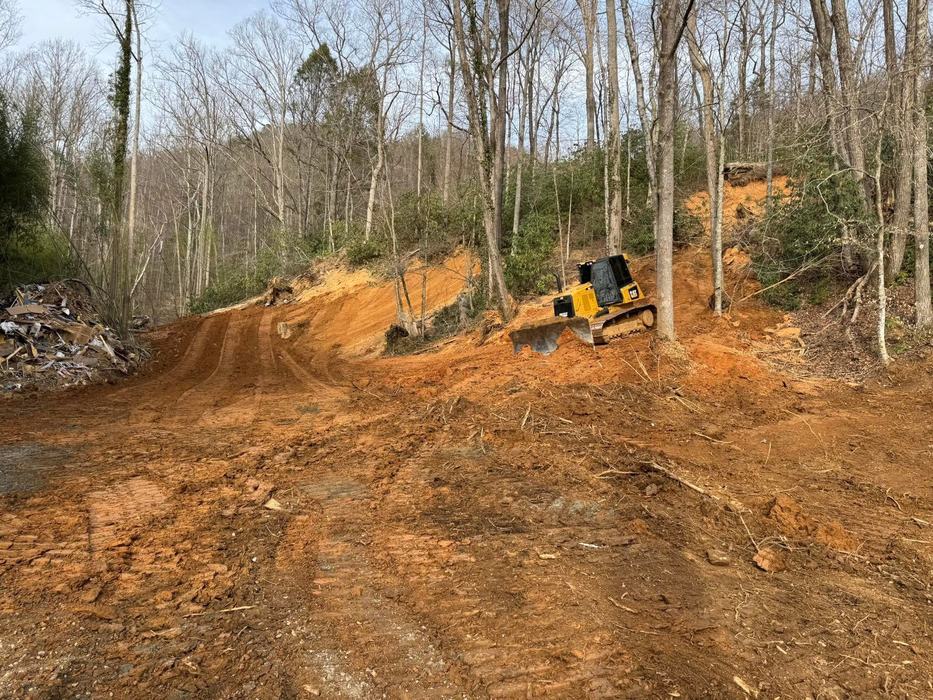
Stabilizing this hillside damaged in Hurricane Helene requires a substantial retaining wall (winter 2024). This is after the property owner removed the collapsed soil from the flat area.
The same landslide remediated with a retaining wall (Fall 2025).
If a slope is not too steep or if the steepness can be corrected to be no more than 45 degrees and the slope is made of soil then it may be possible to stabilize the slope with native plants. Steps: Regrade the slope, plant native grass seed and cover with burlap erosion matting. Later suckering shrubs can be planted on the hillside as well.
Biodegradable burlap/jute erosion fabric can be used to stabilize soils while seeded native grasses germinate.
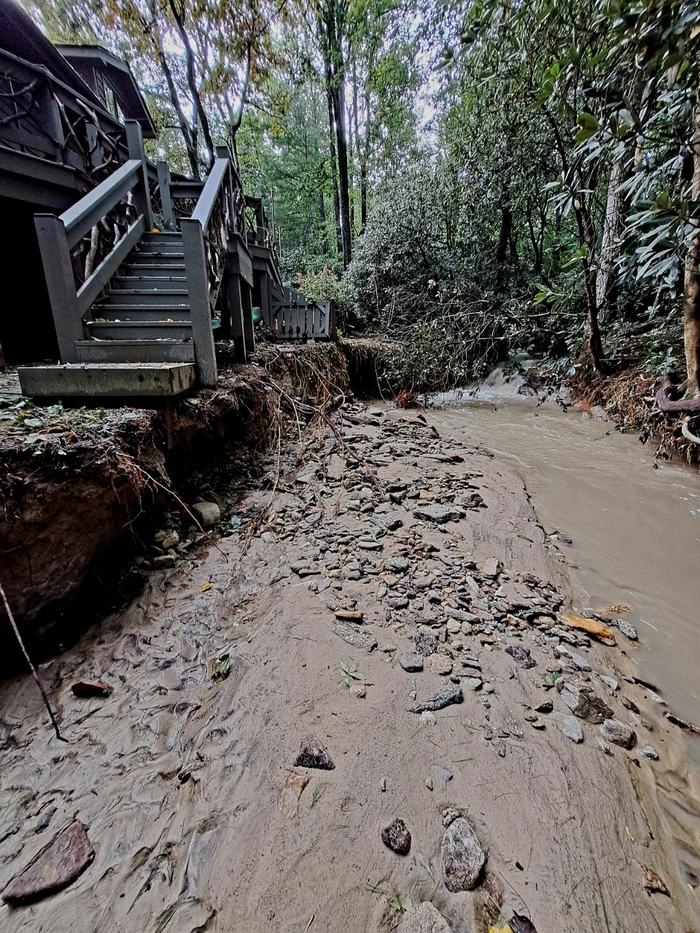
Hurricane Helene turned this babbling brook into a raging torrent that nearly got the porch. (Winter 2024)
The same property as above. The streambank was repaired with a sturdy retaining wall by spring 2025.
This unstable slope has increased landslide potential.
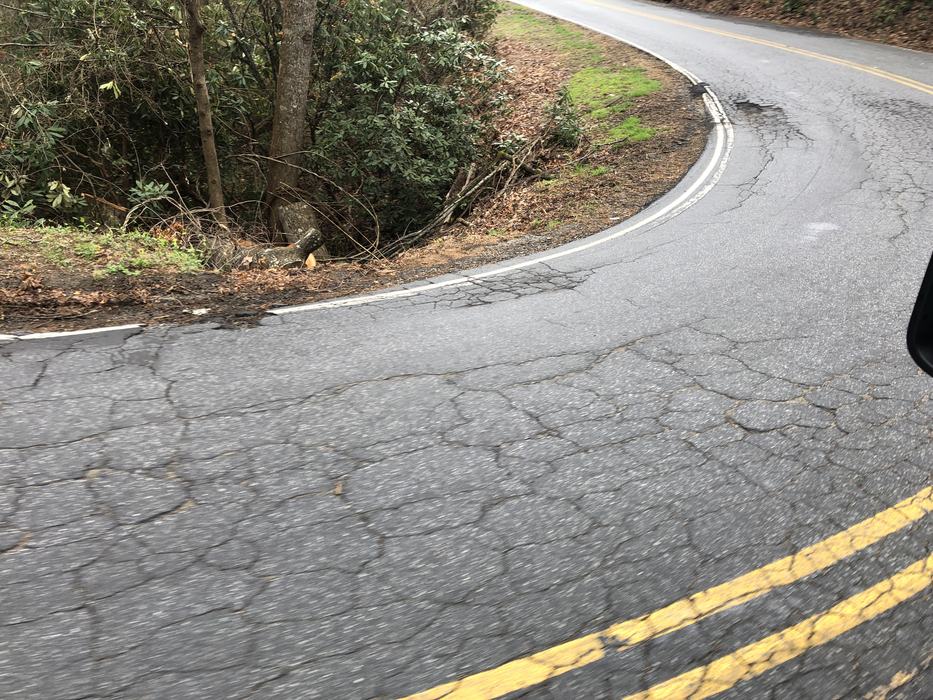
Cracks in roads can indicate future potentiality for landslides.
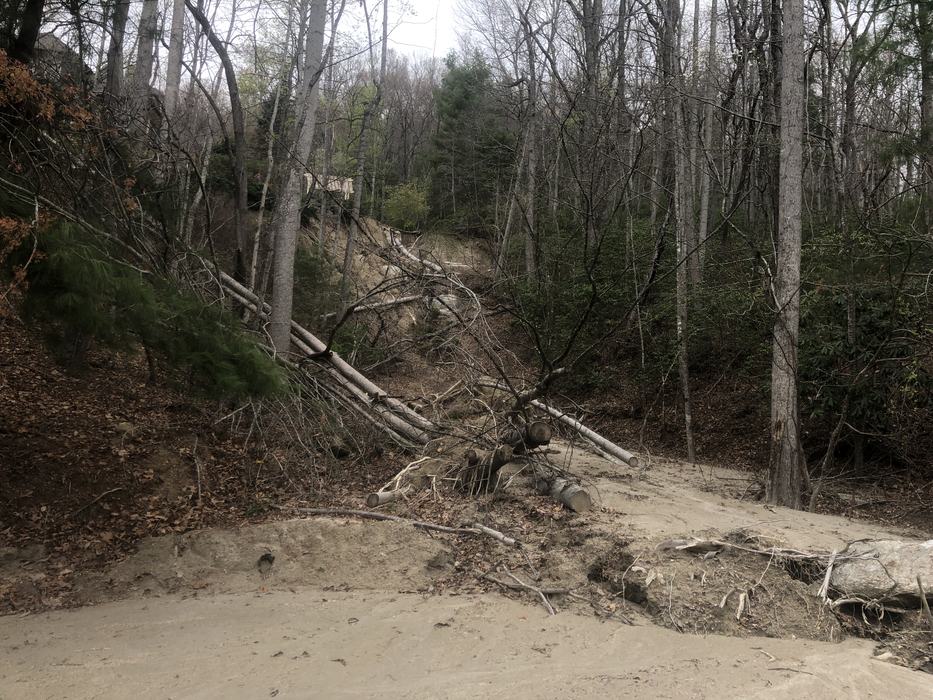
Some landslides are so big that normal people cannot afford to fix them. In these cases the government may have to step in.
Huge landslides require big equipment moving huge amounts of soil.