One of the most asked questions I get is, "I have a hillside that I need to landscape, could you make some recommendations on plants?"
Landscaping a Hillside
(Updated: April 22, 2026, 2:57 p.m.)
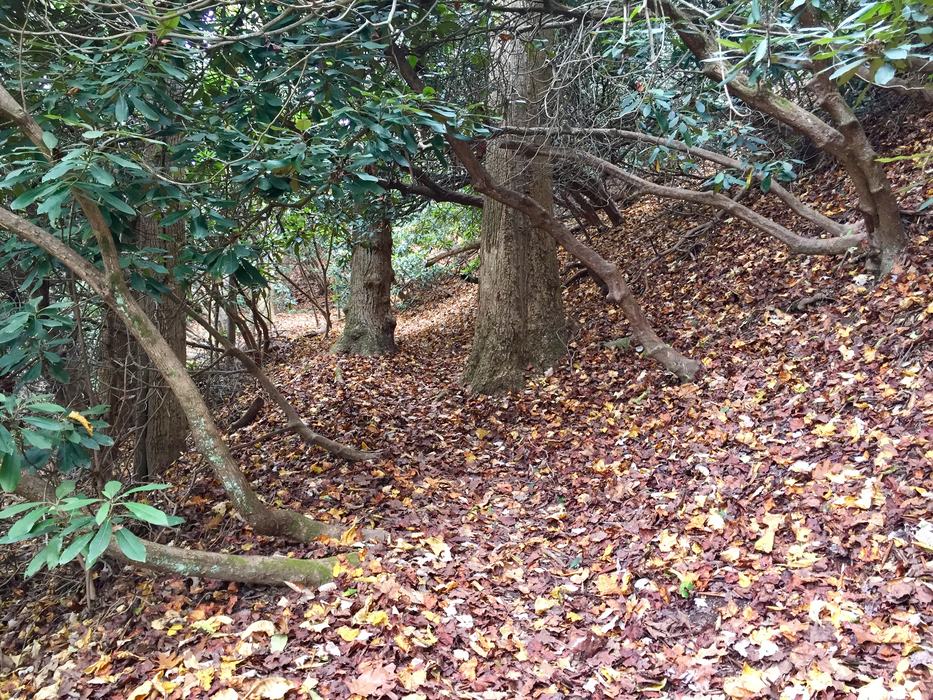
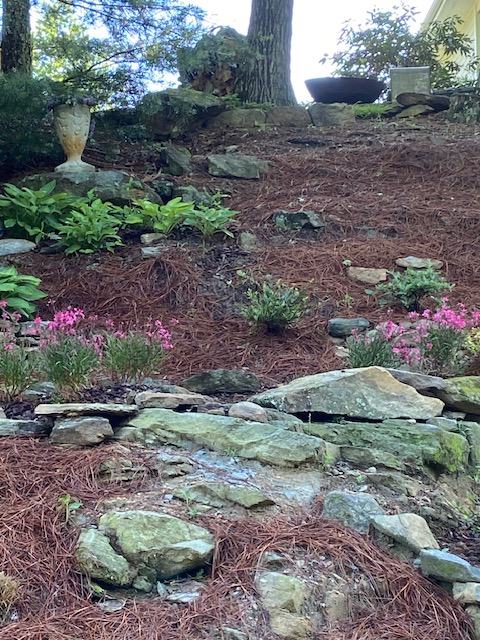
There are no real 'ground cover' plants found in our native forests. The idea of a groundcover plant is a relatively new one. In fact, we do not need ground covers. We only need to do what Mother Nature does and cover the ground with lots of native plants and mulch with leaves and sticks!
When asked this question I try to get the client to think through how nature holds the mountains together. Natural hills are held together with native plants and a mulch of leaves and sticks on the forest floor.
'Ground covers' There really are no native 'ground cover' plants. Most 'ground covers' are actually invasive plants i.e. english ivy, periwinkle, etc. Nature 'covers ground' with a mix of species and plant types growing tightly together on the slope.
Mulch For mulch in shady woods, I would suggest using the natural leaves. When the leaves fall in at the end of the summer, keep all your leaves and limbs that fall. You can also use your pruning waste and spread it out over the sloping land. If nature does not provide enough mulch, you should use single ground mulch or wood chips or shredded hardwood mulch.
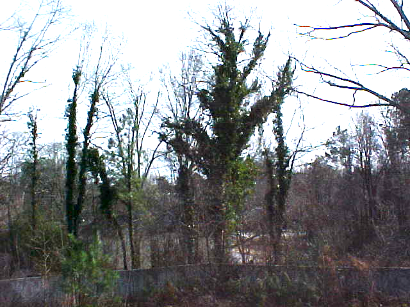
English ivy kills trees
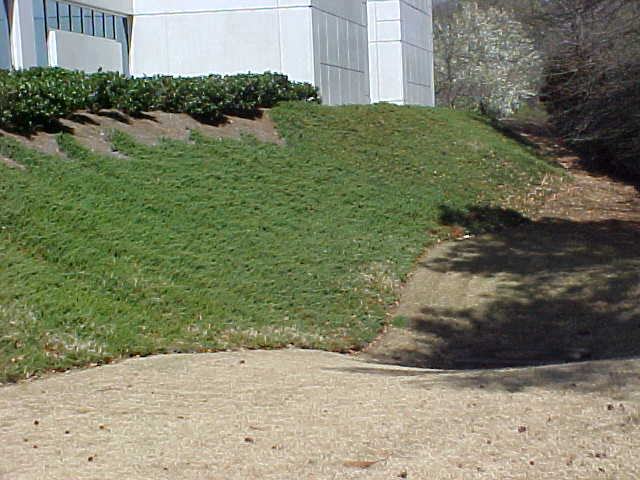
Plants In the past we simply planted any hillside that needed stabilizing in creeping plants. Many of those plants have turned out to be invasive. A few creeping shrubs such as cotoneaster or creeping evergreen junipers such as shore juniper or blue rug juniper work to cover ground when planted en masse. However, a mixed planting of different sorts of native plants is more interesting visually and better for pollinators and other wildlife.
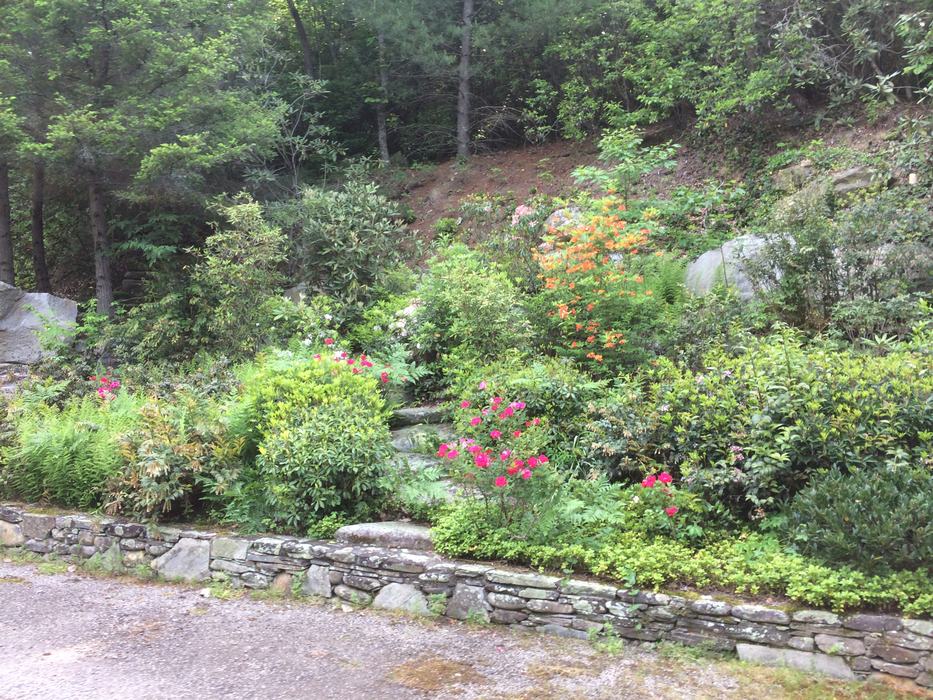
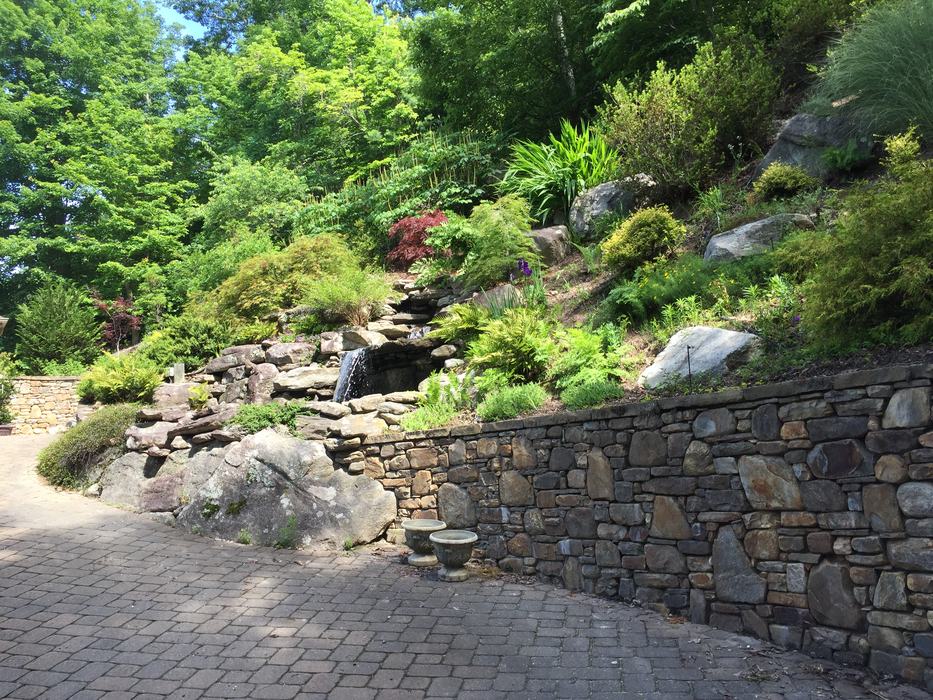
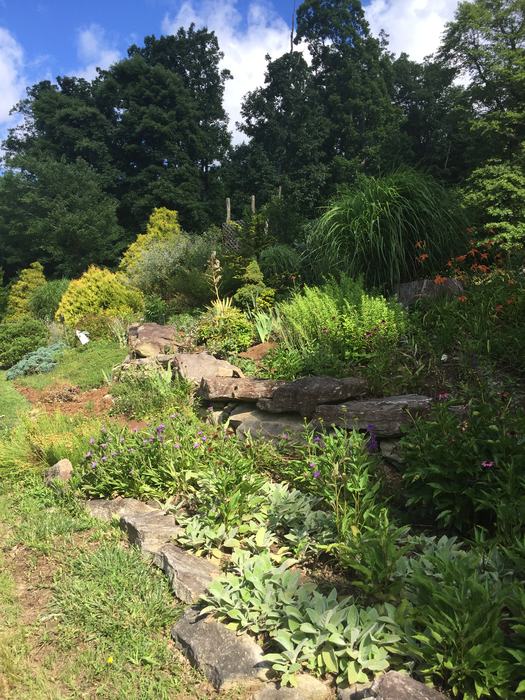
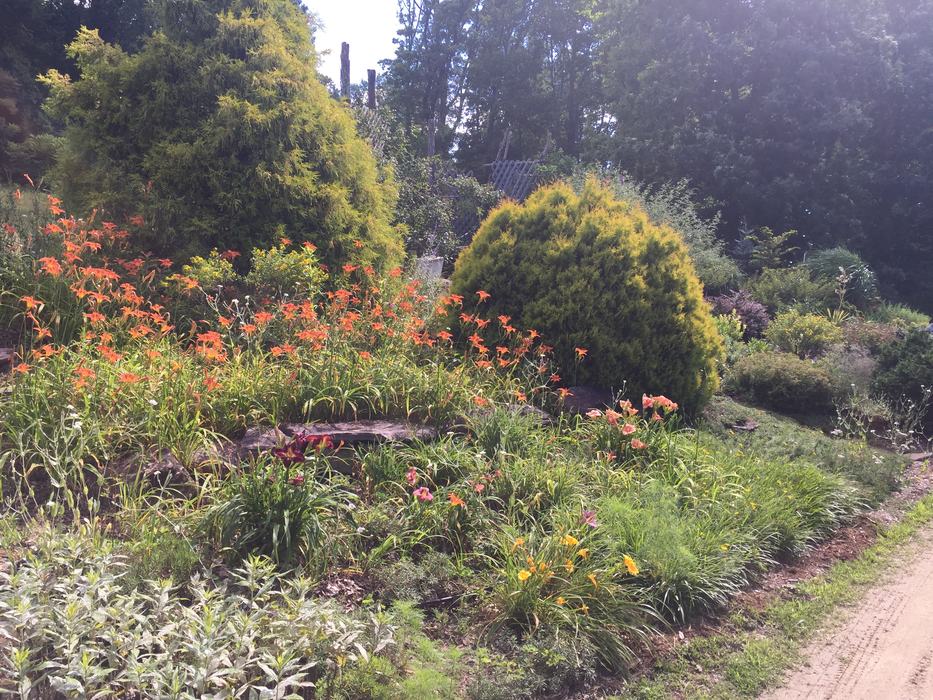
In sunny areas, I would recommend using a mix of native woody ornamental plant types such as suckering shrubs, small trees, grasses, perennials and vines. Add mulch and a few boulders to complete the natural look and your hillside can be covered in native plants that benefit the environment.
Here are some plant lists I made that you might find useful:
Native plants divided into kinds and sizes Native vines Native grasses
Native Plant List for Henderson County
Small trees up to 25′ – (deciduous) service berry, hornbeam, redbud, dogwood, fringe tree, Carolina silverbell, hornbeam
(evergreen) red cedar, arborvitae, American holly, Savannah holly, small southern magnolia cultivars
Large Trees over 25′ – (deciduous) red maple, sugar maple, river birch, yellowwood, beech, birch, cucumber tree, oaks
(evergreen) spruce, hemlock, fir, pines, Atlantic white cedar, arborvitae, red cedar, southern magnolia
Shrubs under 4′
(deciduous) St. John’s wort, lowbush blueberry, cranberry, maple leaf viburnum, hydrangea, American beautyberry
(evergreen) leucothoe, American boxwood, quince
Mid-sized Shrubs over 4′ under 10′
(deciduous) sweetshrub, red-twig dogwood, hearts-a-bustin’, fothergilla, hypericum, winterberry, Virginia sweetspire, spicebush, native azaleas, elderberry, highbush blueberry, deciduous viburnum, leatherleaf viburnum, spirea,
(evergreen) mountain laurel, rhododendron, inkberry
Large shrubs over 10′ – (deciduous) smooth sumac, arrowwood viburnum, bottlebrush buckeye, witch hazel. oakleaf hydrangea, ninebark
(evergreen) rhododendron, mountain laurel,
Vines
(deciduous) crossvine, trumpet creeper, climbing hydrangea, coral honeysuckle, Virginia creeper, fox grape
Grasses
bluestem, broomsedge, river oats, switch grass, pink muhly grass, lovegrass (more grasses)
Groundcovers
(deciduous) pussy’s toes, wild ginger, partridge berry, pachysandra, phlox, golden aster, Christmas fern, Oconee bells, yellow root, green and gold
(evergreen) shore juniper, blue rug juniper,
Wildflowers
annual wildflower mix for the south from Eden Brothers or American Meadows websites
Perennials
black-eyed Susan, coneflower, milkweed, asters, false indigo, coreopsis, Joe Pye weed, Carolina geranium, swamp sunflower, bee balm, Carolina phlox, Cardinal flower, mountain mint
landscaping a hillside
Join our mailing list!
Enter your email address to receive updates.
Written By