With the potential severe weather heading our way this weekend, it's a great time to be proactive about your emergency food supply and make sure you have what you and your family need in the event you are unable to leave your house, lose power or have minimal access to outside food sources.
Emergency Food Preparedness
(Updated: Jan. 21, 2026, 6:14 a.m.)
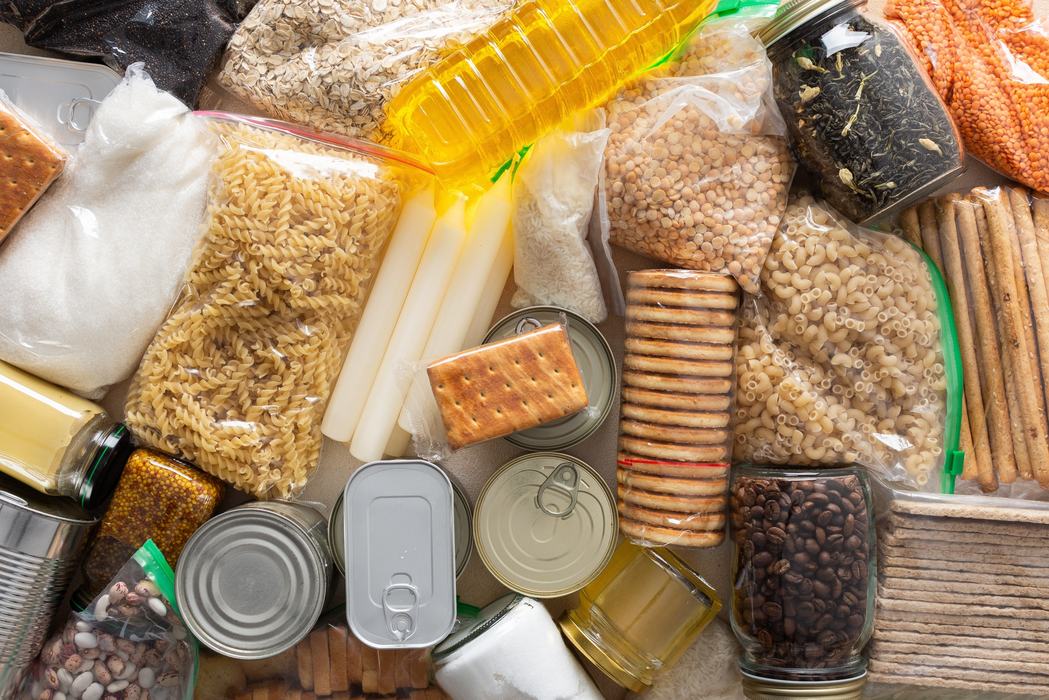
It is recommended to have at least a three day food supply stocked in your home, but up to two weeks is even better.
It is worth taking some time to evaluate what you already have in your home pantry and where you could fill in the gaps. Make sure you purchase food that your family would be willing to eat even outside of emergency conditions so that it doesn't go to waste. I recommend finding a few recipes or meal ideas to guide your grocery list instead of just panic buying random items that your family might not eat or enjoy.
Here are some shelf-stable food items to consider:Breakfast Foods:
- Pre-packaged or dried fruits
- Shelf-stable milk
- Ready-to-eat cereals, breakfast bars, granola, trail mix
- Bread with nut butter (peanut butter, almond butter, sunflower butter)
- Nuts and seeds
Lunch or Dinner Foods:
- Canned meats (tuna, chicken, spam)
- Ready-to-eat canned fruits and vegetables (opt for low sodium if available)
- Canned beans
- Canned soup or other ready to eat shelf-stable meals
- Crackers/bread with honey and nut butter
Beverages:
- Fruit juices
- Powdered drink mixes
- Instant coffee
- Tea bags
- Shelf stable milk
- Charcoal
- Wood for the fireplace
- Fuel cups—Sterno
- Gas for gas grill
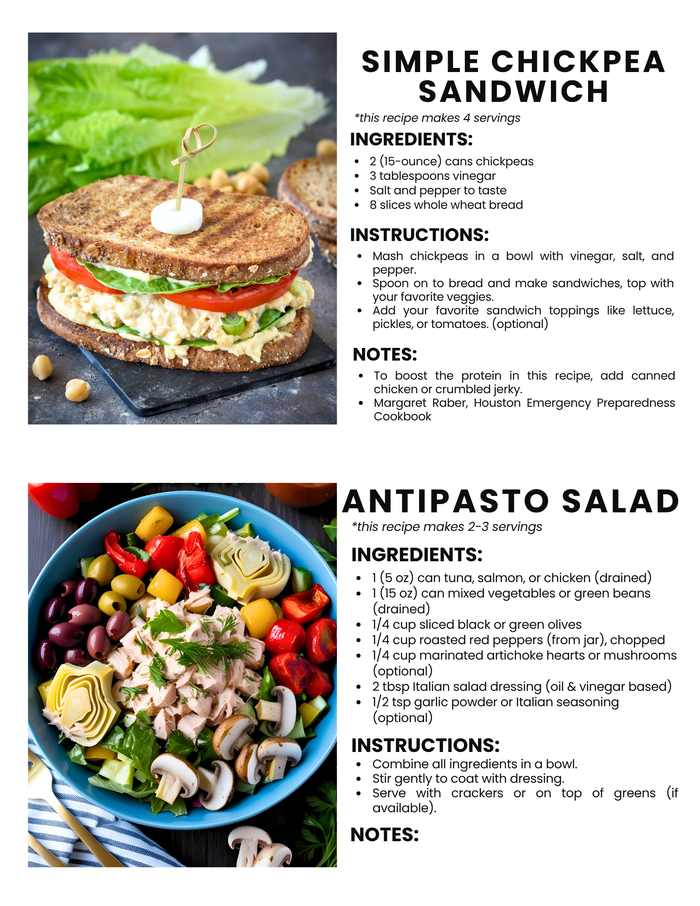
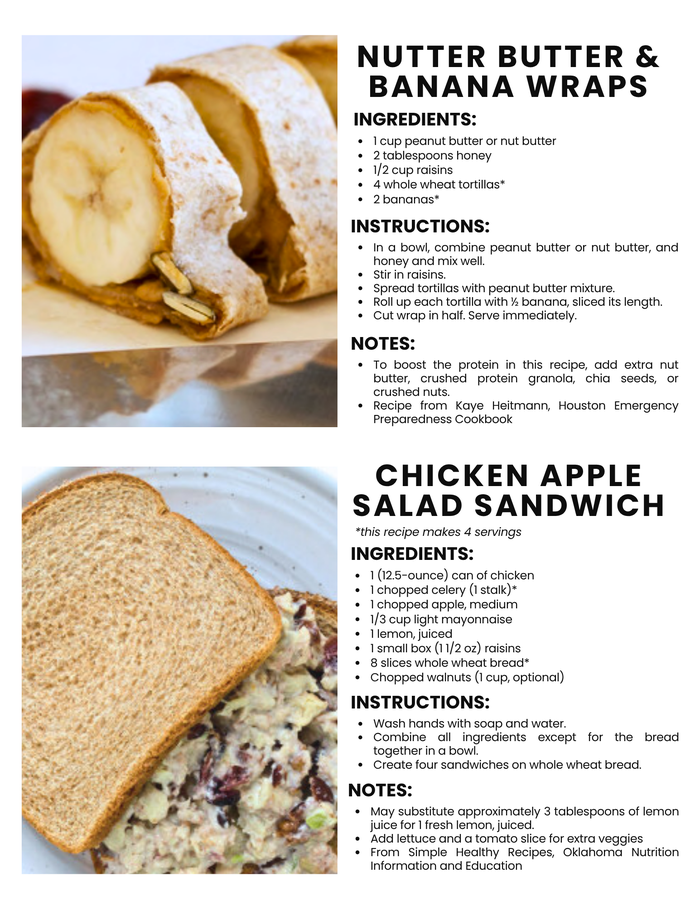
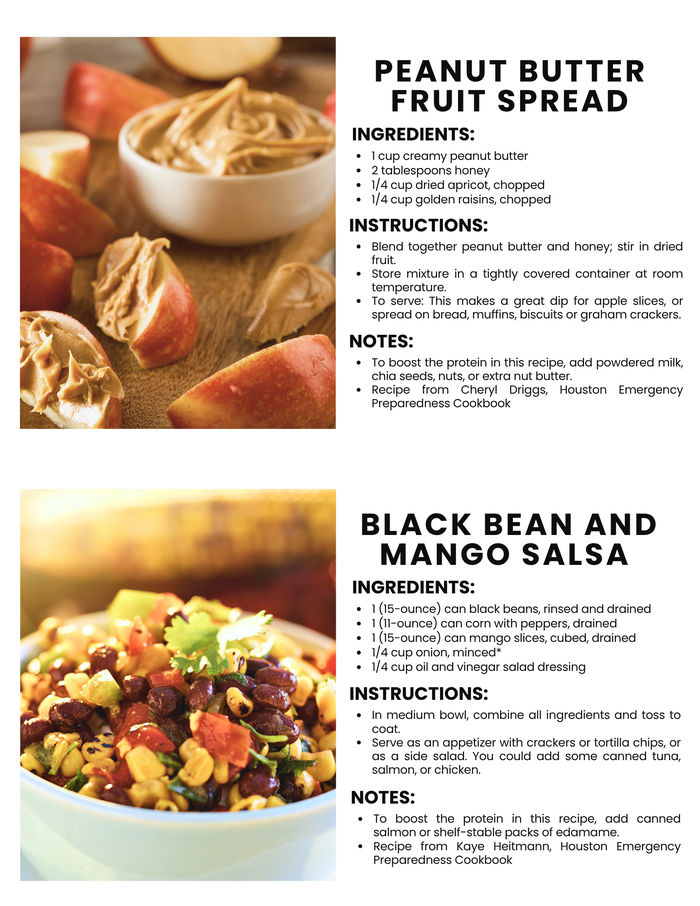
Looking for some healthy no-cook meal ideas if the power goes out? Consider these options and use these to guide your food supply choices as well:
Join our mailing list!
Enter your email address to receive updates.
Written By