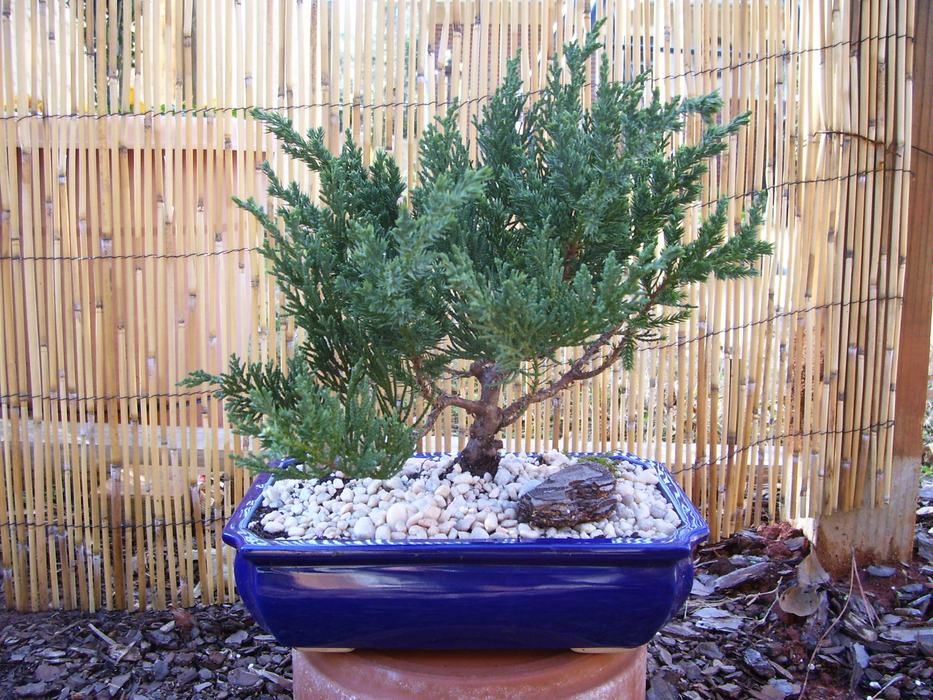
This is a 'backyard bonsai' created by the author.
What is bonsai? Bonsai is the 'Ancient Art of Miniaturizing Trees'.
The height potential of a tree such as a Japanese maple can be as much as 30 feet. So how could you possibly maintain this same tree in a container at a height of 2 feet or less? The answer is using the basic principles of bonsai.
The growing of bonsai is simple enough that anyone can become an enthusiast. The skill that most of us are lacking is the patience that is needed to allow a plant to properly develop. Achieving a dwarf plant that is a true mimic of a tree in nature in one of the specific styles is the art of bonsai.
History
The art of bonsai, the ancient art of dwarfing trees, has been practiced for hundreds of years. The first people to practice the art were the Chinese who, in the 14th century, collected trees that were naturally dwarfed trees from the wild. These gnarly trees naturally contorted by the harsh conditions found on mountainsides were transplanted into containers near Buddhist temples by monks. These ancient gardeners enhance the wild contorted beauty of the plants that were stunted by the harsh extremes of altitude and poor soil and maintained them as a meditative practice. An art form grew out of the Buddhist monks’ ingenuity, cleverness, and eventual understanding of plant physiology.
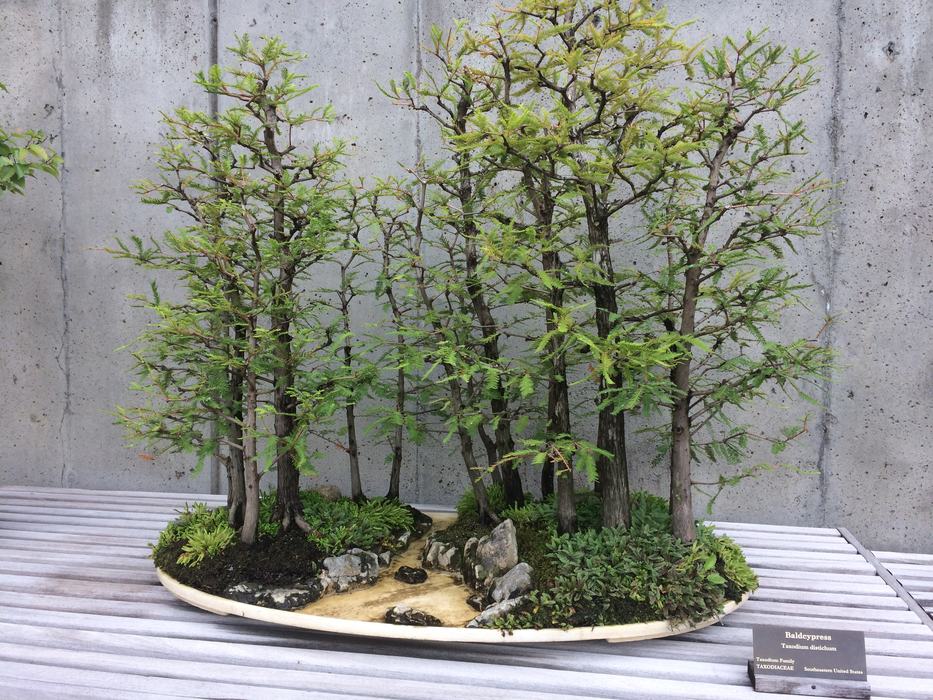
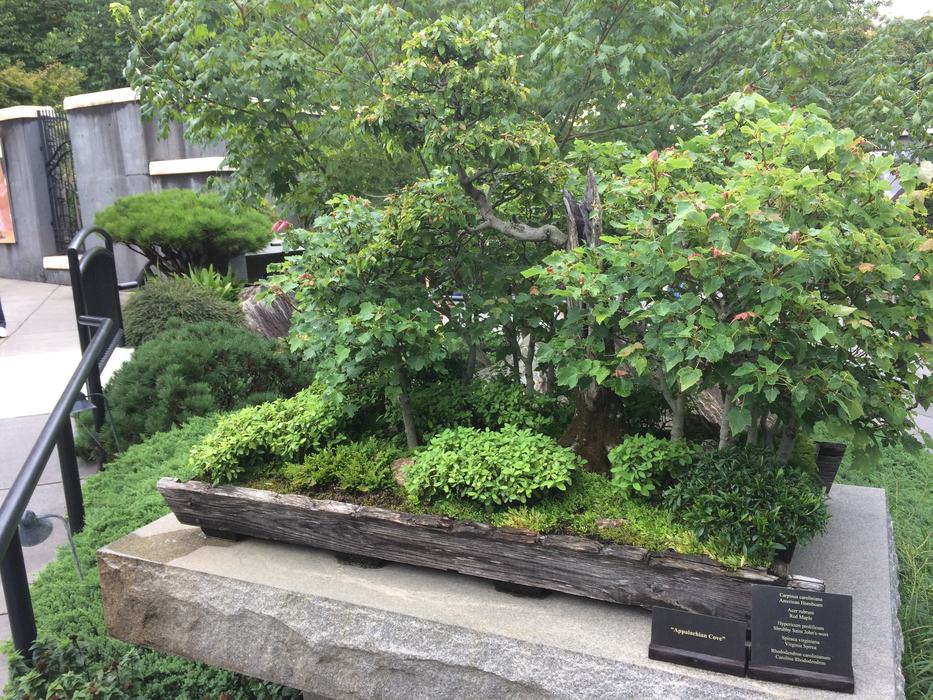
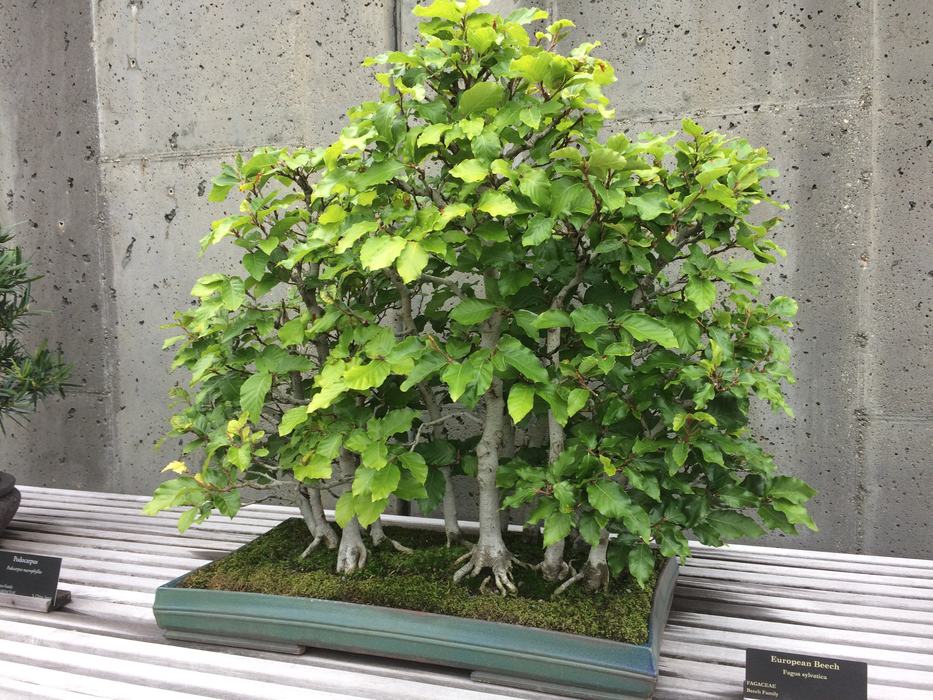
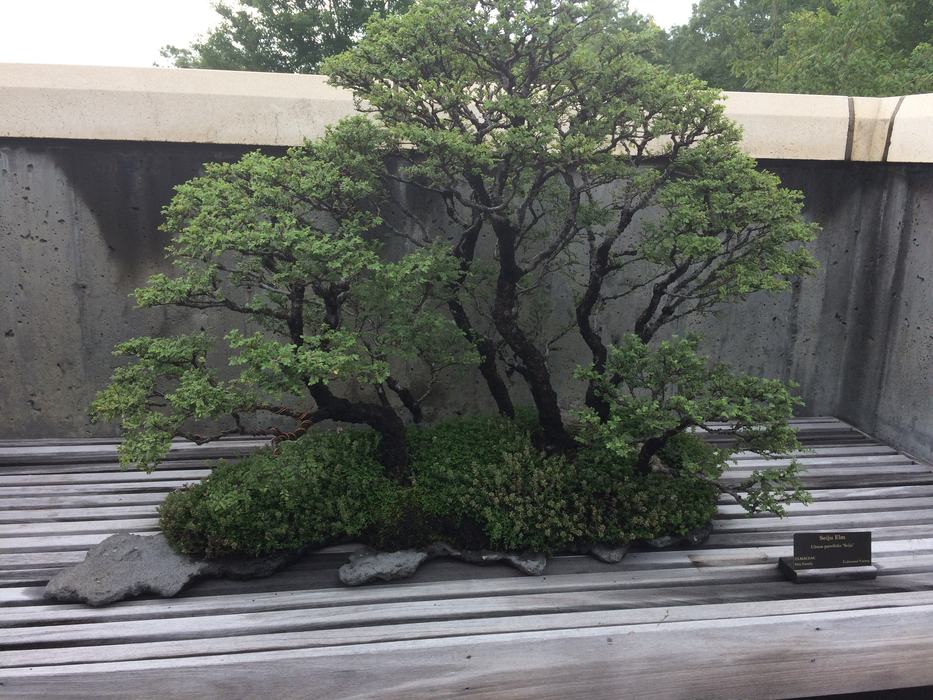
This is a professional level bonsai located at the NC Arboretum.
The word bonsai literally means ‘plant in a tray’. The concept is simple; restrict the growth of a plant’s roots and shoots, allowing the trunk to grow. The end result is a plant that appears to be a miniature representation of its relatives in the wild.
Bonsai Styles
There are many styles of bonsai. The simplest would be the formal upright or erect style. The trunk is encouraged to grow straight and the tree is usually pruned into a symmetrical form. Another simple design is the informal upright. The tree is trained vertically but is not forced to grow straight. Other upright designs include the double trunk and the leaning.
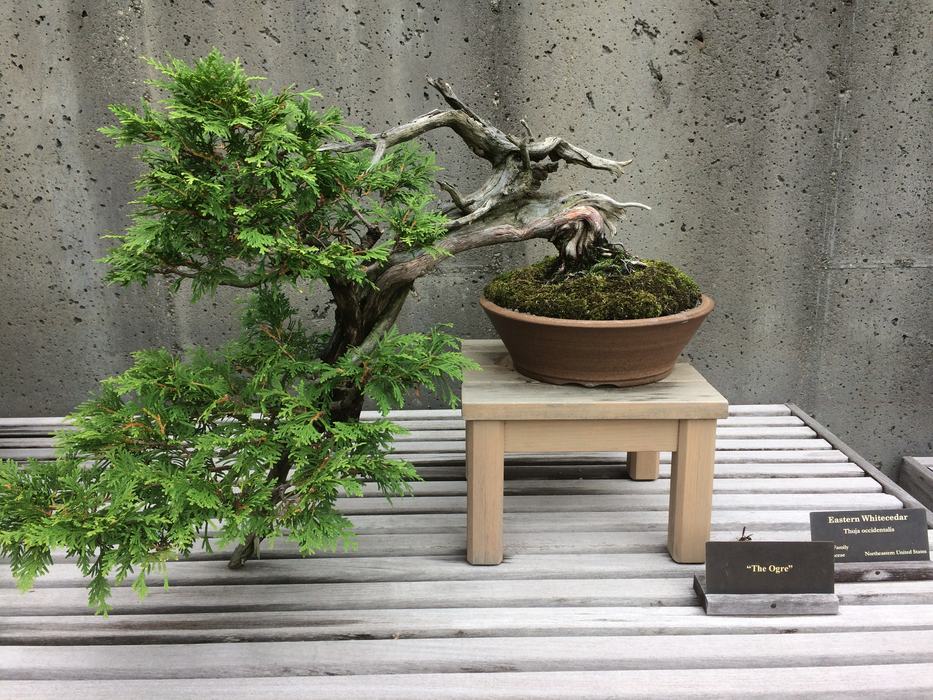
Cascading bonsai style from the NC Arboretum.
There are more challenging designs for advanced gardeners. Using a trailing groundcover shrub, the cascade design allows the plant to hang over the edge of the pot and grow toward the ground. Other very interesting styles are the roots-over-rock style where the tree is planted so that it grows over stone and the windswept design where the plant is pruned to make it appear as though it is growing in the desert.
Creating and Growing a Bonsai Tree
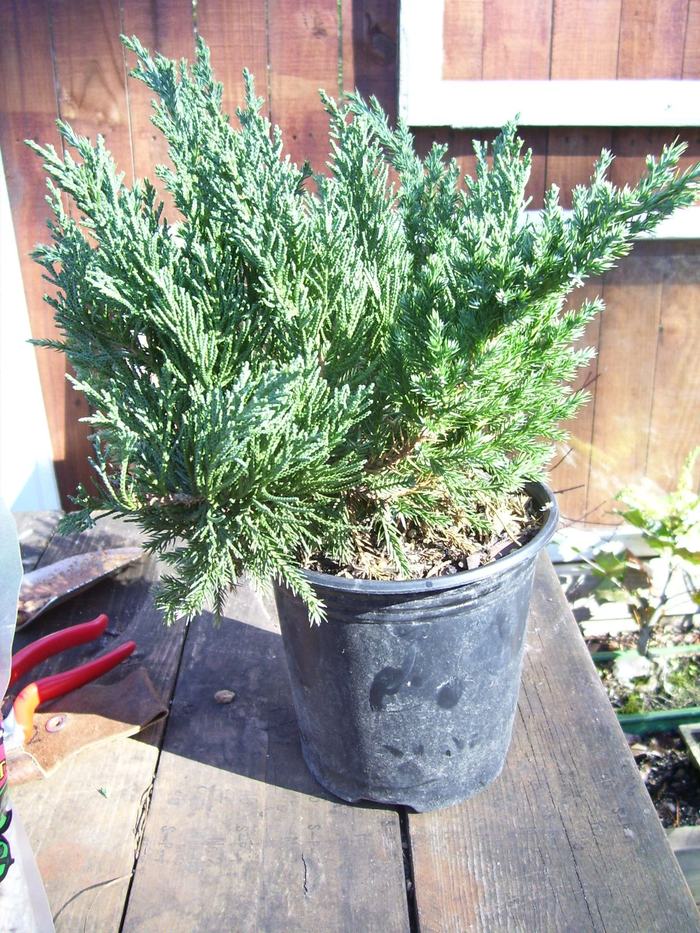
Growing bonsai isn’t difficult. To grow your own, begin by growing or purchasing a tree or shrub such as juniper, red maple, Japanese maple, Chinese elm, river birch, Chinese zelkova, pine or any other plant in a 4 inch cup up to a one gallon container. Next, obtain a shallow container, well-drained soil and very small sized gravel. The tools I use include small pruners, a trowel, a clean spray bottle filled with water and a pan of water.
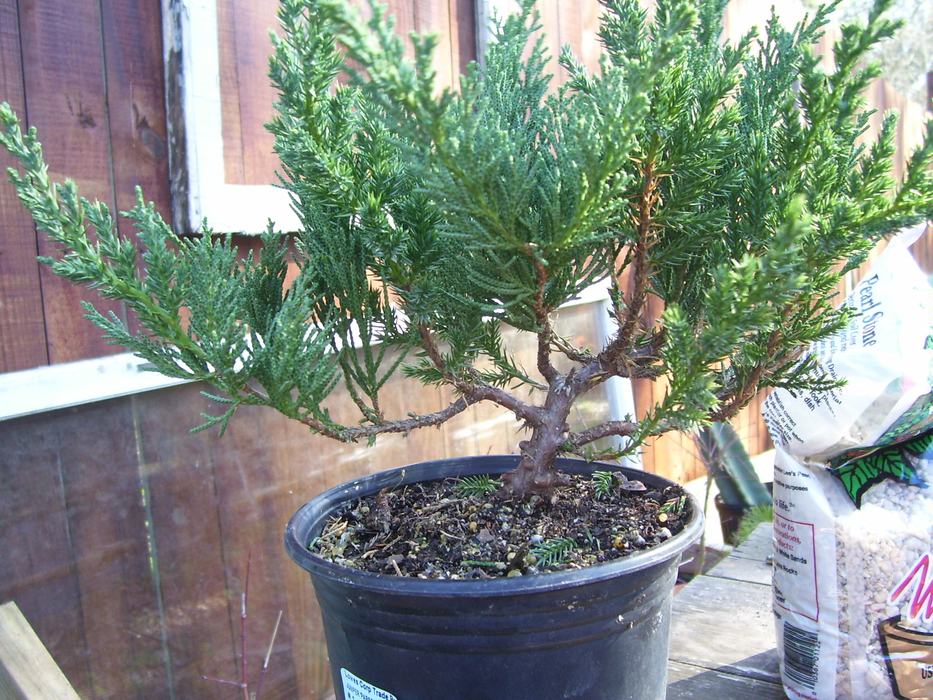
The author chose a one gallon juniper for his bonsai project.
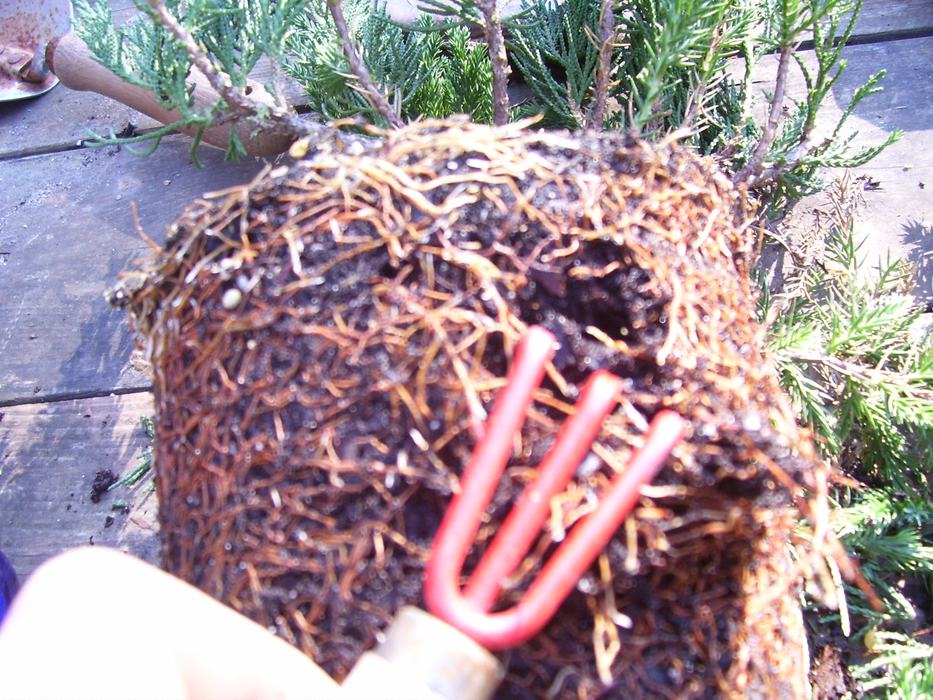
After gathering bonsai supplies and tools, remove the plant from its original pot. Dislodge all the soil from the roots of the plant. Dipping the roots in clean water, gently wash them. Keep the roots moist throughout the planting process by misting with a spray bottle.
This the canopy of the plant and create a tree shape.
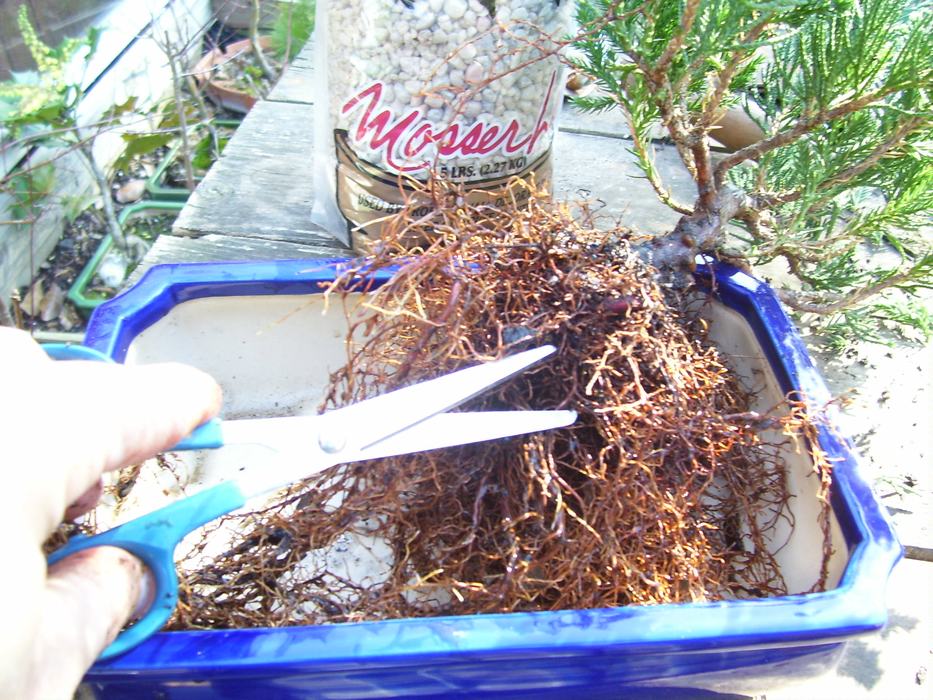
Using the pruners, lightly trim the roots and the shoots or branches. Trees need to maintain a specific ratio of roots to shoots. Prune the roots and the shoots to balance the ratio to 1:1.
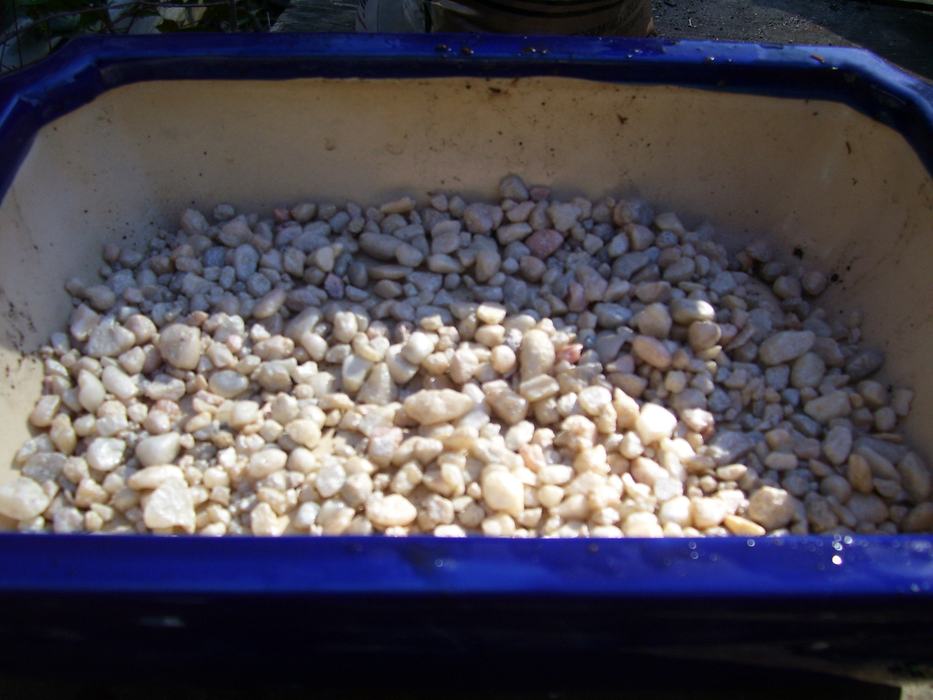
Line the bonsai tray with very small gravel to facilitate drainage.
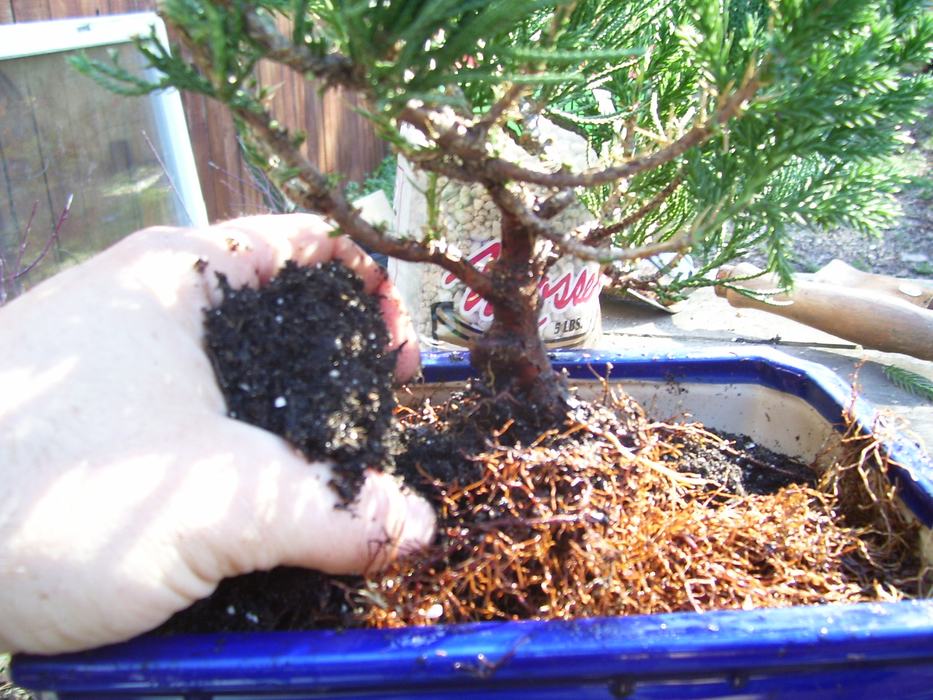
Locate a shady spot and begin planting by lining the bottom of the tray with one-half inch of gravel and a layer of soil. Spread the roots over the soil layer. Cover the roots with soil being careful not to cover the root collar of the tree with soil. Firmly press the soil with your fingers. Sprinkle a thin layer of gravel on top of the soil and arrange any stones or moss on the surface.
Loosen roots keeping them very moist.
Trim the roots so the root system will fit in the bonsai tray.
Wire the roots system to the bottom of the tray to avoid the plant toppling. Then, fill with soil.
Caring for Bonsai
Caring for bonsai trees is rewarding. Pinch or prune trees to keep them in shape and irrigate the tree daily. Fertilize with a diluted liquid fertilizer every four weeks. Remember, bonsai are not houseplants. Most bonsai trees need plenty of sun so place the tree in a partly sunny to sunny outdoor location and water regularly.
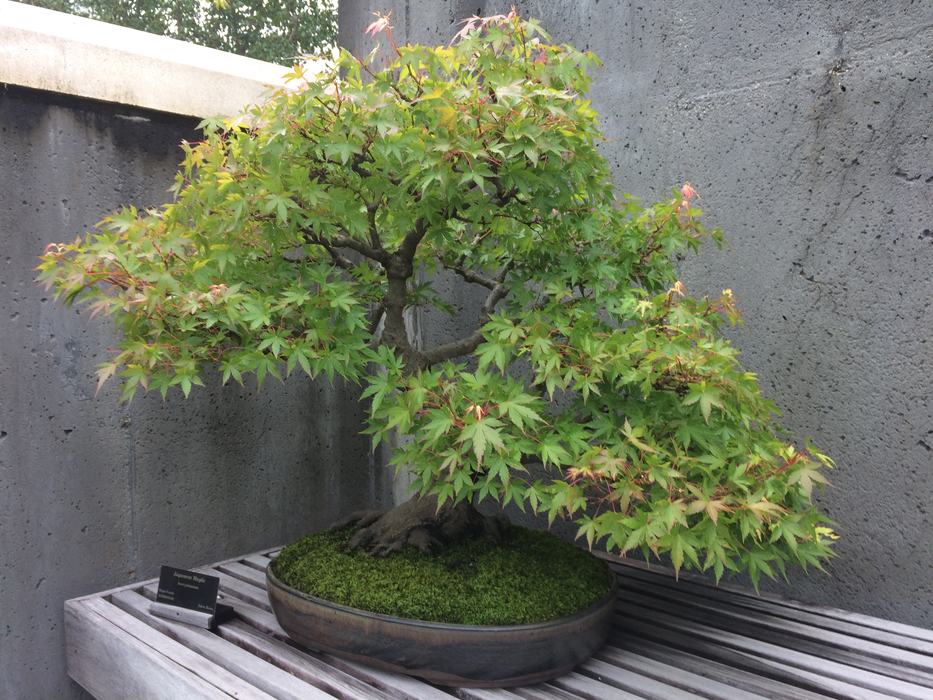
Japanese maple bonsai example located at the NC Arboretum.