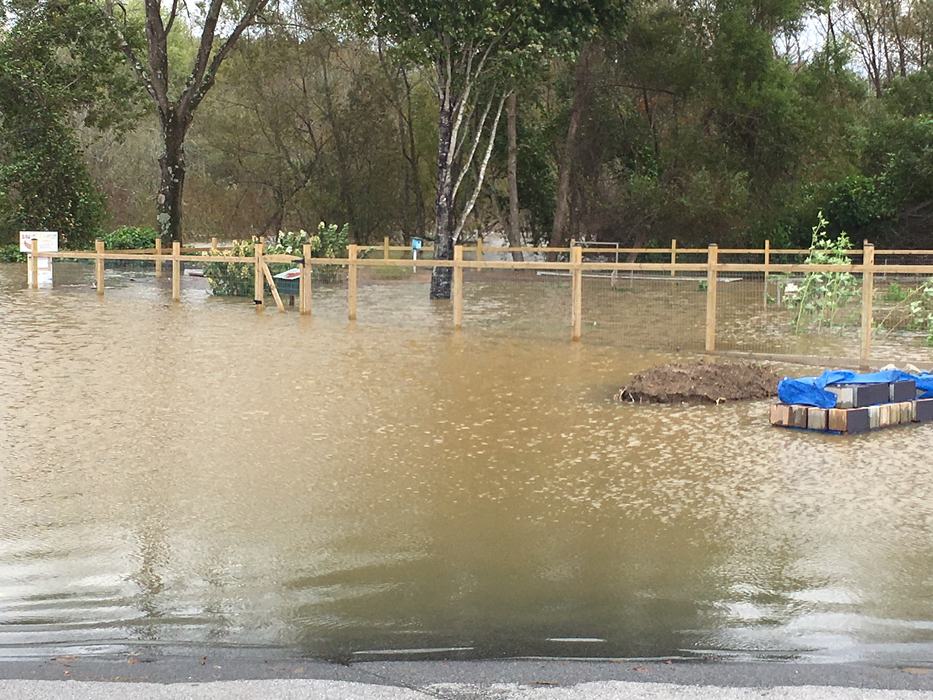
Farmers, home owners and playground managers have expressed concern about the potential of contaminants in soils in areas flooded by Hurricane Helene. The Henderson County area is fortunately not overly industrialized so industrial contaminants are not as much of a concern. We do have farms and urban sites that possibly could contribute to contaminants in flood water.
Possible Contaminants
According to t
his publication from NC State "Floodwaters can carry chemical and biological contaminants that harm human health. Flooded vegetable gardens can possibly harbor risks to people who touch contaminated plants and soil, consume harvested produce, or breathe in dust from soil."
So what are we concerned about when we think of soil contaminants? According to the same article, "Chemical contaminants carried by floodwaters may include salt, lead, heavy metals, and pesticides. Biological contaminants may include bacteria, viruses, and parasites from raw sewage, raw manure, dead animals, and sediment and organic matter eroding from or running off nearby areas.
Preventing and Cleaning Up Contaminants
Gardeners can take specific actions before a flood, after the storm, and after floodwaters recede to reduce health risks from floodwaters. The authors of the article recommend, "Select a site (for your garden) that is unlikely to flood (away from a floodplain or the bottom of a slope) or move your existing garden to a less flood-prone location."
"Notice where rainwater flows during heavy downpours and avoid planting in areas where water collects, if possible. If necessary, install raised beds or use flood-resistant or permaculture design techniques like swales and rain gardens. Investigate surrounding land use to identify sources of contamination that may compromise your garden site. Avoid locating gardens within 1,000 feet...of potential sources of contamination."
After a flood at a minimum you want children to avoid ingesting soils and silt deposited by flood waters. Use water to rinse away flood deposits in yards and on playground equipment. Instruct kids to wash their hands and change clothes if they get flood silts on them. Caregivers should wash their clothes at home after contact with soil/silt deposited by flooding.
This article refers to 'cleaning' areas and equipment children touch.
Testing Soils For Contaminants
Basically the authors of the article recommend testing soil only
if contamination is suspected. Unless you are downstream from some industrial activity, massive farm or waste facility your soil is unlikely to be contaminated. The USDA says to wait for 90 days before planting in flooded areas to allow any bacteria to die. Use good sanitation practices when gardening washing hands after touching soil and washing produce thoroughly after floods occur.
If you do suspect contamination, then there are labs that can guide you through the testing process.
PACE Analytical testing service north of Asheville. They also have an office in Greenville.
The University of Georgia soil lab is one of the best labs in the southeast if you do decide to test. They can test for just about anything. Their website tells you how to submit a sample and costs.