There are many unusual forms of life on this planet. Man has classified the different types of life into Kingdoms including the animals, the plants, the fungi and the protists. All of the kingdoms contain weird organisms.
Slime Molds and Yeasts- Not a Pest
(Updated: April 23, 2025, 5:44 a.m.)
Among the animals there are such strange and fascinating creatures as the platypus, the sea cucumber, the jellyfish, the praying mantis and the ever-mysterious home gardener. Among the plants there can be found such strange botanical organisms as the bromeliads (Spanish moss), Giant Redwoods, Resurrection fern and the Bradford Pear.
The fungi include some of the funkiest of all the life on earth. There are stinkhorns which attract flies by emitting odors similar to that of a bloated road-killed raccoon, the Lion’s Mane which hangs pendulously like a big head of hair from hollows in old hardwoods and foxfire, a bioluminescent fungi that glows at night an the forest floor. But the weirdest of them all is the protists, which includes the protozoa, algae and the slime molds.
Slime molds are not fungi. They are officially grouped into the phylum of organisms known as Myxomycota but are often lumped in with the mushrooms because they are more similar to fungi than plants or animals. Organisms of this group are characteristically fungi-like in that they reproduce by spores. They differ from fungi in that they are not made up of hyphae, the filamentous strands that form the body of a fungi.
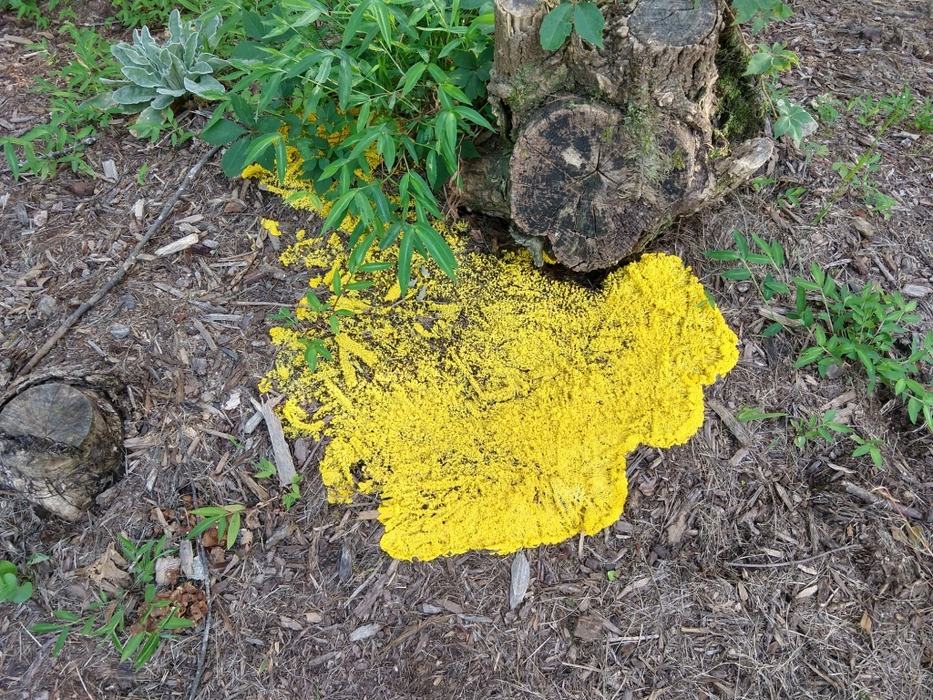
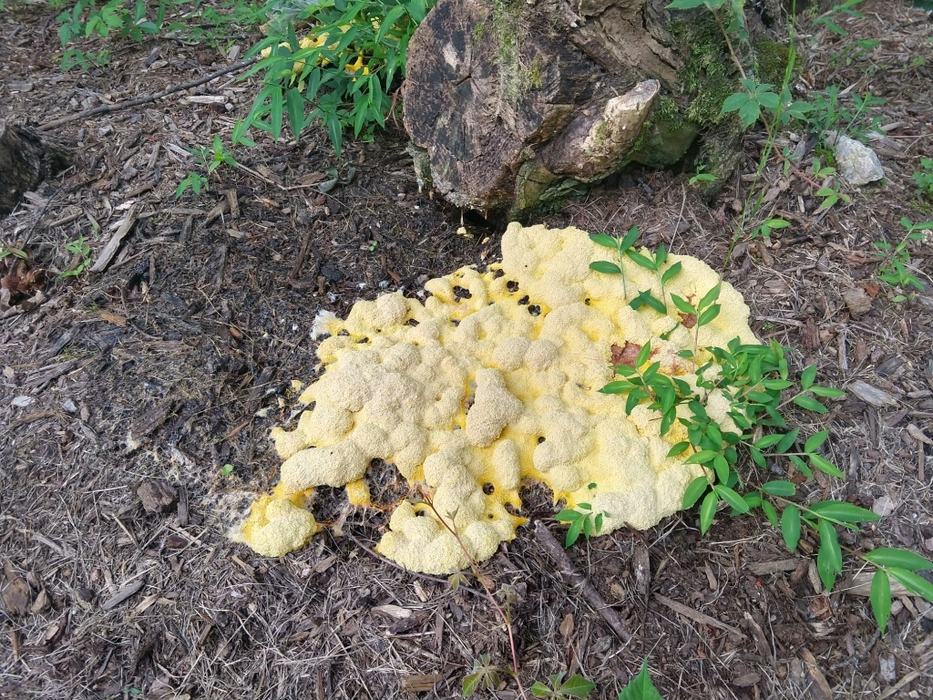
Slime molds come in various shapes, colors and sizes. The most commonly reported slime mold is Fuligo septica or ‘dog’s vomit’ mushroom. Charming title isn’t it? The name is appropriate however because the organism does look like some canine became violently ill in your flowerbed. Fuligo actually feeds off of decomposing organic matter like mulch. But the really cool thing about the slime molds…they move. Yeah, this big pile of dog vomit-like funk actually marches across flowerbeds leaving a trail of slime behind it.
Other slime molds can be pretty funky as well. Physarum polycepharum can be found growing on rotting logs in the forest. It is usually yellow and forms spiderweb-like filaments under the bark of rotting logs. Brefeldia maxima is usually whitish and looks alot like a cottage cheese. It grows on plant surfaces appearing like some horrible disease is infecting your plant. Turf can also be affected. Gray structures form on turf during cool wet weather. Sometimes the mold can form a ring in turf but usually it forms a patch.
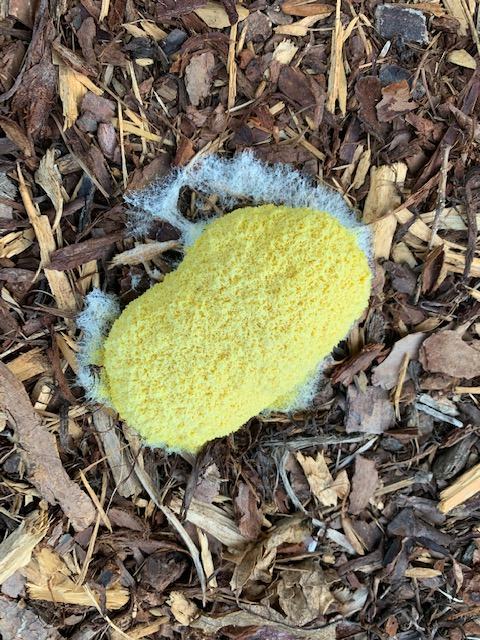
Slime molds are harmless and very interesting. If you find one in your lawn or garden, observe it and appreciate its funkiness. And tell all your neighbors…it is sure to make them envious.
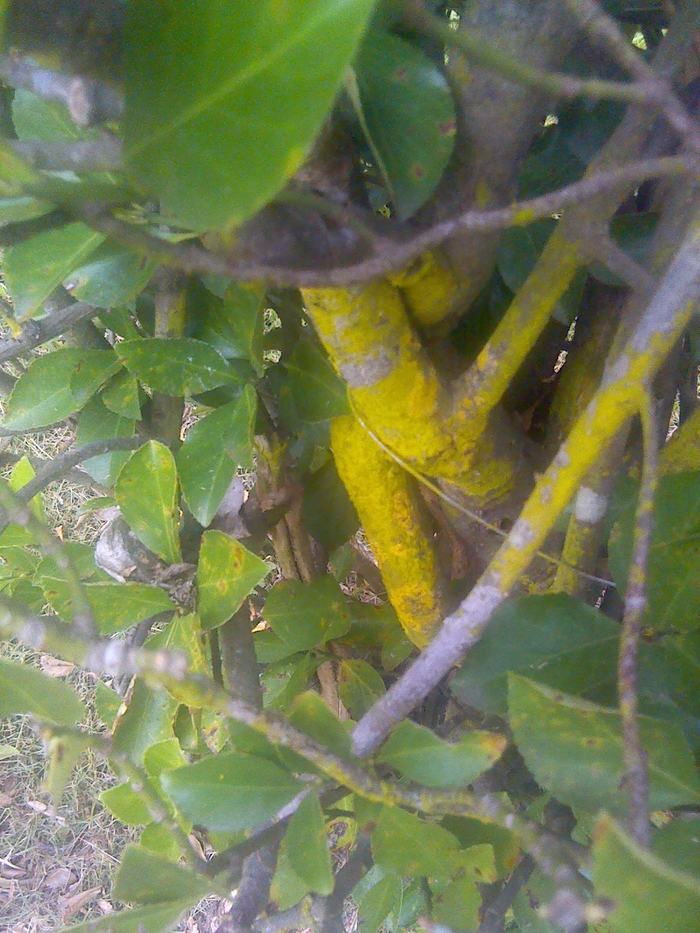
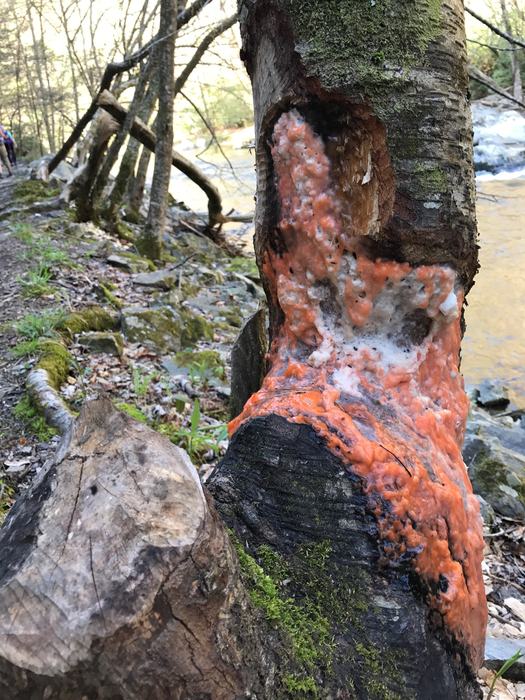
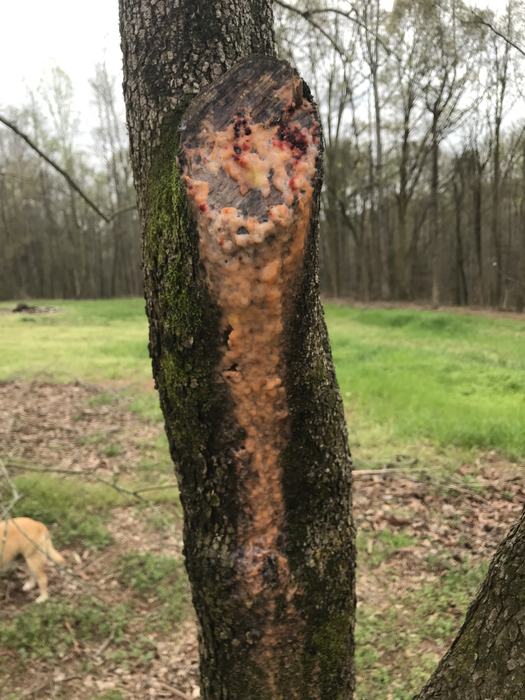
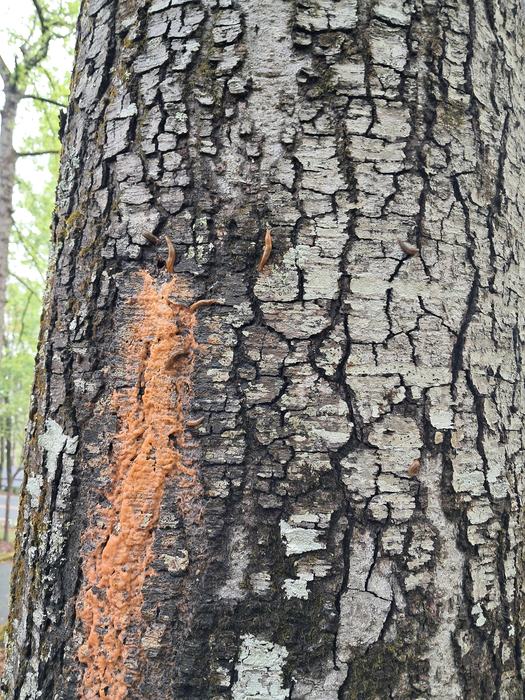
Yeasts All things slimy are not slime molds. Yeasts can sometimes be found growing on sugary sap that is leaking from wounds in trees. As in the case of slime molds, yeasts are harmless to trees. The wounds where the sap is leaking wether caused by humans or insects should be the concern. The following images are yeasts fermenting the sugary sap leaking out of trees in the spring.
Join our mailing list!
Enter your email address to receive updates.
Written By