Cucurbita pepo or the summer squash is a herbaceous annual commonly grown in many home gardens. Known for its seemingly never-ending harvest. This garden staple can be intimidating to save seeds from. Its monoecious habit and ease of being cross-pollinated complicate the pollination process. With a few quick steps squash seeds can easily be harvested from any home garden.
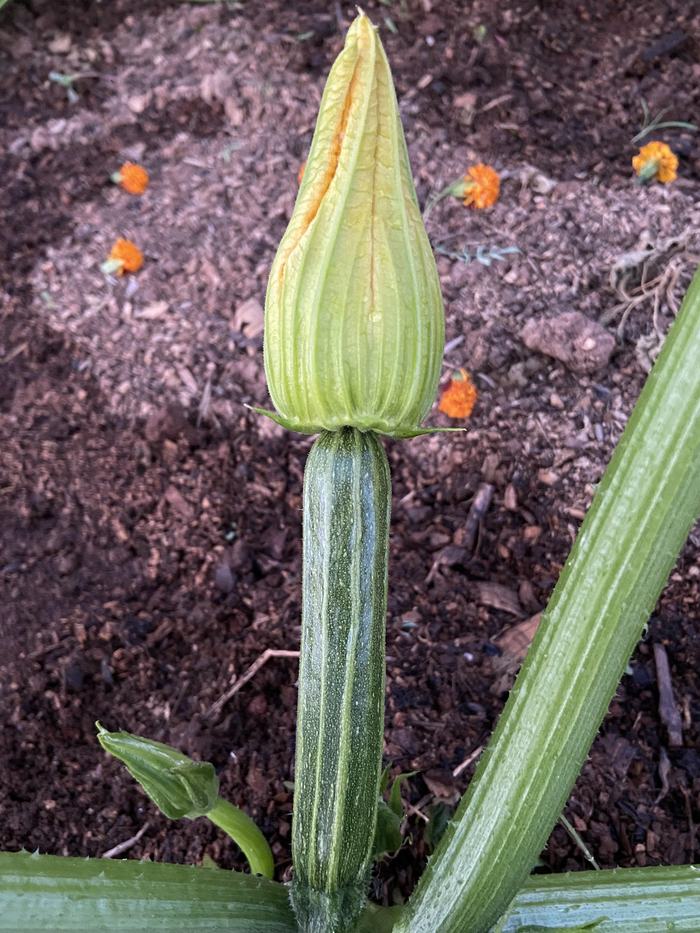
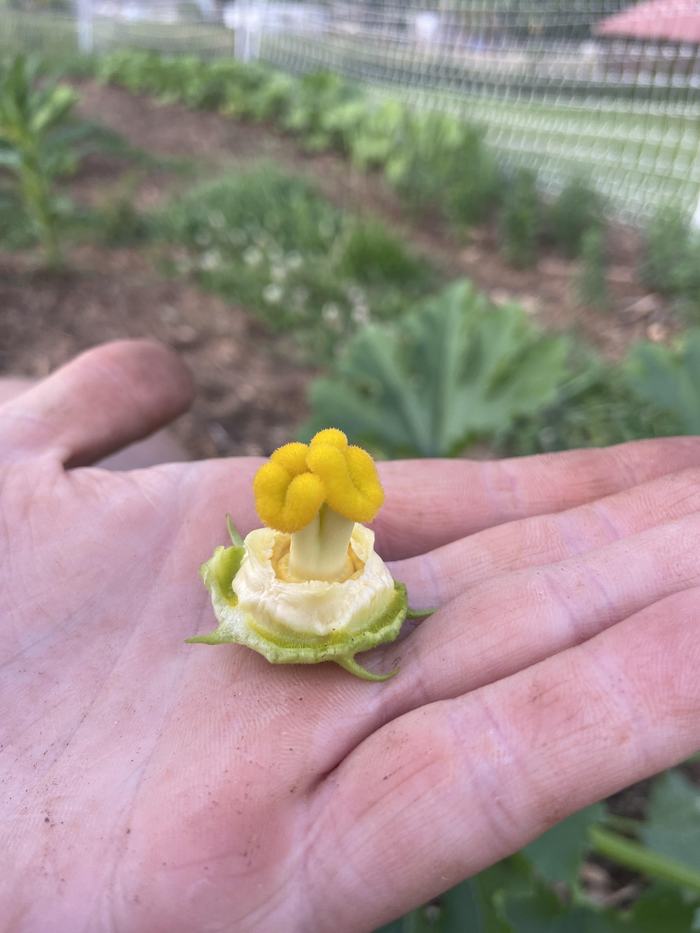
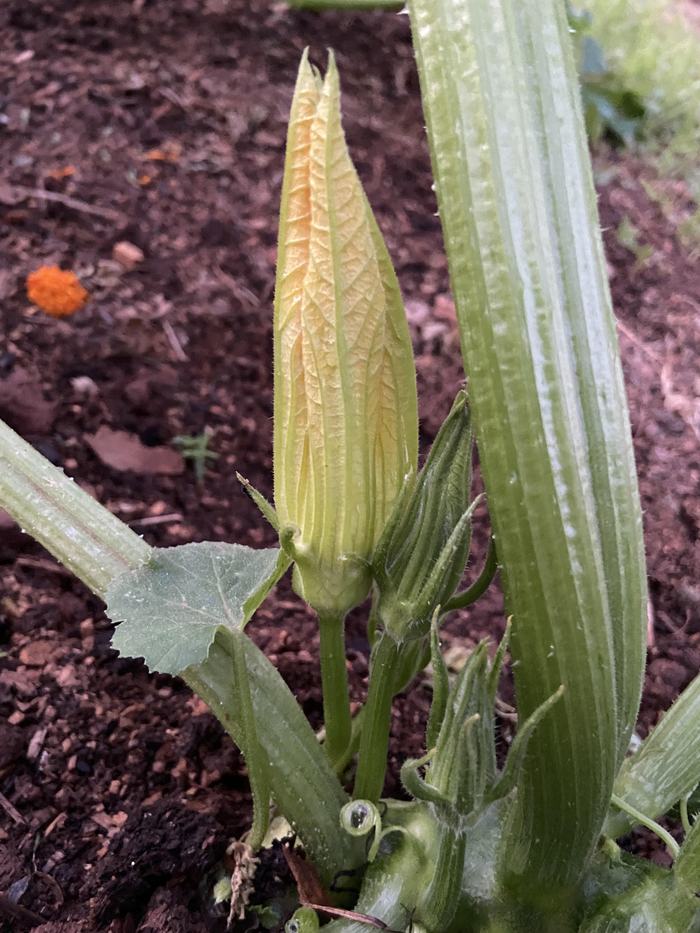
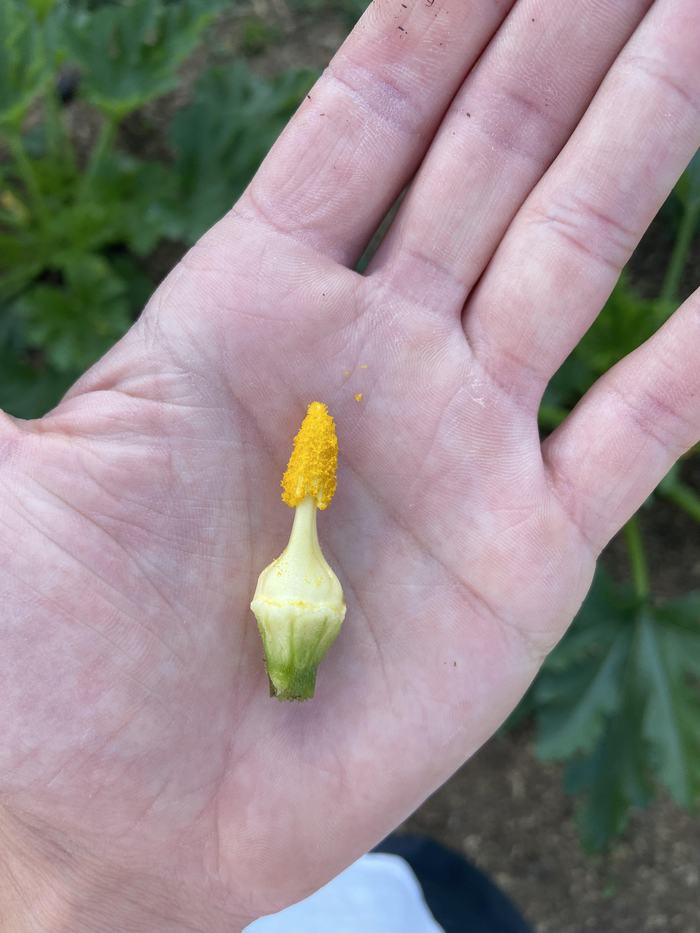
First, we need to understand the anatomy of squash flowers. These plants are monoecious, each plant has male and female parts on separate flowers. Meaning that a pollinator such as the native squash bee (Peponapis sp.) must go from the male flower to the female to achieve pollination. This is why cross-pollination is such a high concern. The female flower has an inferior ovary, which looks like a small squash positioned just behind the flower (figure 1). The pistil is located just inside the petals, the stigma tissue is visible and looks like deep folds on the top (figure 2). Under that, there is a thick style leading to the inferior ovary. The male flower has no anterior ovary rather just petals subtending the stamen (figure 3). The stamen is composed of a filament and anther (figure 4). The anther is superficial to the filament. The filament is much thinner than that of the style also helping in sexing a flower.
Now that we know how to sex a squash flower, we can begin the process of hand pollination. This is the practice of humans taking the place of a pollinator and selecting individuals to cross. We can choose to keep the genetic lines pure and cross with the same variety. Yielding seeds that are true to type and will grow the same squash next year. We can also cross to separate varieties and make a hybrid. This is how all the F1 hybrids sold in box stores are produced. This will produce seeds that may be highly variable for many generations. Variations can lead to both good and bad genetic differences in each offspring.
Hand pollination of squash is simple and easy now that we know the anatomy of flowers, and why we hand pollinate. You will need a paintbrush and a male and female squash flower on two separate plants. Remove the pollen from the male flower with the paintbrush. The brush should have a powdery yellow dust on it, this is your pollen. Take the pollen and apply it to the stigma tissue of the female flower. Once the pollen has reached the stigma pollination has occurred. Now if you want to make sure that the seed does not get crossed, you must protect it from any other pollinators. You can cover it with a small breathable bag or tie the petals into a knot so no insects can enter. Leave the bag or tied petals until the flower begins to fade (1-3 days). Once the plant begins to die remove the squash which should be large and have tough skin.
Cut the ripe squash and remove the seeds much like you would pumpkin seeds. Give the seeds a rinse in a wire mesh collinear. Remove all the pulp from the seeds. Once the seeds are clean lay them in a single layer on parchment paper to dry. A light fan will speed the process and prevent the risk of mold growth. Keep the seeds out of direct light and occasionally stir the seeds. Leave for at least a week or until the seeds are dry and firm. Label the seed container with the variety and year the seeds were saved. The container should be airtight and keep as much light out as possible. Leave the seeds in a cool dark place for storage, for long-term storage squash seeds can be saved in a freezer.