Plants for Winter Interest

(Updated: Dec. 1, 2025, 9:06 a.m.)
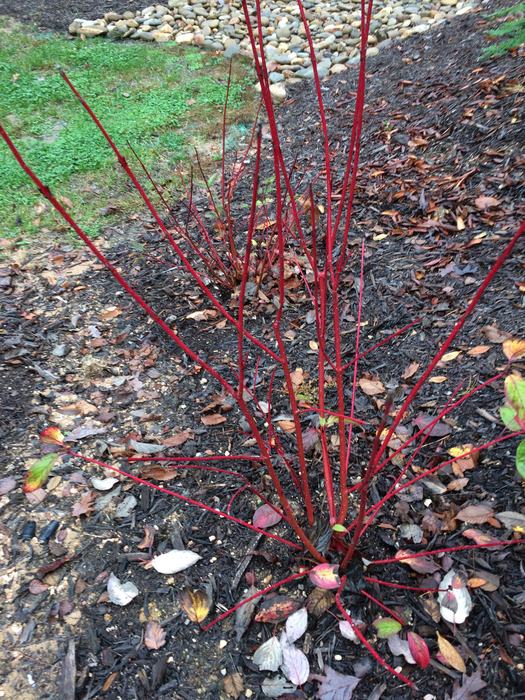
red twig dogwood
The red twig dogwood is a small multi-stemmed tree that has stunningly red bark in the winter time.

Plants with Winter Interest

Most people when they think of the garden, they picture it as it looks in the spring and summer. Few people realize that gardens can be exciting in the wintertime as well. There are many plants that have characteristics that are attractive even in the depths of winter.

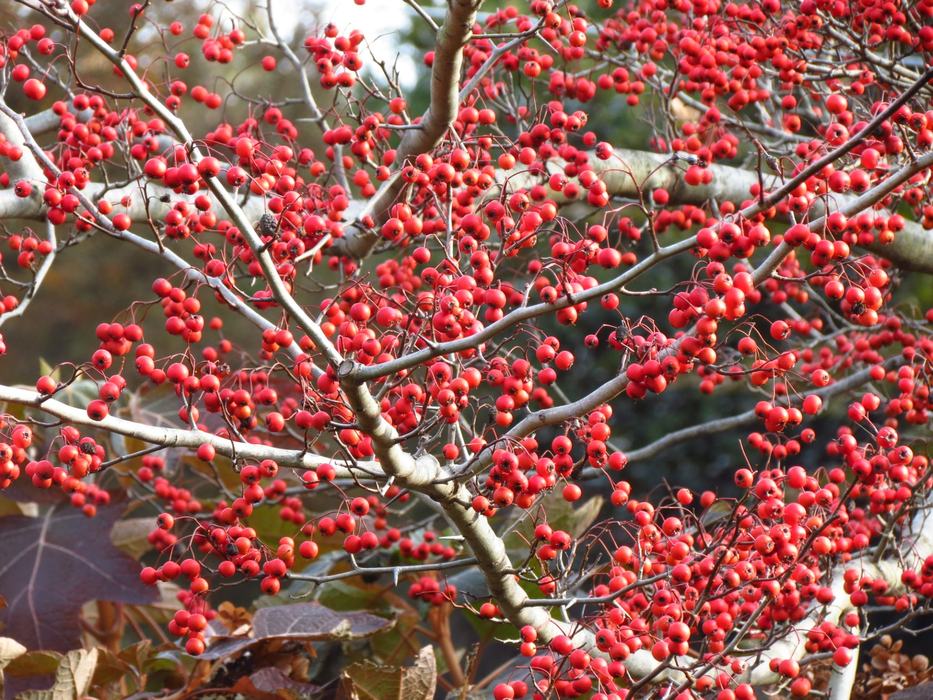
Plants with berries - winterberry (Ilex verticillata), American holly (Ilex opaca), American beautyberry (Calicarpa americana), American Cranberry (Viburnum trilobum), Japanese skimmia (Skimmia japonica), crab apple (Malus floribunda), Chokeberry (Aronia sp.), cranberry (Vaccinum macrocarpon), native euonymous (Euonymous americanus), sumac (Rhus glabra)

winterberry
The winterberry deciduous holly is showy all winter long. Eventually the birds will eat the berries.
Plants with winter seeds - river oats (Chasmanthium latifolium), Pink muhly grass (Muhlenbergia capillaris), Switchgrass (Panicum virgatum), coneflower (Echinacea sp.), Joe Pye weed (Eutrochium purpureum), upright sedum (Hylotelephium spectabile 'Autumn Joy'), yarrow (Achillea sp.), bee balm (Monarda sp.), and rattlesnake master (Eryngium yuccifolium)

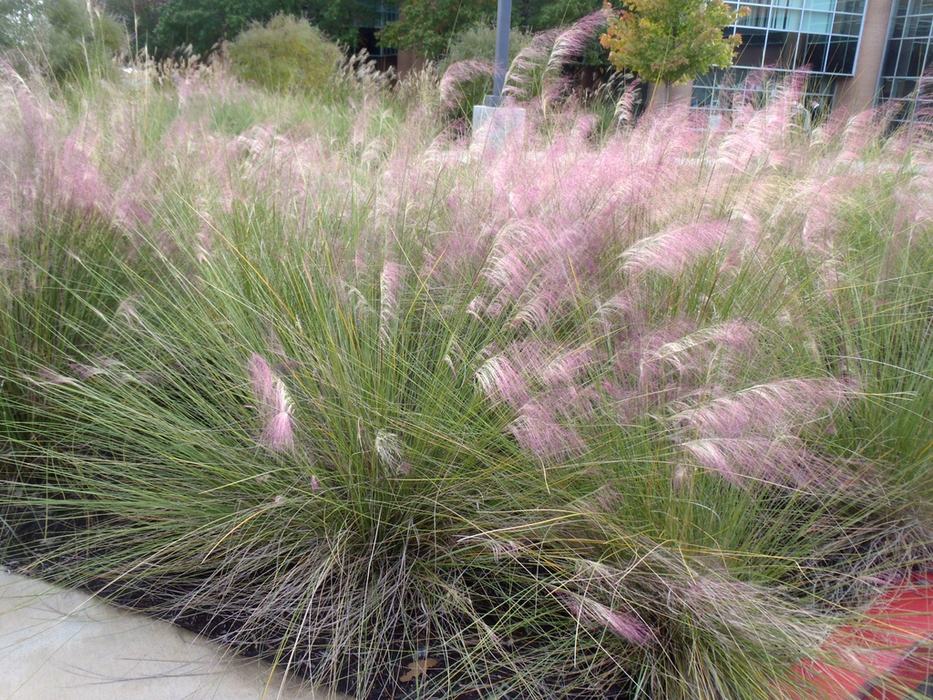
pink muhly grass
Grasses such as pink muhly grass are showy all winter. They blow in the wind and add movement in the garden.

Winter bloomers - witch hazel (Hamamelis virginiana), Paper bush (Edgeworthia chrysantha), camellia (Camellia sasanqua), winter jasmine (Jasminum nudiflorum), hellebore (Helleborus sp.), franklinia (Franklinia alatamaha)

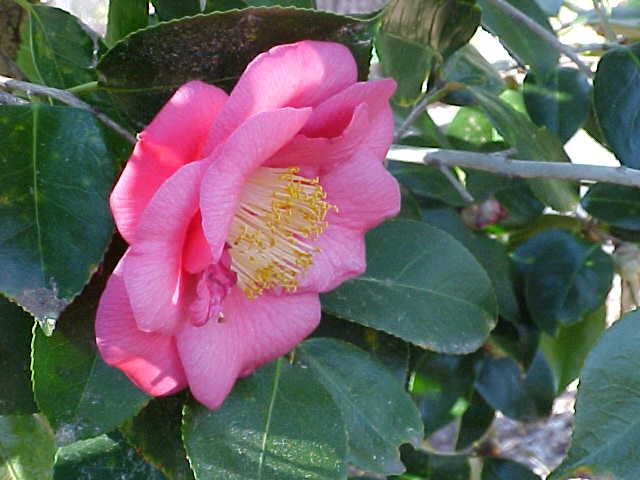
Camellias flower throughout the winter.

Structural interest - Japanese maple (Acer palmatum), harry lauder walking stick (Corylus avellana), corkscrew willow (Salix babylonica f. tortuosa)

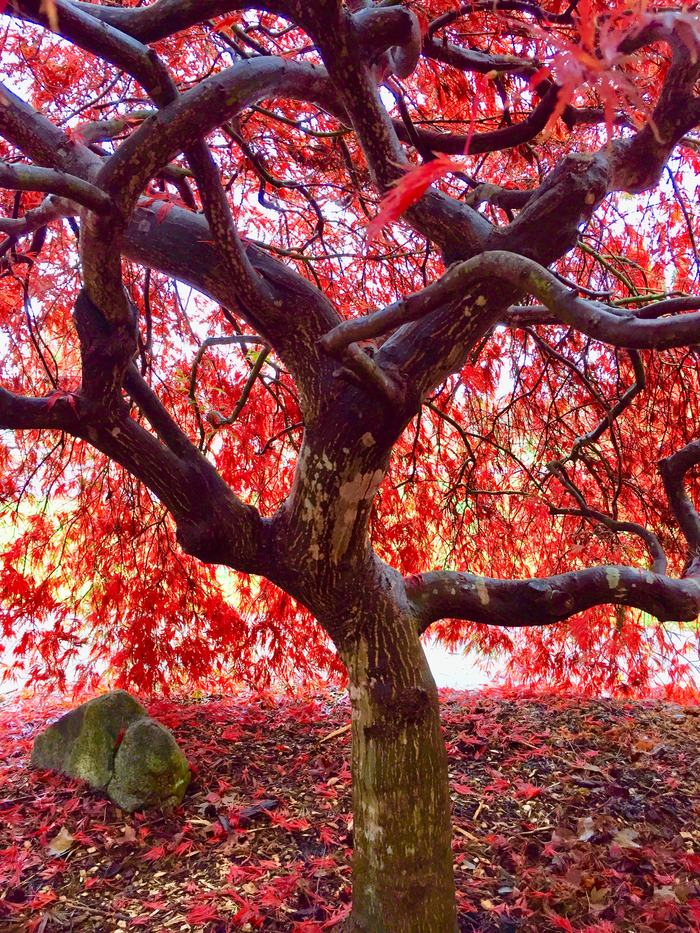
Japanese maple trunk and stems.
Japanese maple trunk and stems are very beautifully shaped.

Interesting bark - paperbark maple (Acer griseum), river birch (Betula nigra), coral bark maple (Acer palmatum 'Sangokaku'), Korean dogwood (Cornus kousa), Japanese stewartia (Stewartia pseudocamellia), red twig dogwood (Cornus sericea), yellow twig dogwood (Cornus sericea 'Flaviramea') ninebark (Physocarpus opulifolius), Cletrha (Clethra alnifolia), cornelian cherry dogwood (Cornus mas), sycamore (Platanus occidentalis), lacebark pine (Pinus bungeana), lacebark elm (Ulmus parvifolia), zelkova (Zelkova serrata), crape myrtle (Lagerstroemia indica), yellow birch (Betula alleghaniensis), redbud (Cercis canadensis), dawn redwood (Metasequoia gliptostroboides), baldcypress (Taxodium distichum), silky dogwood (Cornus amomum), American beech (Fagus gradifolia)

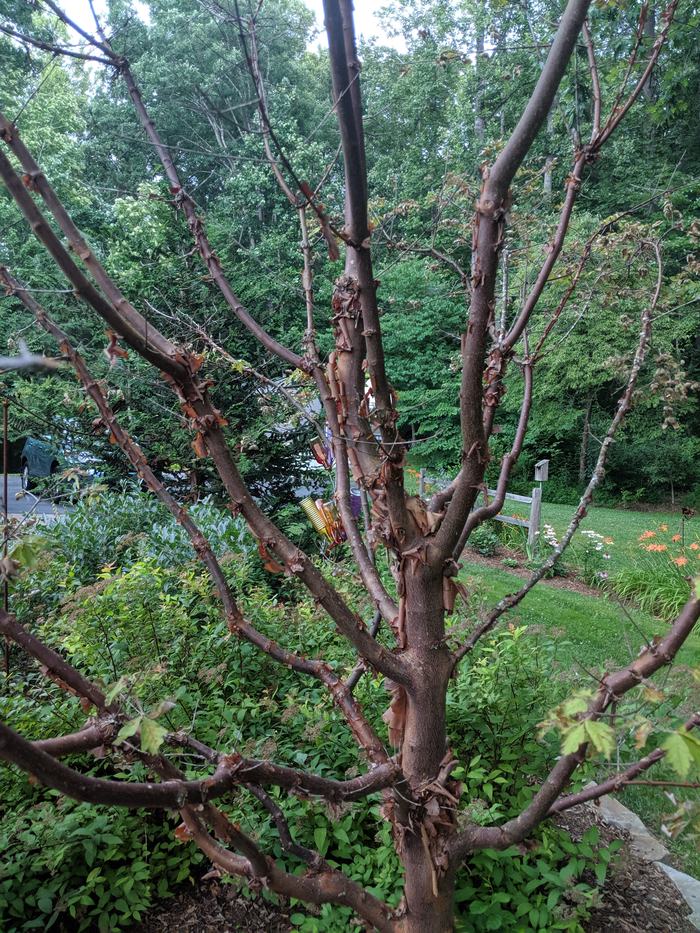
paperbark maple
Paperbark maples have exfoliating bark.

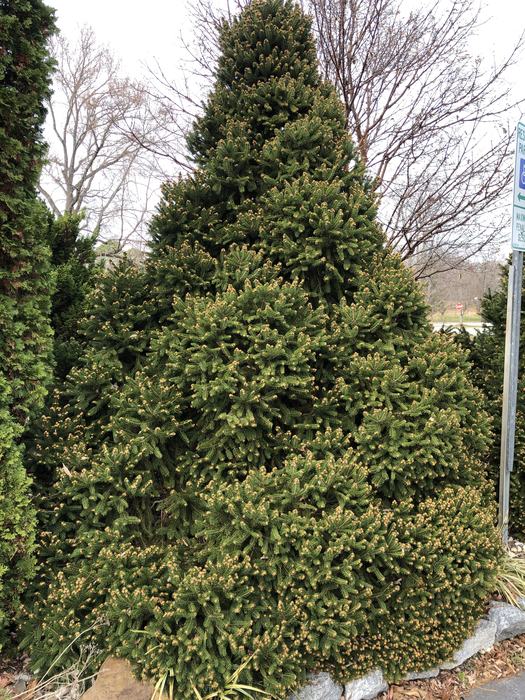
Evergreen plants - conifers such as arborvitae (Arborvitae sp.), hemlock (Hemlock canadensis), Norway spruce (Picea abies), Fat Albert Spruce (Picea pungens 'Fat Albert'), Mugo pine (Pinus mugo), 'Gold Mop' Chamaecyparis (Chamaecyparis pisifera 'Golden Mop' ), lacebark pine (Pinus bungeana)

spruce
'Fat Albert' spruce is a great conifer is sited in full sun with plenty of air flow.
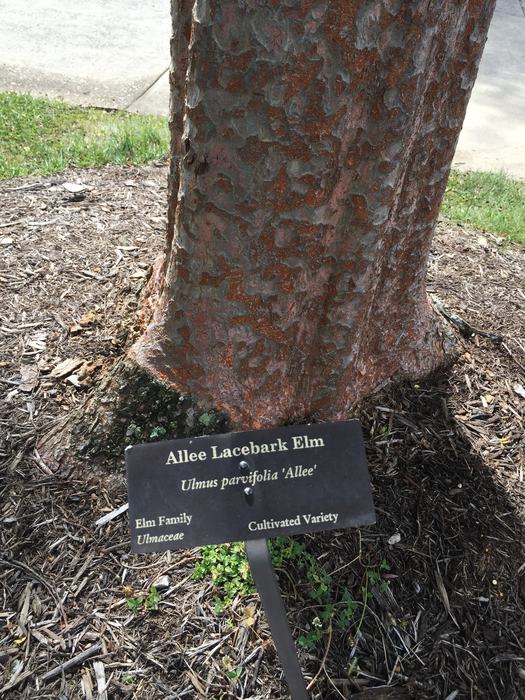
lacebark elm bark
lacebark elm bark