Conifers are plants that have needles and cones instead of leaves. Conifers need special care and take extra effort to grow. A gardener must improve the soil before planting, provide adequate irrigation during dry periods and make sure the plants get plenty of sunlight. Junipers have a reputation as a tough plants but they are not immune to poor planting practices and neglect.
Plant Health Alert - Juniper Issues
(Updated: Dec. 15, 2025, 10:36 a.m.)
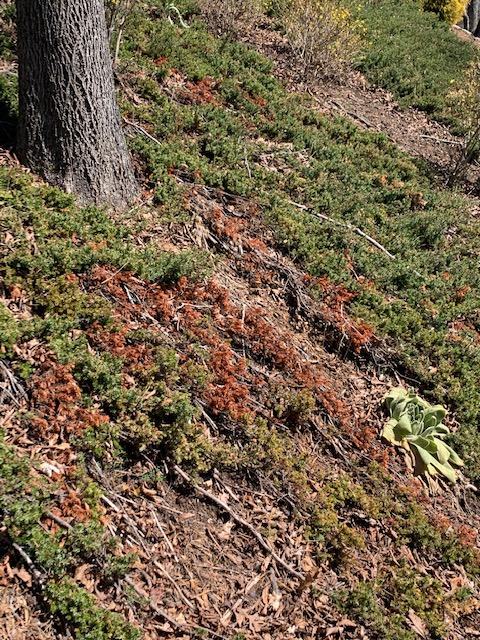
'Blue Rug' juniper and shore juniper are used extensively as ground cover plants. The plants grow relatively quickly as they trail along the ground providing soil stabilization on slopes. Junipers are generally plentiful in garden centers.
Juniper Problems
When someone sends me an image of struggling junipers or any plant for that matter, my first guess is people! Planting plants in the wrong area (too much shade), poor planting practices such as planting the plant too deep, over watering and excessive mulch all lead to plant health issues. Physical damage from human activities, chemical damage and many other human caused problems are more likely to be the cause of plant health issues than disease or insect pests.
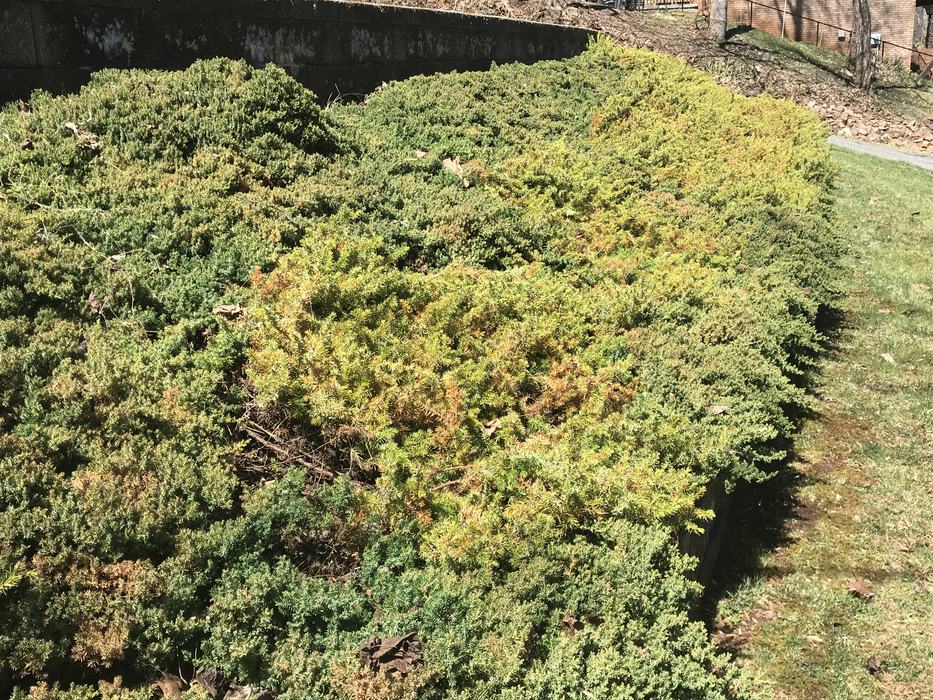
There are few diseases that can cause damage to junipers. Cercospora needle blight, phomopsis blight, cedar apple rust, root diseases or one of several other fungal diseases can cause juniper damage. Our area gets so much rain that leaf and root diseases caused by excessive moisture are common.
Poor Soil Conditions Sometimes soil issues may be causing poor plant health. Perform a soil test to quantify the condition of your soil. Then implement the recommendations on your report to improve your soil. Sometimes you will find that your soil isn't too bad. Maybe you just need a little fertilizer. I typically recommend a water soluble fertilizer via a hose-end sprayer as a quick fix.
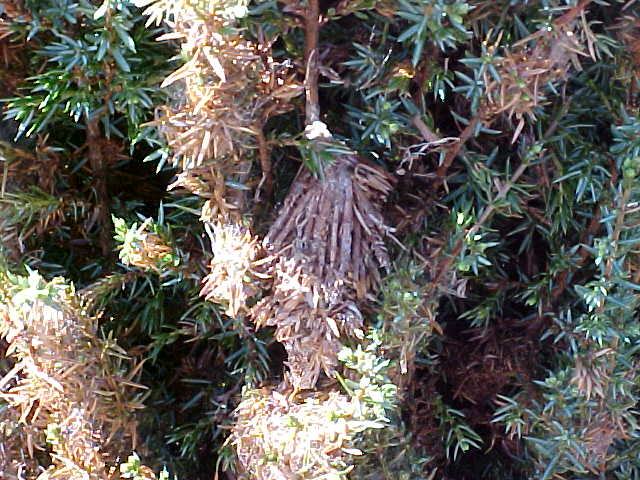
Insects and mites can cause juniper problems. Caterpillars, aphids, spider mites and other arthropods all cause juniper problems. Bagworms are a common insect problem of junipers.
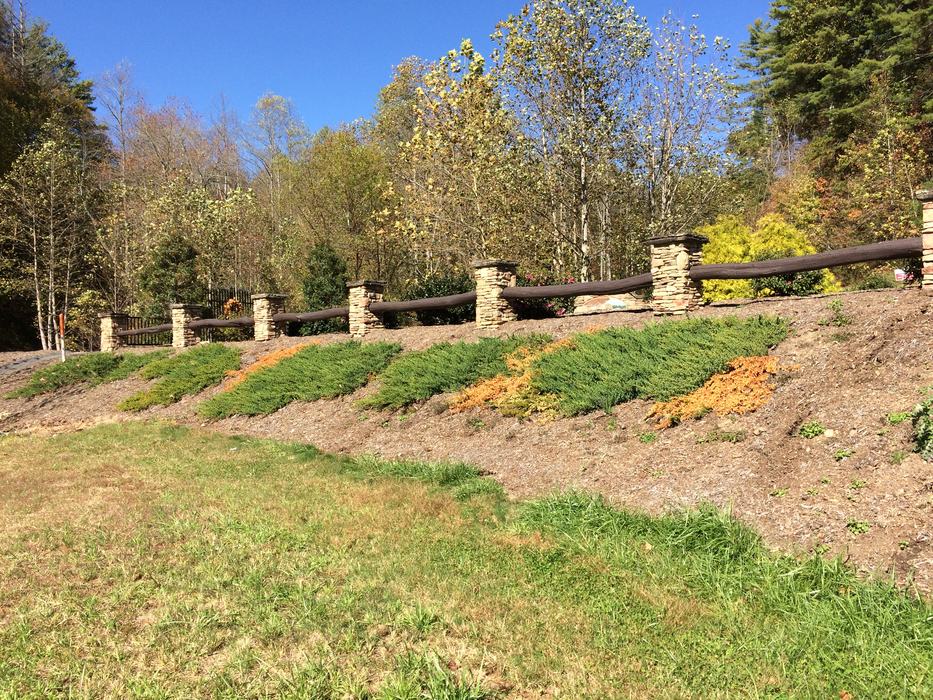
Voles are little mouse-sized beaver-like rodents that chew the roots and stems of plants. They have been observed in juniper plantings chewing the stems and killoing plants. Learn more about controlling voles.
Drought Junipers are often planted in dry sites so it is prudent to water the plants during periods of drought. Although we do get ample rain most months, we can have serious dry spells in the fall. Plants need an equivalent of on inch of rain per week during the growing season and into the fall.
Diagnosing plant health issues whether caused by humans or diseases/insects requires a trained eye. We have experts and the tools to diagnose plant diseases and insect infestation in our office. Concerned plant growers should bring me a sample of a limb that is partly alive and partly dead so I can look at it under a microscope and diagnose for diseases and insects. Or, they can bring in or email digital pictures.
Finally, remember that just like any other organism, plants get older and weaker and more susceptible to diseases over the years. The average lifespan for a landscape shrub is about 25 years. If your plant is really old it may just be time to remove it and replace it with a new plant. I would rather invest in the future than spend money nursing along an over-mature plant.
Join our mailing list!
Enter your email address to receive updates.
Written By

More About