Algae in Ponds
Ponds are wonderful landscape features to have on your property. These bodies of water add beauty and value. However, ponds can have issues.
Ponds can have many problems. Lawn care has become more intense over the years with more frequent mowing and applications of fertilizers. Too many nutrients entering the ponds from stormwater runoff carrying fertilizers or blowing grass trimmings or leaves into ponds can cause algal blooms.
Sometimes a pond can get too shallow over the decades of its existence though sedimentation allowing sunlight to reach the bottom and causing plants and algae to grow. Sometimes pond owners remove the natural plant growth around the edges of the pond allowing light to shine on the shallow water at the pond's edge which encourages algae. If a pond is too warm and too clear plant and algae growth can occur around the edges. Pond algae is worse these days with our warmer winters, older ponds that have gotten shallow, intense lawn care practices and resident waterfowl spreading algae and other weeds.
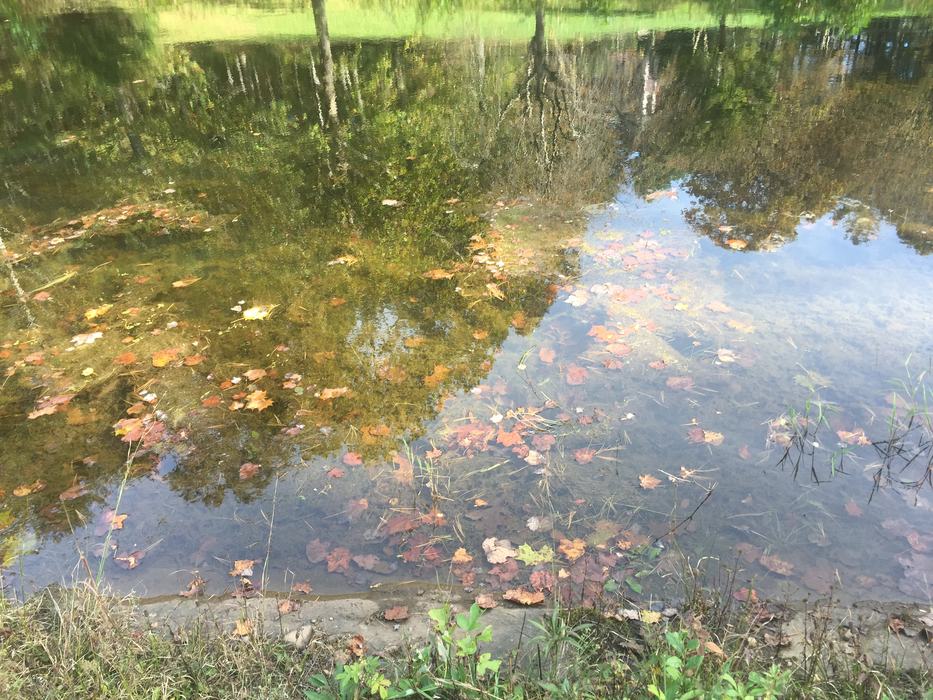
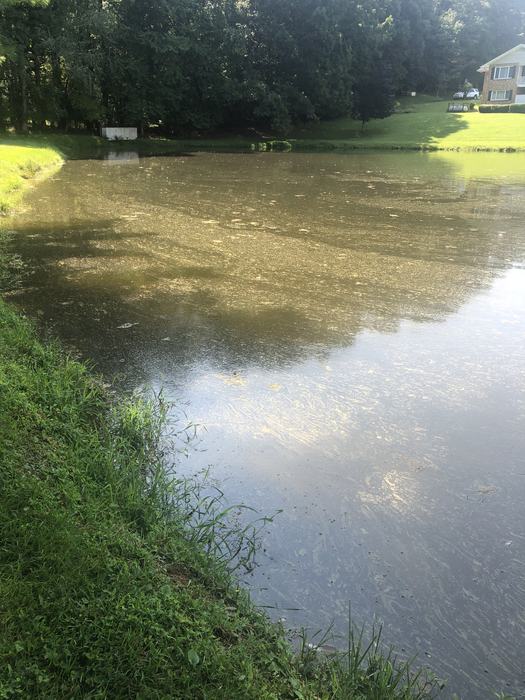
Healthy ponds should be deep and have steep banks under water. Ponds should also have a healthy murkiness. The healthy dark murky color of ponds is caused by a phytoplankton bloom. Mowing the edges of the pond increases weeds by allowing sunlight into the pond which feeds plants and heats water. Grass clippings that enter the water can provide nutrients which feeds pond algae and weeds. If your pond is too clear and too shallow around the edges, algae and plant growth can occur.
Phytoplankton are microscopic creatures that grow in nutrient rich water. Nutrients in water get diluted when we have rainy summers like the one from this last summer or if the pond source is an underground spring. Extremely clear ponds can grow weeds and algae.
If you have algae in your pond, you should try multiple approaches to get rid of it.