Pollination is simply the movement of pollen from one flower to another of the same species. Pollen contains the male genetic material of a plant. Plants are either pollinated by wind, water or through the actions of animals.
More than 75% of flowering plants depend on animal pollinators. In U.S., over 100 crop plants depend on animal pollinators. Most natural ecosystems would collapse without animal pollinators. Some plants are endangered because of diminished pollination.
Animals that are important pollinators include birds, bats and insects. However, the insects are the most important. Bees, butterflies, moths, flies, beetles, wasps and other insects do most pollination by far.
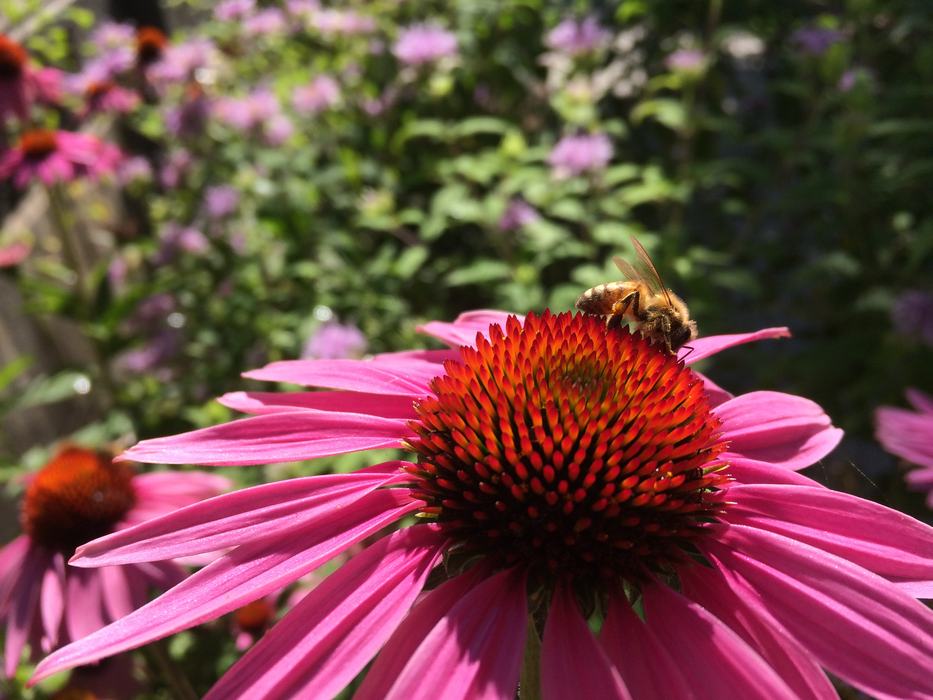
Honeybees are usually first insect people think of when asked to name a pollinator. Native to Europe, these livestock bees do valuable work pollinating fruit and vegetable crops and making honey. Our grocery stores would be sad places without them.
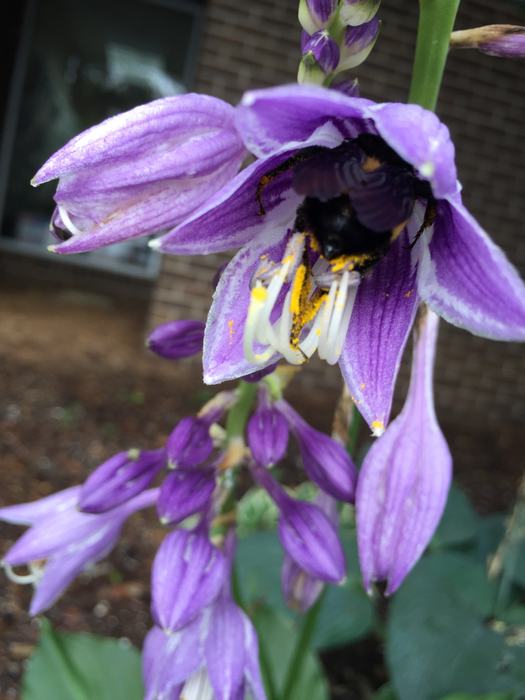
Native bees are those bees that evolved in our area. These insects co-evolved with native plants with some insect/plant associations being totally unique. There are over 4000 species of native bees in the US and over 500 species of native bees in North Carolina.
Native bees evolved to pollinate our native wild plants. Their work sustains native ecosystems by helping native plants reproduce. Native bees are vital to the survival of many plant species.
Bees sometimes sleep inside flowers.
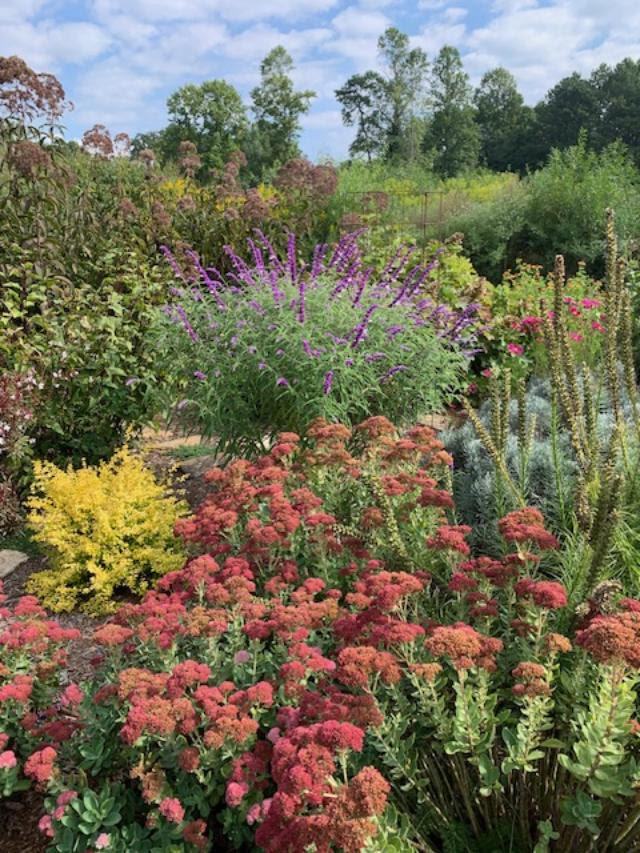
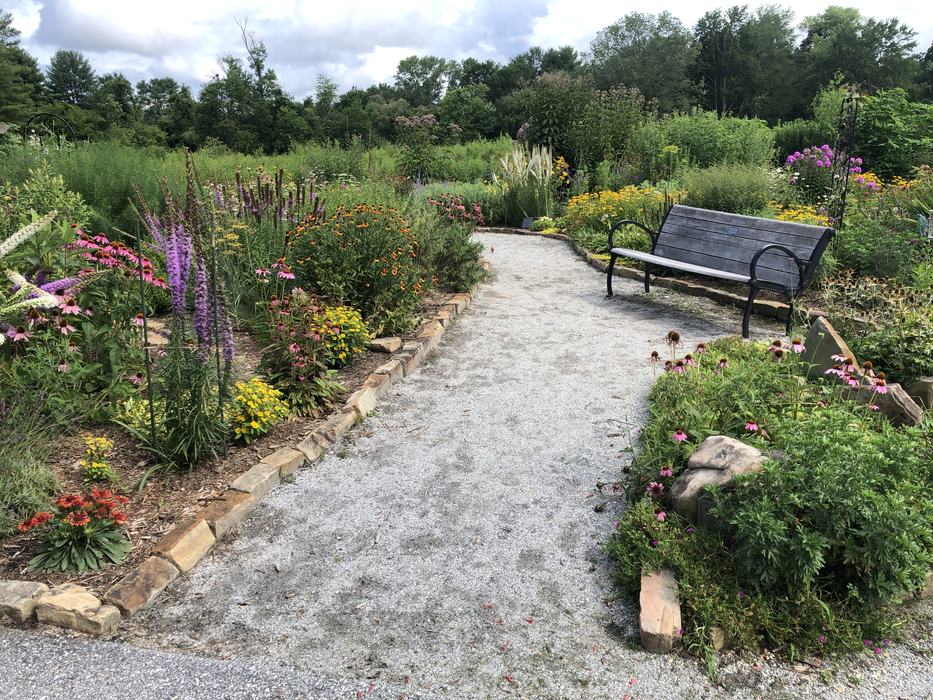
Clustered Mountain Mint Pycanthemum muticum (foreground) is tremendously attractive to pollinating insects. Multiple university studies have proven this plant to attract the broadest diversity of insects.
Native bees include:
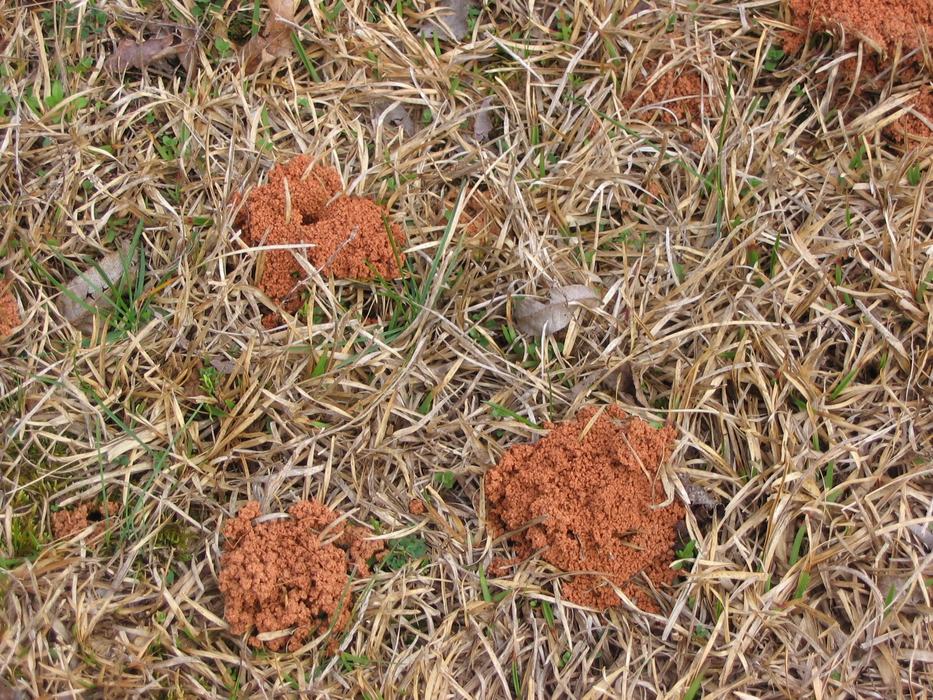
Ground nesting solitary bees such as mining bees, sweat bees and polyester bees.
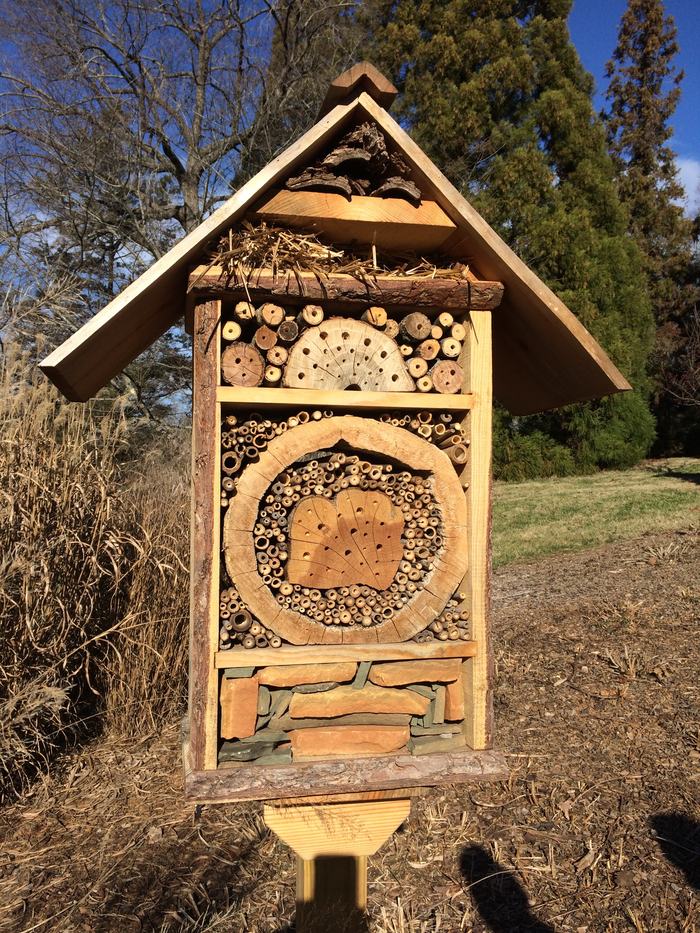
Wood and stem nesting solitary bees such as leafcutter bees, mason bees and carpenter bees
The only native bees that form social colonies are bumble bees.