Pest Alert - Spring Evergreen Tree and Shrub Leaf Drop
(Updated: May 5, 2026, 9:52 a.m.)
Evergreen plants do not need older leaves and will discard them if sacrificing them will provide nutrients to the more important new spring growth.
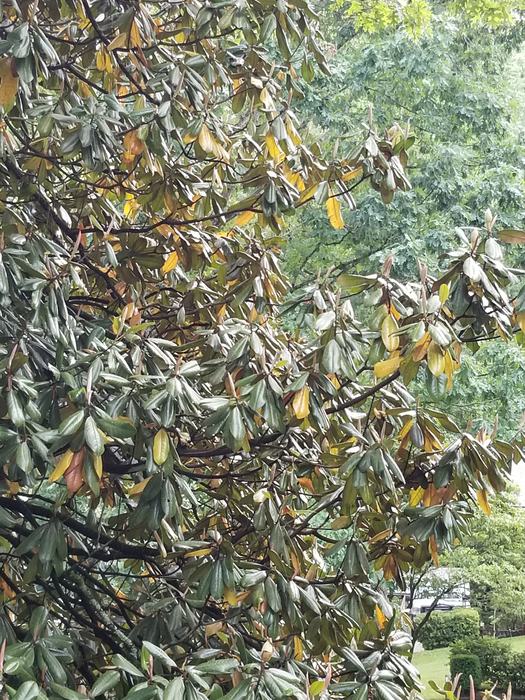
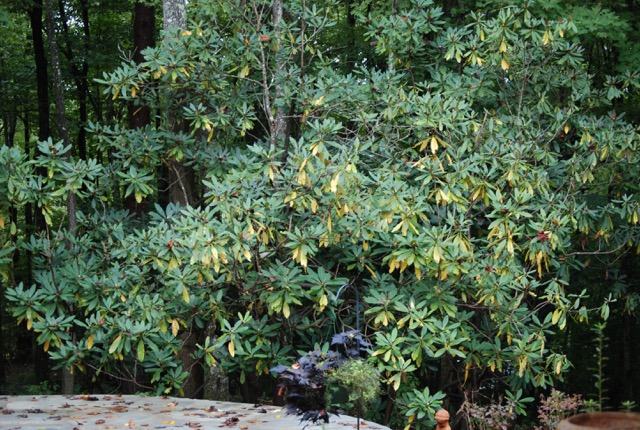
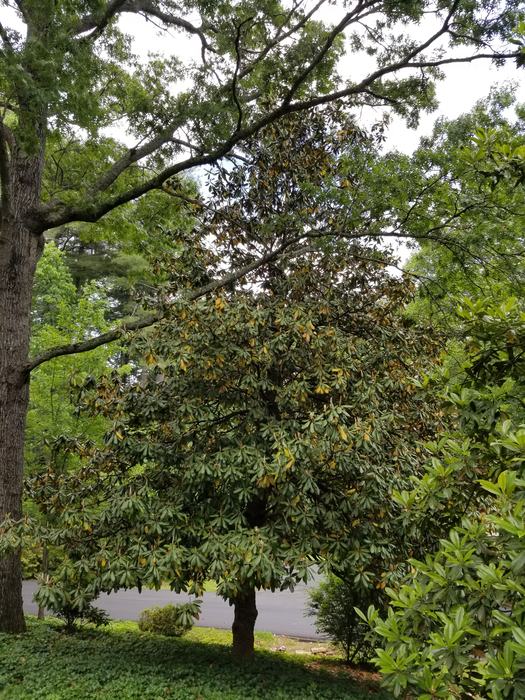
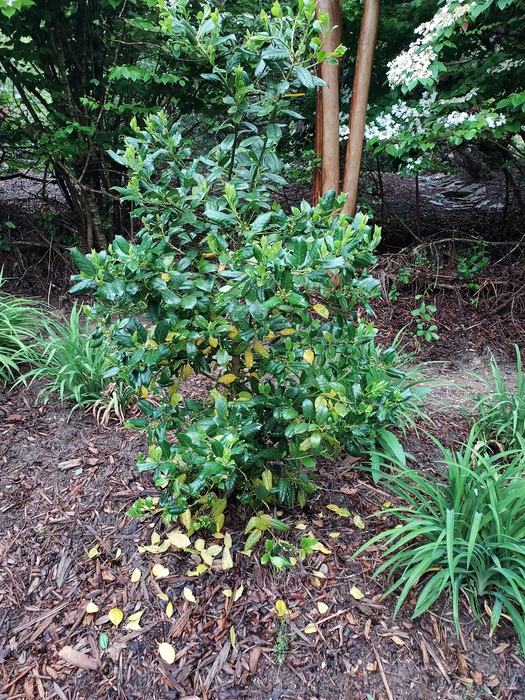
Each spring and fall I get questions about evergreen plants such as rhododendrons, magnolias, hollies, and other broadleaf evergreen plants dropping leaves. Home gardeners get concerned when they see their favorite rhododendron, magnolia, or holly losing leaves. The good news is that leaf drop is not uncommon in evergreen trees and shrubs. I call this phenomena ‘spring evergreen leaf drop’.
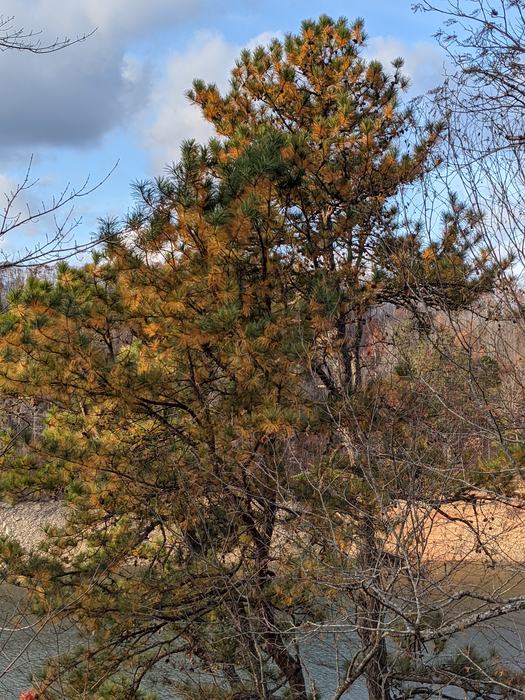
We all know that deciduous plants such as oak trees drop all of their leaves each year all at once. What people do not realize is that evergreen plants such as magnolias and hollies drop many of their leaves each year too. Generally, evergreen trees and shrubs drop their leaves a few at the time throughout the year. Sometimes though, evergreens such as magnolias will get stressed by environmental factors and dump many of their leaves all at once. To the avid gardener, this can be disconcerting.
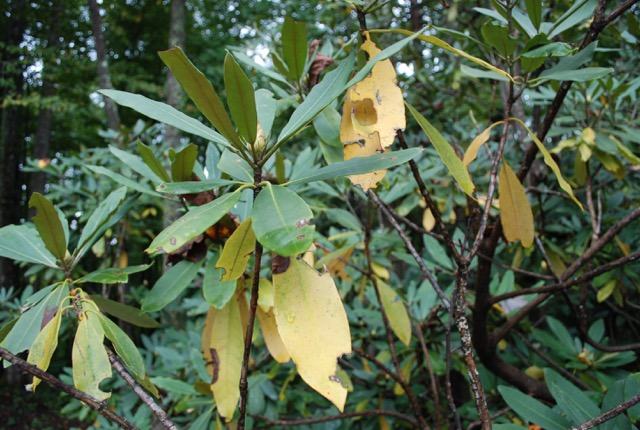
evergreen leaf drop rhododendron
So why do evergreen trees and shrubs sometimes drop copious amounts of leaves? Nitrogen is one of the most important nutrients in plants. It is particularly useful in producing new plant tissue growth such as leaves, flowers and even roots.
Nitrogen is mobile in plants. This means a plant can move nitrogen from one plant part to other more important parts. Plants prioritize new growth over older plant parts.
Older leaves are less important than new leaves. New leaves are more photosynthetically productive. New leaves are better at producing the 'food' needed for the plant to grow.
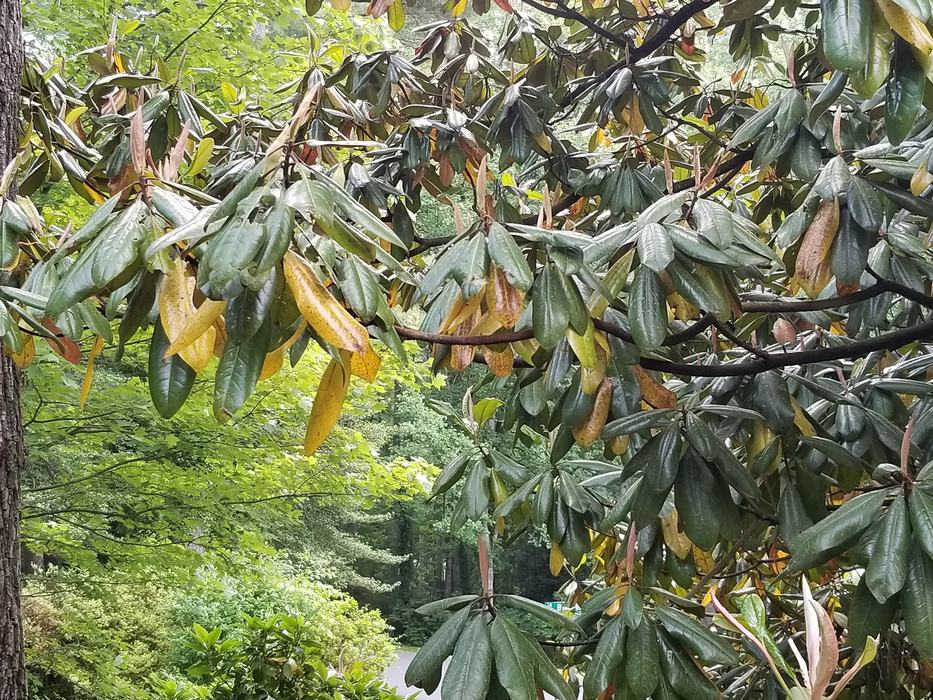
If a tree is low in nitrogen it will move nitrogen from the older unproductive leaves to the new leaves, flowers and roots. In the absence of adequate nutrients trees recycle nutrients in older leaves. These older leaves turn yellow and ad fall to the ground. Plants sacrifice their older unproductive leaves in favor of newer more productive leaves.
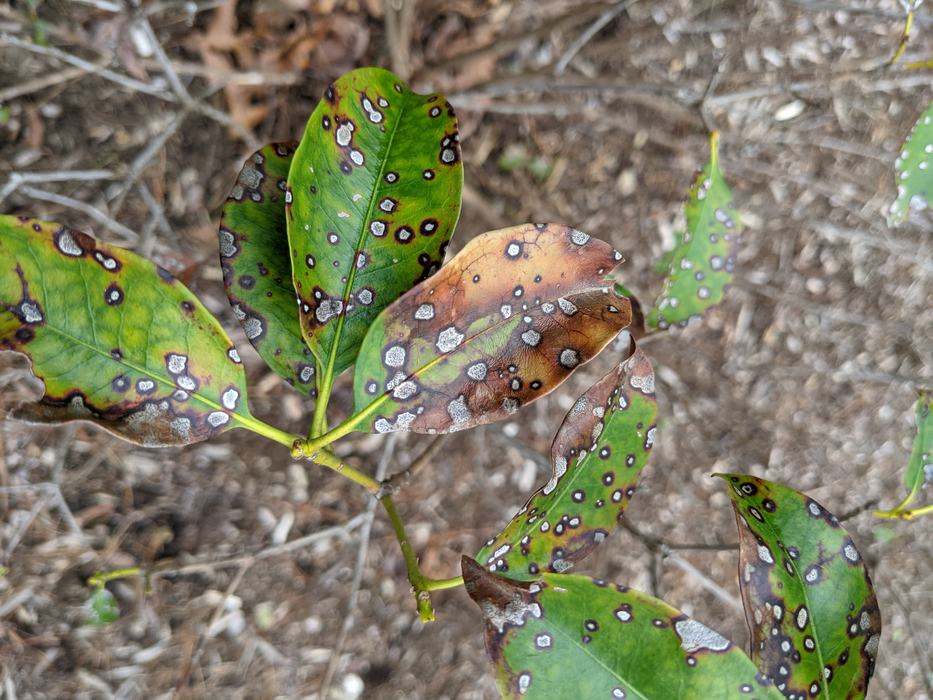
Sometimes spots will appear on the yellowing leaves from which plants are stealing nitrogen. Essentially these spotted leaves are being decomposed right on the plant by fungi. These spots could be mistaken as disease but they are not.
Why would a plant be deficient in nitrogen? One reason is that as a tree or shrub matures over years, it can deplete the soil of nutrients. Plants mine nutrients from the soil and turn them into plant tissues. If we remove leaves each fall which normally return nutrients to the soil as they decompose then we are withdrawing from the 'nutrient bank account' in the soil. If plants continue to remove more nutrients than are being added to the soil then the plant will exhibit nutrient deficiencies.
Another reason an evergreen plant may not have enough nutrients is that it does not have enough roots. If a tree was produced in a 'field grown' nursery then dug and shipped, most of the roots were removed. This plant will more leaves than the reduced root system can provide nutrients including nitrogen.
Drought or lack of water can lead to nutrient deficiencies as well. Nutrients enter plants via the soil. Roots absorb nutrient-ladened water. If there is no water in the soil, then plants cannot take up nutrients.
So what does 'spring evergreen leaf drop indicate? It indicates a lack of nitrogen. How do we fix a lack of nitrogen? First, leave your leaves! Leaves are made up of nutrients. As leaves decompose they return nutrients to the soil.
Next, we fertilize. For existing landscape plants it is recommended to use slow-release fertilizer annually at the rate recommended on the bag to give the tree a boost. For new plants, use a combination of slow release fertilizer and water soluble fertilizer.
A favorite evergreen plant suddenly dropping lots of leaves can be alarming. The good new is that if the tree or shrub in question has healthy new buds at the end of the branches then the plant can recover if nutrient deficiencies are corrected.
Sometimes leaves will begin to decompose right on the plant. This could be mistaken as disease.