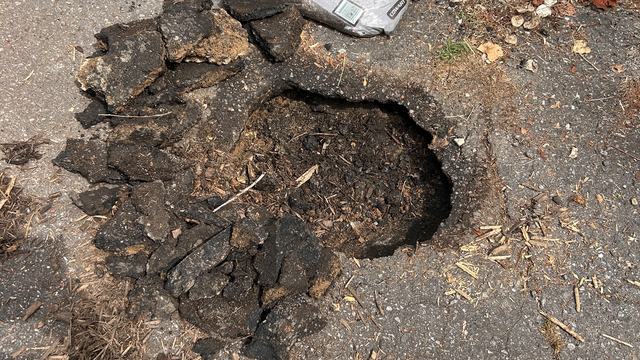
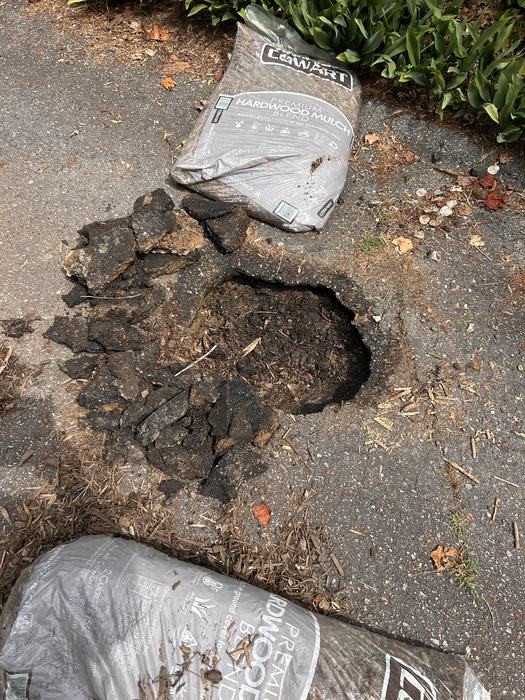
Sinkholes in the Landscape Most people probably envision sinkholes as being the ones seen in areas like Florida where cavernous holes appear suddenly and swallow homes. That is not what we see in landscapes locally. Generally, in the home landscape sinkholes are caused by soil subsidence from some past soil disturbance.
In the past, home builders and even farmers would bury construction debris, stumps and logs to dispose of them. Years later, this material can decompose creating an underground void that eventually leads to a sinkhole. Sinkholes in the landscape can also be caused by buried groundwater springs, old tree stumps, blown out storm water pipes, sewer pipes, etc.
Although they can be huge sometimes, a sinkhole doesn't have to be a giant hole in the ground. It can be a small area that subsides gradually over time. Landscape sinkholes can vary from twenty or more feet across to as small as two feet across.
Repairing Sinkholes If you find a sinkhole in your yard follow these simple steps to remediate the issue:
- Mark off the area with caution tape to keep someone from falling into the hole.
- The first thing to do is to call 811 or go to the CALL BEFORE YOU DIG WEBSITE and have your utilities located and marked.
- Once utility locations are known and the sinkhole is not near an underground utility, you can use a long pole, rod or dowel to probe the extent of the hole.
- If the hole is small then excavate the loose soil and debris in the hole and fill it with compacting clay or fine granite chips. Use a dowel or some other item to compact the material.
- If the hole is extensive, you should avoid going near it for safety reasons. You may need to hire a contractor to dig out the hole, empty it of loose debris and then refill it with compactable soil. Often sinkholes have to be refilled multiple times because they will settle.
- Finally, you can plant grass or mulch over the area. It would probably be a good idea to wait for a couple of years to plant a tree or shrub or until you are sure the soil settling has ceased.