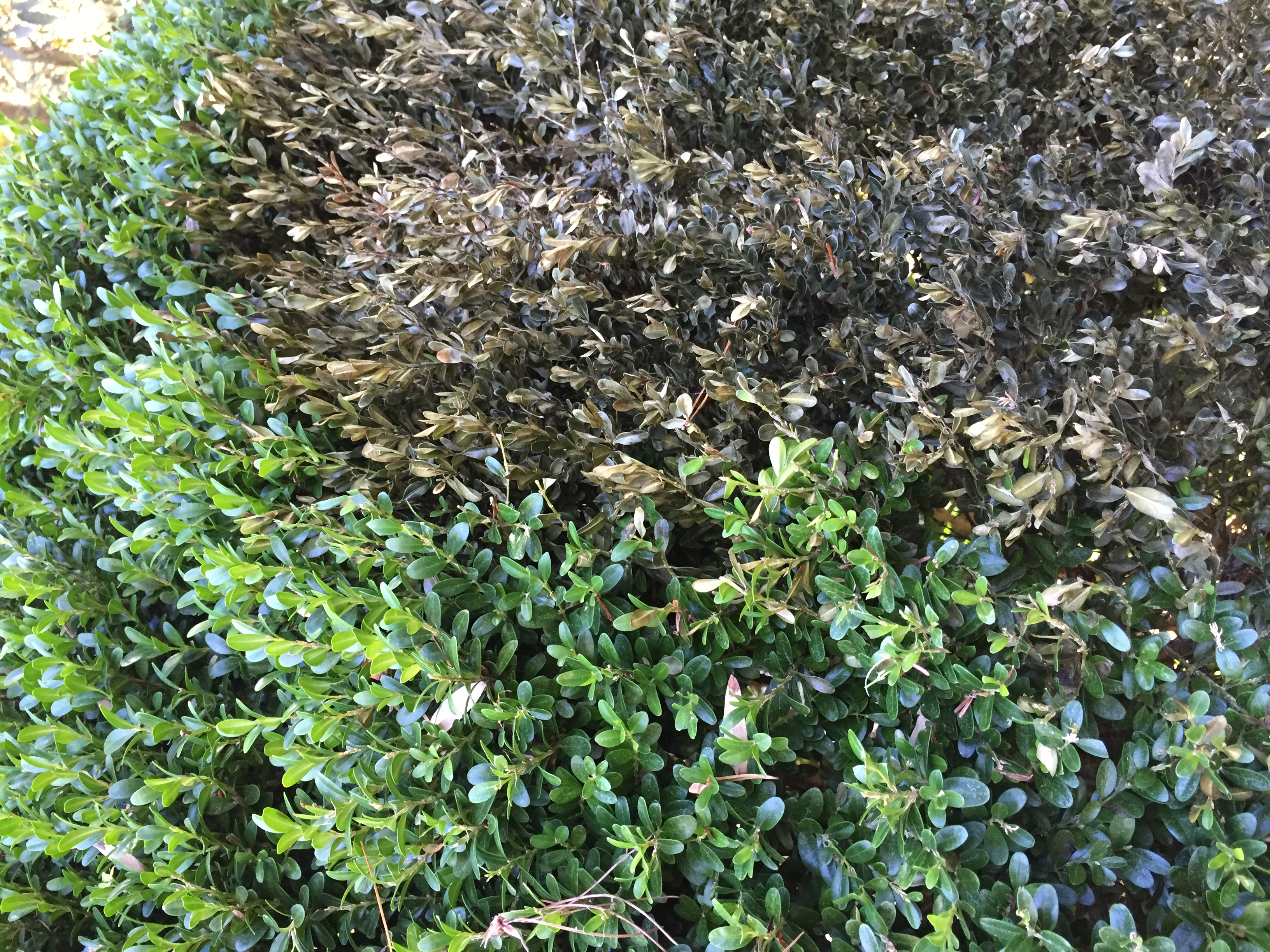
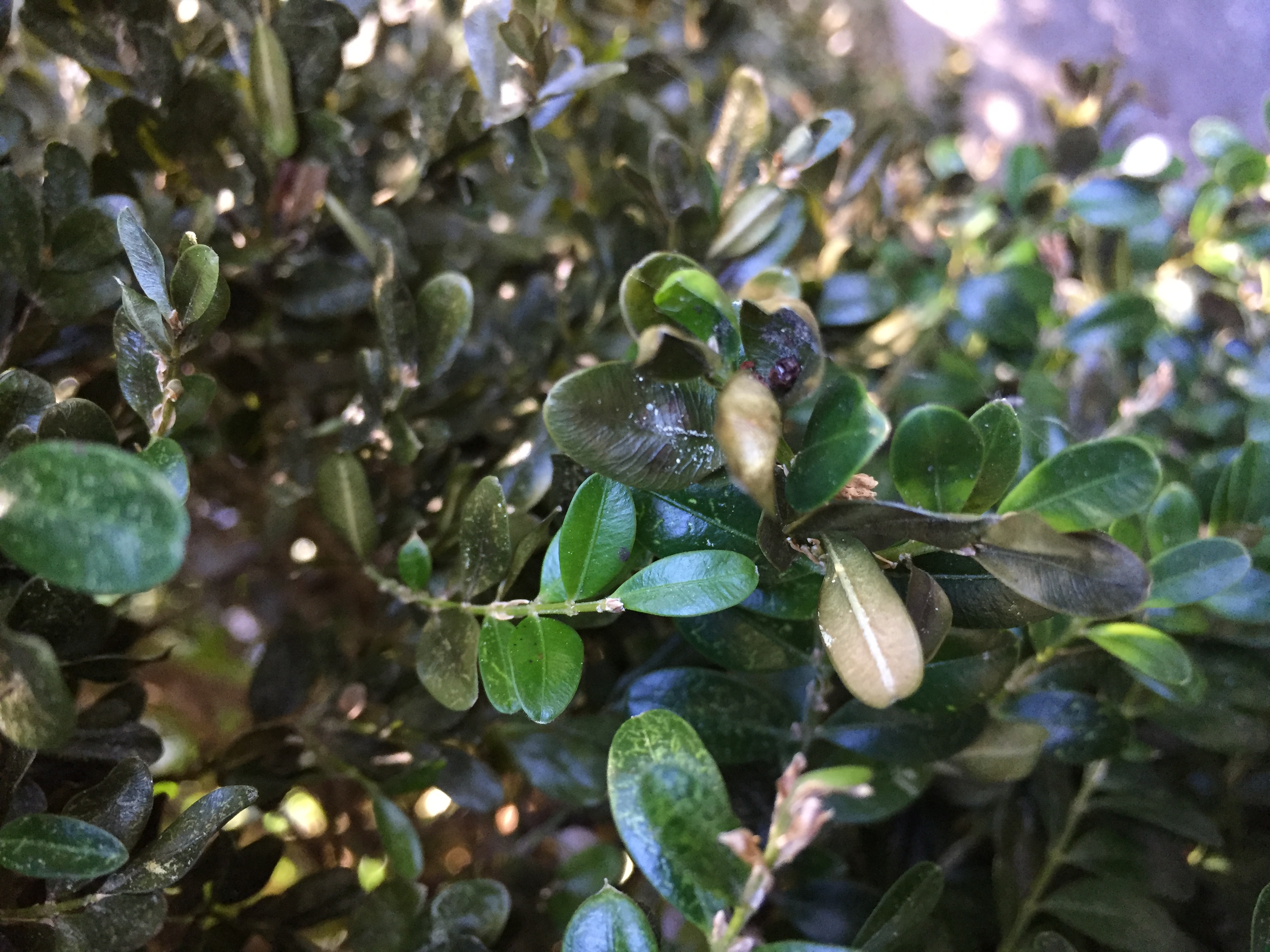
Boxwood blight is a fungal infection that kills boxwoods. The fungus is highly contagious, sticking to both people and animals. The disease is incurable.
Pest Alert - Boxwood Blight
(Updated: June 9, 2023, 9:27 a.m.)
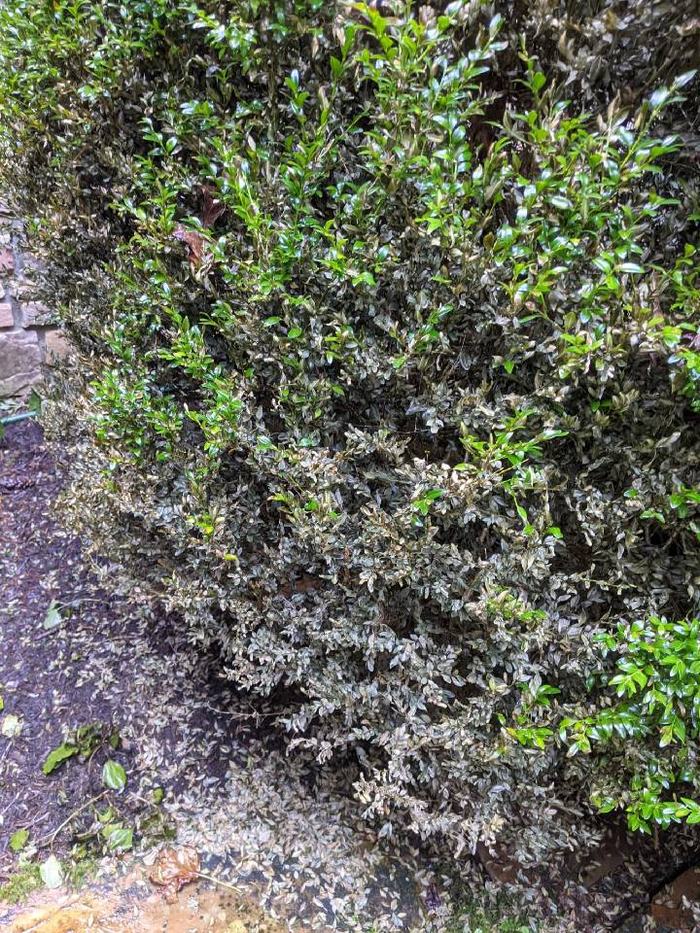
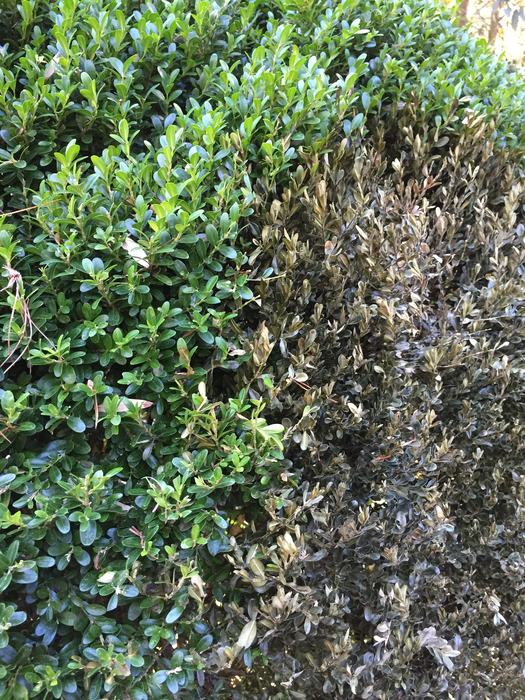
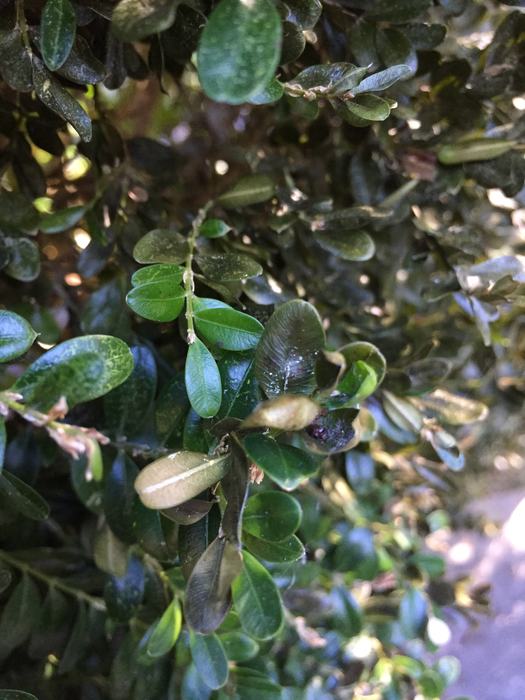
Here is an image of boxwood blight. In the image you can see black spots on the leaves. This is characteristic for BB. Nothing else makes black spots on boxwood leaves. You will note the heavy defoliation.
The BB disease spreads when it is warm and wet in the spring and summer. This fungus is exceptionally contagious. It has sticky spores that can be spread by people and animals. Home gardeners and landscape workers should be sterilizing tools between properties. Whenever you work around boxwood plants you could bring BB in from another site and then go on to spread it to other properties. BB should be treated like the plague.
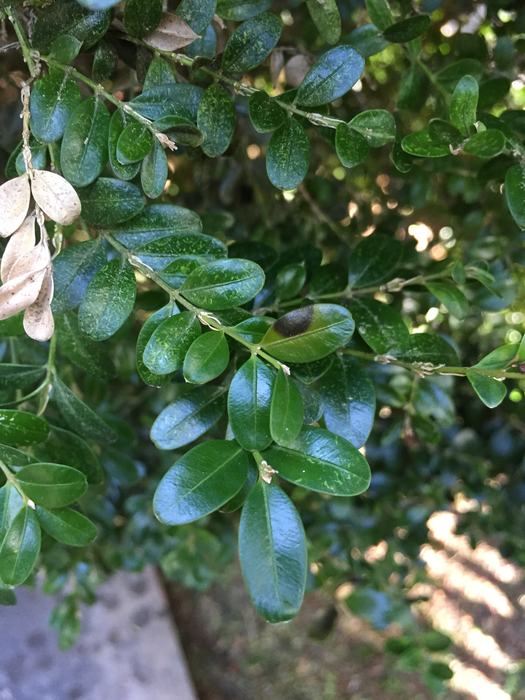
Chemical Treatments
Properly applied fungicides can protect boxwood plants from boxwood blight infection. However, chemicals do not cure plants with the disease. The goal of successful chemical applications is to prevent disease because mostly fungicides are preventative.
Apply fungicides when temperatures reach 60°F and rainfall is not expected. Apply fungicides every 7 to 14 days to protect susceptible boxwood, so basically every 2 weeks all summer and fall. That is at least ten sprays per growing season. The fungicides must be applied thoroughly as well. If the weather is exceptionally wet, then fungicides must be applied more often.
Effective products include a rotation of Armada, Subdue, Cleary's, and Propaconazole. Another rotation includes chlorothalonil or fludioxonil. You will need to apply fungicides every 7 to 14 days to protect susceptible boxwood.
Avoid introducing the boxwood blight fungus:
- Purchase boxwood plants from nurseries that participate in a boxwood blight compliance agreement.
- Quarantine plants by separating them from existing nursery stock. Do not spray new plants with fungicides for one month before installation to watch for any BB symptom development. Be sure to also include pachysandra and sweetbox in your scouting program.
- Do not prune boxwoods when they are wet to reduce the chance of spreading disease. Clean and disinfect pruning tools (used on an infected planting) with SA-20, Sanidate, Lysol, bleach, ethanol, or quaternary ammonia before moving to a new area.
- Collect and remove pruning clippings; do not compost infested debris.
- Avoid introducing new boxwood plants to landscapes that already have large, historically important boxwoods. Also, limit human contact with big, historic boxwoods.
- Once the disease is detected, sanitation is critical for management. Remove and bag any diseased plants and fallen leaves and dispose of them in municipal waste or bury them. Where permitted, burn infected plants.
Join our mailing list!
Enter your email address to receive updates.
Written By