Fall Planting Fescue Seed
(Updated: Aug. 26, 2025, 12:42 p.m.)

How Much Seed Do I Need?
A typical fescue seeding rate is 5 to 6 pounds of seed per 1000 square feet. Germination will normally be in 7 to 21 days with soil moisture and correct soil temperatures. Before seeding core aerification is recommended to reduce compacted areas. Getting good soil to seed contact is paramount to maximize available soil moisture. The core aerification holes will capture seed and hold moisture so the tall fescue seedlings. Often seedlings will come up as a tuft of turf from the aerification holes.Should I Fertilize New Seed?
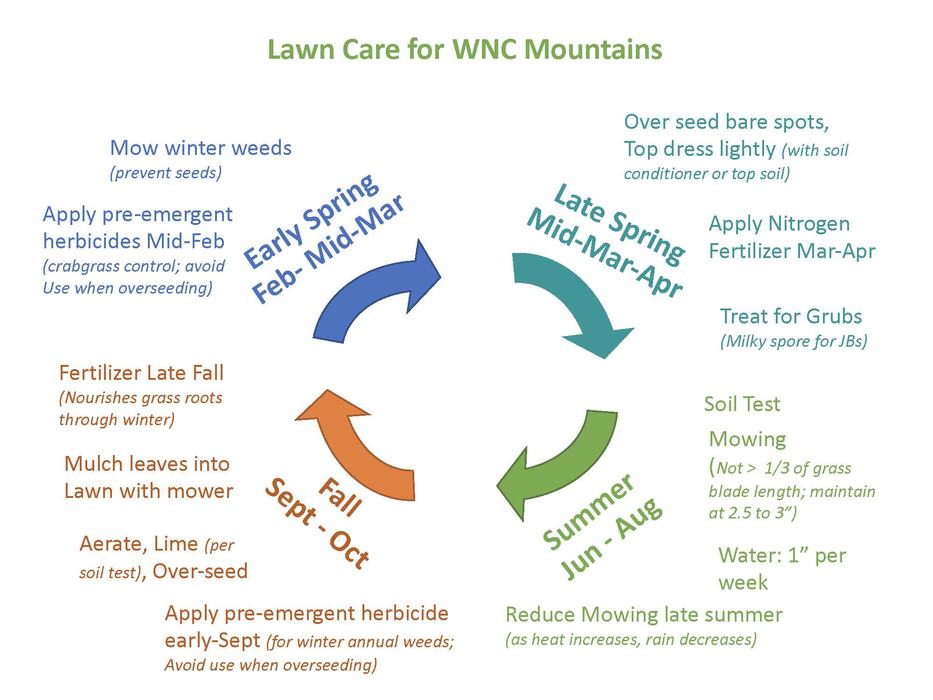
Follow normal tall fescue or Kentucky bluegrass fertilization practices as outlined in Carolina Lawns. The suggested yearly nitrogen application is about 1.0 pound of nitrogen fertilizer per 1000 square at seeding. You can split the application using some at planting and some the next spring.Perform a soil test every 5 years. Include phosphorus and potassium fertilizers if soil tests indicate there is a need. In the absence of a soil test, a 16-4-8 or similar N-P-K ratio fertilizer may be used this spring. Before additional fertilizer or lime is added, conduct a soil test.
*To apply 1 pound of nitrogen per 1,000 square feet: Divide 100 by the first number on the fertilizer bag to determine the amount of product to be used per 1,000 square feet. Example: Using a 16-4-8 fertilizer, 100 divided by 16 equals 6.25, therefore, 6.25 pounds of fertilizer per 1,000 square feet will deliver 1 pound of nitrogen.
How Much Water Will New Fescue Need?
If irrigation is available, set your controller within current water restrictions for your area. Irrigate early in the morning to reduce water loss due to evaporation. In the fall, one inch water per week of water (via rainfall or irrigation) is generally sufficient to meet the turf’s water needs.Can I use Herbicides on Newly Seeded lawns?
No. Since seeds and seedlings may be damaged by some herbicide applications, fall seeded cool-season grasses should not have any herbicides applied until it is mature.Proper Mowing Height
It is very important that tall fescue be maintained at the proper mowing height to allow it to mature before winter and to minimize weed incidence. Studies have shown that a 3½ mowing height provides the best growth condition while minimizing disease incidence and weed encroachment. A 3 to 3.5 inch mowing height is also a good height for tall fescue + Kentucky bluegrass.Join our mailing list!
Enter your email address to receive updates.
Written By