
Butterflies are one of the best things about summer! Butterflies have been of interest to scientists for hundreds of years but we still have not learned everything about them and new things remain to be discovered. For instance, scientists have wondered at overly large, strangely shaped swallowtails that are only found in the Appalachian mountains.
Appalachian Tiger Swallowtail Butterfly
(Updated: March 25, 2026, 3:17 p.m.)
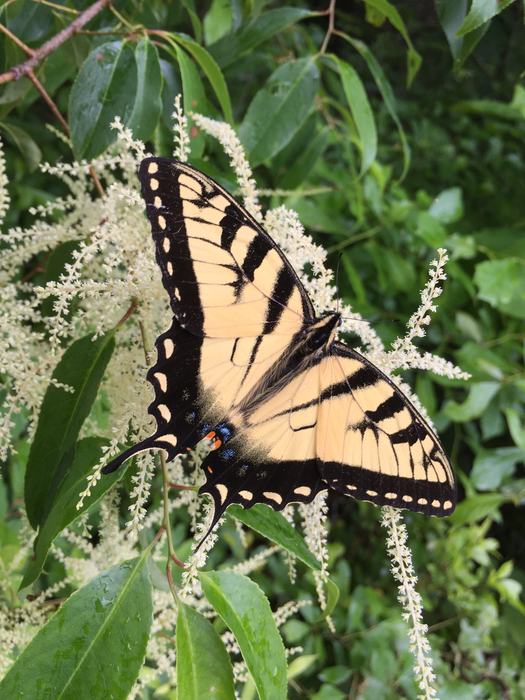
Eastern Tiger Swallowtail butterflies are smaller than Appalachian Swallowtails with less blue on the rear wing.
It turns out that here in Henderson County's Appalachian Mountains there is a unique tiger swallowtail butterfly species.
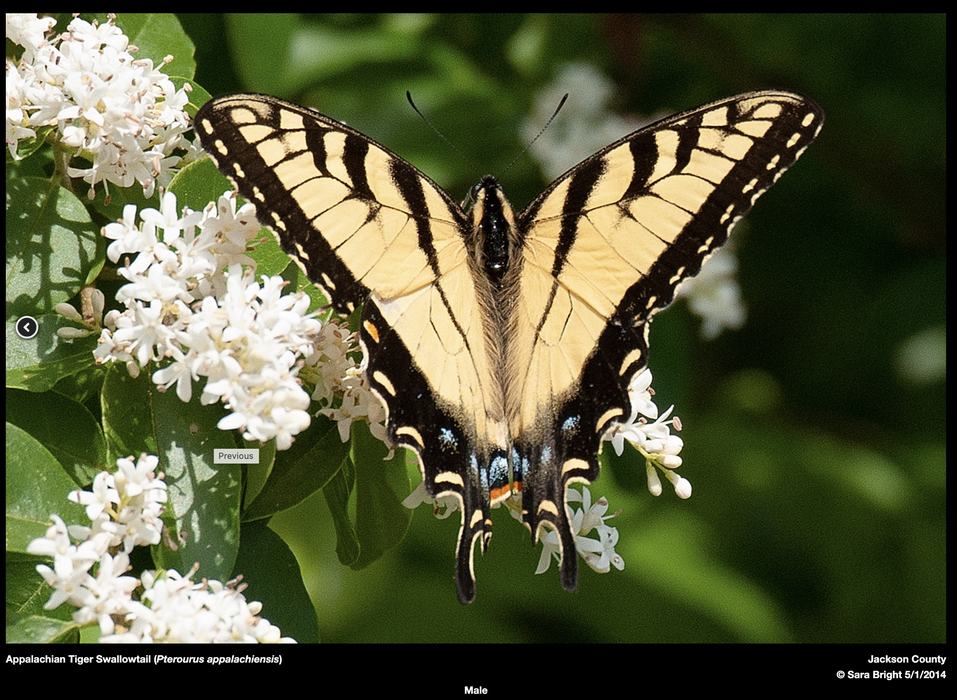
Appalachian Tiger Swallowtail butterflies are unique to the mountains. They are larger than their cousins the Eastern Tiger Swallow tail. Photo Credit
According to an article from the University of Texas at Austin, Scientists from the University of Texas at Austin and Harvard University discovered that, "the Appalachian tiger swallowtail, Papilio appalachiensis, evolved from mixing between the Eastern tiger swallowtail, P. glaucus, and the Canadian tiger swallowtail, P. canadensis. The Appalachian tiger swallowtail rarely reproduces with its parental species and is a unique mixture of the two in both its outward traits and inward genetic makeup."
Scientists have determined that "Eastern tiger swallowtails prefer warmer climates and lower elevations, and the females come in two different forms. They are either striped (yellow and black) or almost entirely black, the latter mimicking a poisonous butterfly called the Pipevine swallowtail, Battus philenor. Canadian tigers are only striped yellow and black, and found in cooler habitats at higher latitudes and elevations."
The article continues, "The Appalachian tiger exhibits a mix of those traits. It shares an affinity for cooler habitats with the Canadian tiger, while sharing the ability to mimic the black Pipevine swallowtail with the Eastern tiger."
The article concludes, "As for identifying the species in the wild, Appalachian tigers are twice the size of Canadian tigers...it’s a bit more difficult to distinguish the Eastern and Appalachian tigers. The Eastern tiger has more blue on the hind wing and a spotted yellow band on its fore wing underside compared with a solid broad band on the Appalachian tiger."
According to the Alabama Butterfly Atlas, the Appalachian Tiger Swallowtail has a "Wingspan: 3½ - 4½ inches (8.6 - 11.5 cm). Very similar to Eastern Tiger Swallowtail, but significantly larger than spring form Eastern Tigers. Hindwings appear elongated and the area of silvery-blue on the underside is much broader than on Eastern Tigers. Underside of forewings has a nearly continuous yellow submarginal band that is comprised of closely stacked rectangles; the band on Eastern Tigers contains separate yellow ovals. "Appy" females may be either predominantly yellow or predominantly dark. Both forms have much less iridescent blue on their upper surface hindwings than Eastern Tiger females."
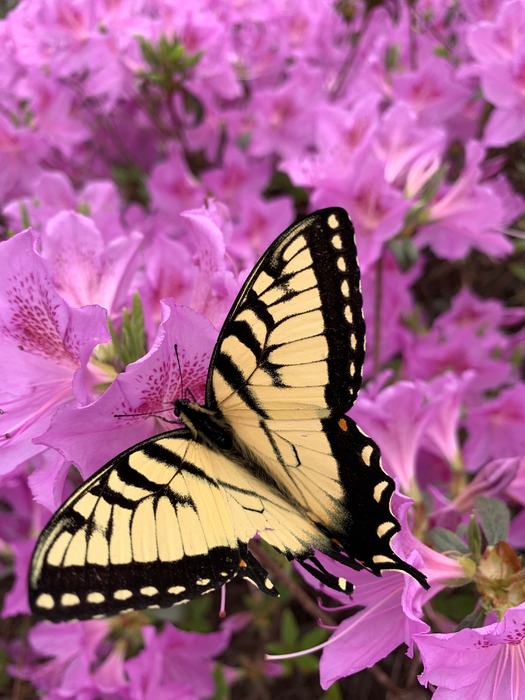
Eastern swallowtails are much smaller than Appalachian tigers and have little to no blue on their rear wings.
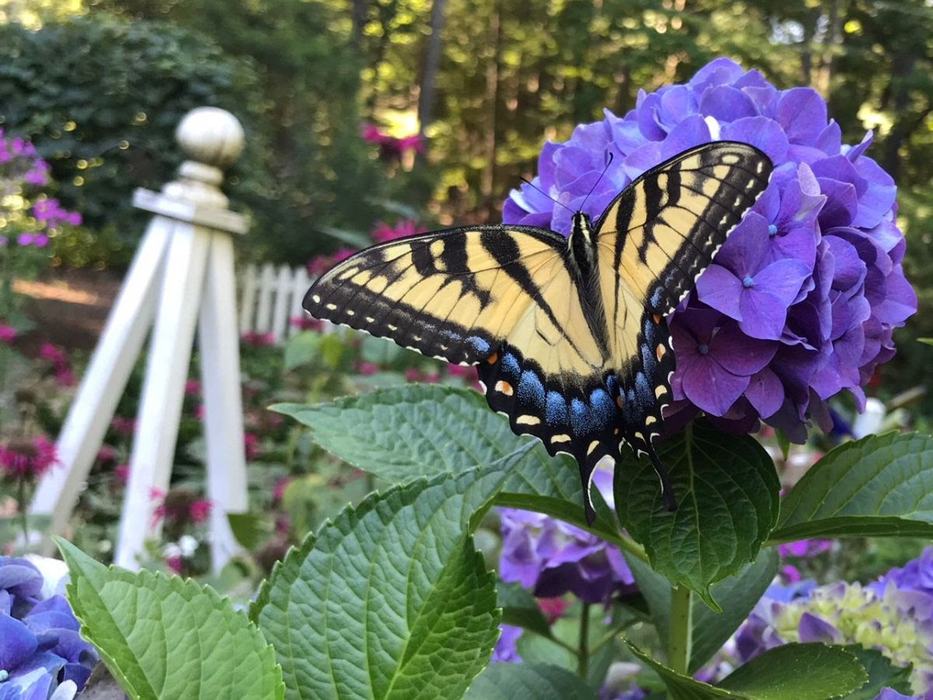
Appalachian tiger swallowtails are much larger and have more blue on their rear wings than eastern tigers.
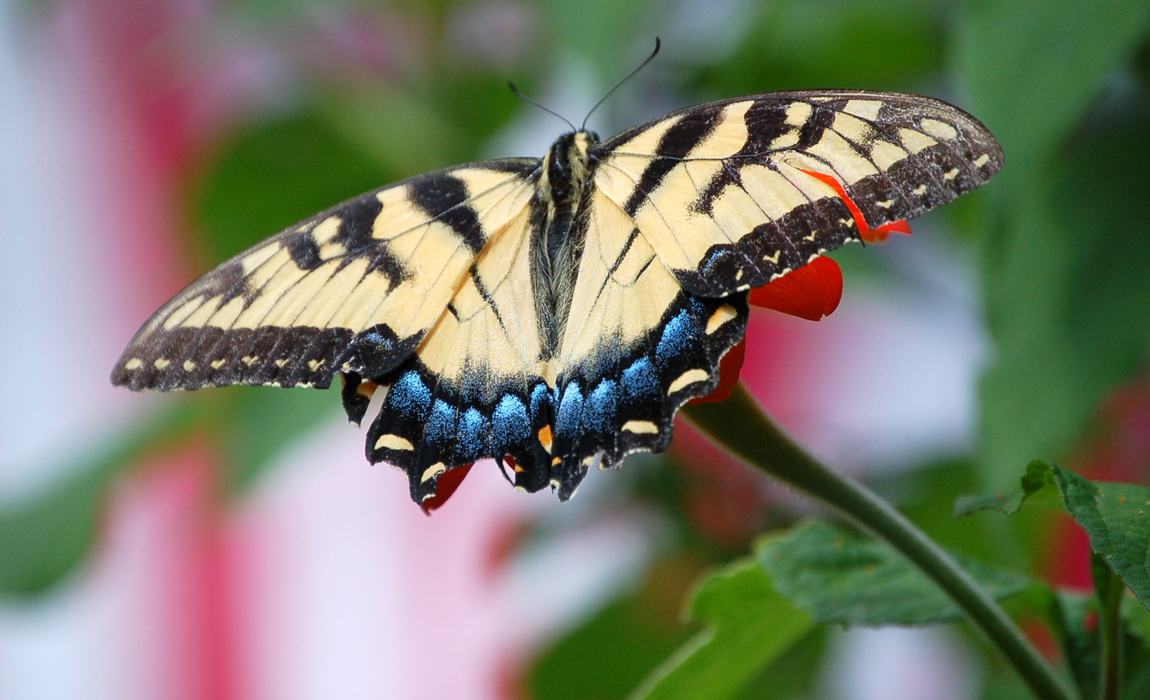
Appalachian Swallowtail butterfly yellow morph. Notice the large amount of blue on the rear wings. Photo by Mickey French.
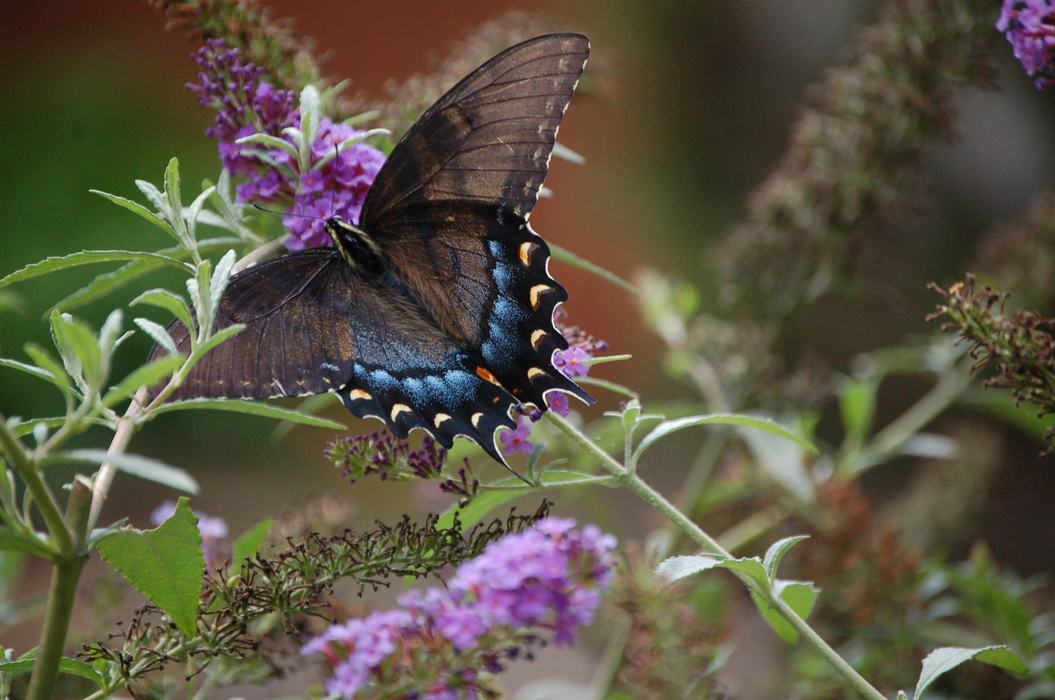
Appalachian Swallowtail butterfly black morph. Notice the large amount of blue on the rear wings. Photo by Mickey French.
Join our mailing list!
Enter your email address to receive updates.
Written By