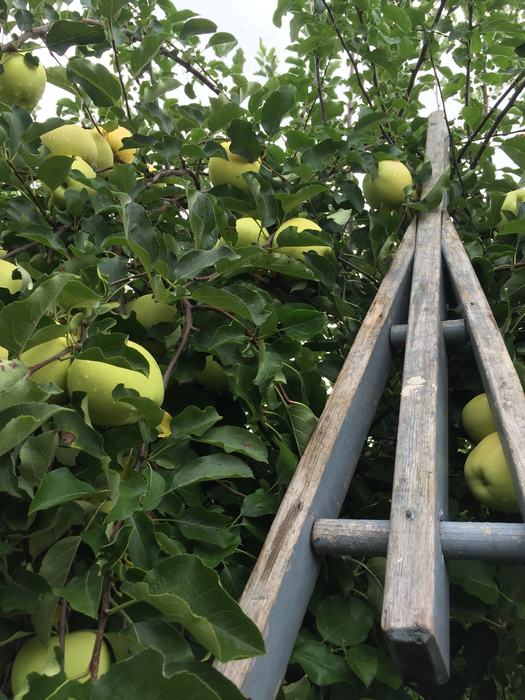
Henderson County is the apple capital of the state. Many gardeners want to grow apples in their backyards. Fall apple season can be made even more wonderful with your own home grown apples. The following article will cover some of the basics of growing apple trees at home. If you wish to take a deep dive, check out our NC Production Guide for Smaller Orchards publication.
Apples requires work Before you start planting apple trees you should realize that fruit trees in general do require some work or results will be disappointing. Sometimes there are problems such as late frosts that kill the flowers and prevent a fruit set. Our generally humid weather requires frequent spraying. You may not get a great crop every year. However, if you have plenty of room in your landscape and you do not mind a little work each year, fruit trees can be very rewarding.
Where to apple trees come from? Apple trees are grown from vegetative cloning. Unfortunately you cannot grow apples from seeds true to type. When you plant a seed from a hybrid apple like Golden Delicious it doesn't become a Golden Delicious but reverts to some small-fruited ancestor. Modern apple tree production harvests a living bud from a desired variety then grafts it onto a hardy rootstock. The result is a 'whip, a single stemmed tree with no branches that is sold as a 'bare root' tree. Adams County Nursery is a great place to obtain trees.
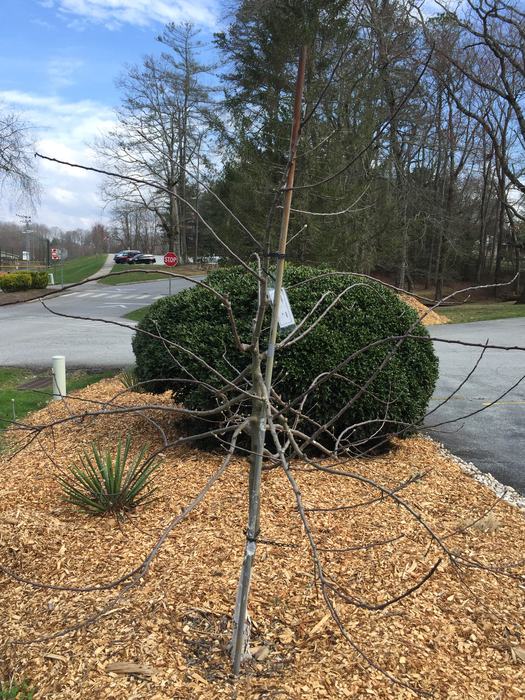
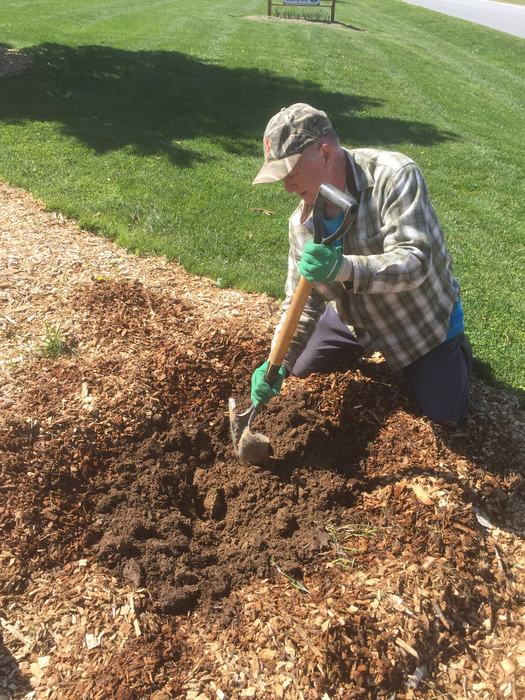
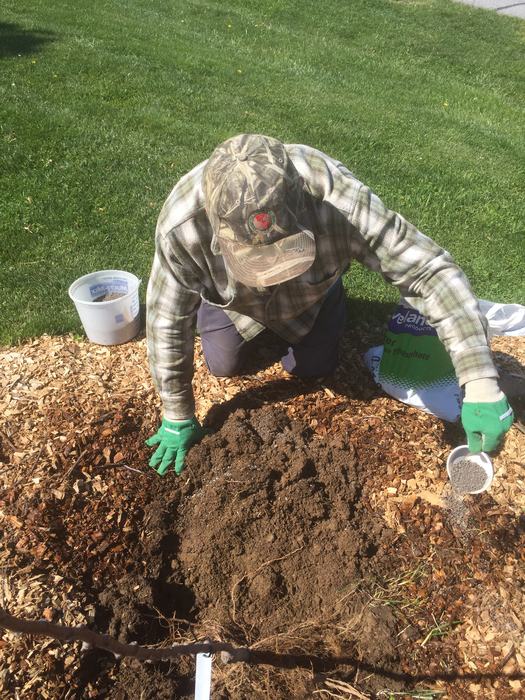
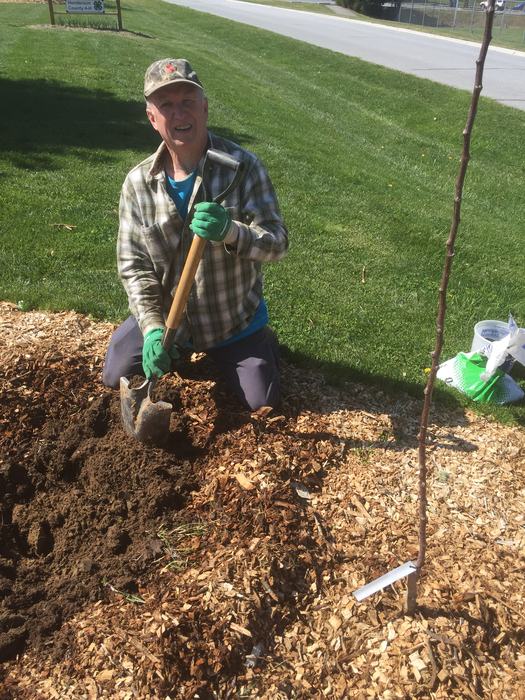
Planting Apples trees are usually planted in the dormant season between January and March. Prepare the soil within two feet of the planting hole by tilling it thoroughly and adding lime and starter fertilizer. Fruit trees are usually 'bare root whips' when ordered online meaning you are planting a stem with few roots. Sometimes people buy potted trees at nurseries. Either way, plant you trees in the prepared ground making sure that the graft union is four inches above the soil.
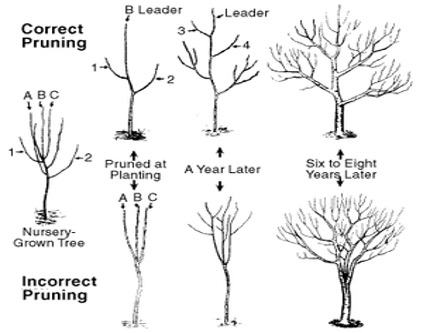
TrainingandPruning Apple trees should be trained through regular pruning. After planting, do not prune the tree the first growing season. During the second year train scaffold branches. Each year develop next set of scaffolds 18” above last set. See the diagram below. Annually open up trees to allow in sunlight to increase flowering and fruiting. Apple and pear trees bears fruits on ‘spurs’. Leave at least 20% of last year’s wood. Try to complete pruning in February. Make clean cuts with sharp tools. Do not leave a stub when making cuts.
Diagram by Dr. Bill Hanlin County Extension Director Wilkes County, North Carolina
Recommended Annual Pruning Process For mature trees remove dead wood; remove upright water sprouts/suckers in canopy; remove root water sprouts; remove crossing branches; remove branches that are growing down; remove branches that will block sunlight into the interior of the tree
Diseasesand Insects Unfortunately, apple growers must spray trees for insects and diseases to assure a good harvest. Washington State has a really great Organic Spraying Schedule for Apples.
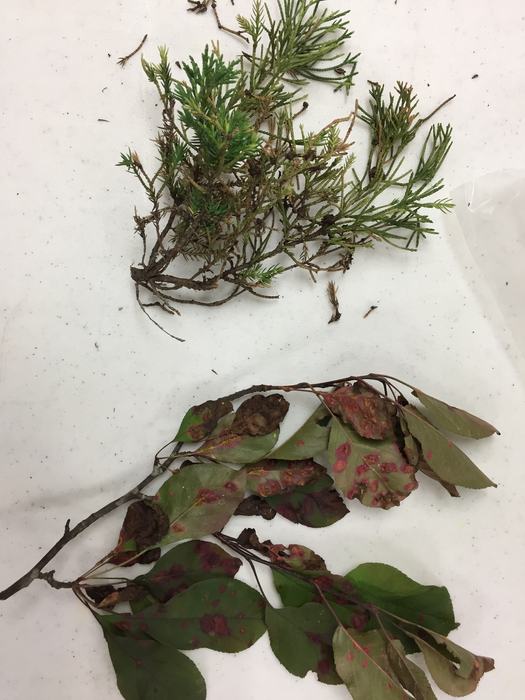
Problems Apple trees can have Cedar-apple rust. This is a fungal disease that spends part of its time on cedars and part on apples. On apples, it appears as spots on the leaves. On cedars and other junipers, it appears as marble to golf ball-sized galls that exude orange tendrils or spores. The best option for control is to remove the nearby cedars.
There are many other diseases that affect apple trees. There are also lots of insects that attack the trees such as scale, aphids, stink bugs, borers, etc. Utilize the Organic Spraying Schedule for Apples fruit spray schedule beginning in February or early March. Learn all about apple pests in this publication from NC State.
Voles Voles love apples. Voles are like tiny beavers; they nibble off the bark of the roots and lower trunk. Learn about voles.
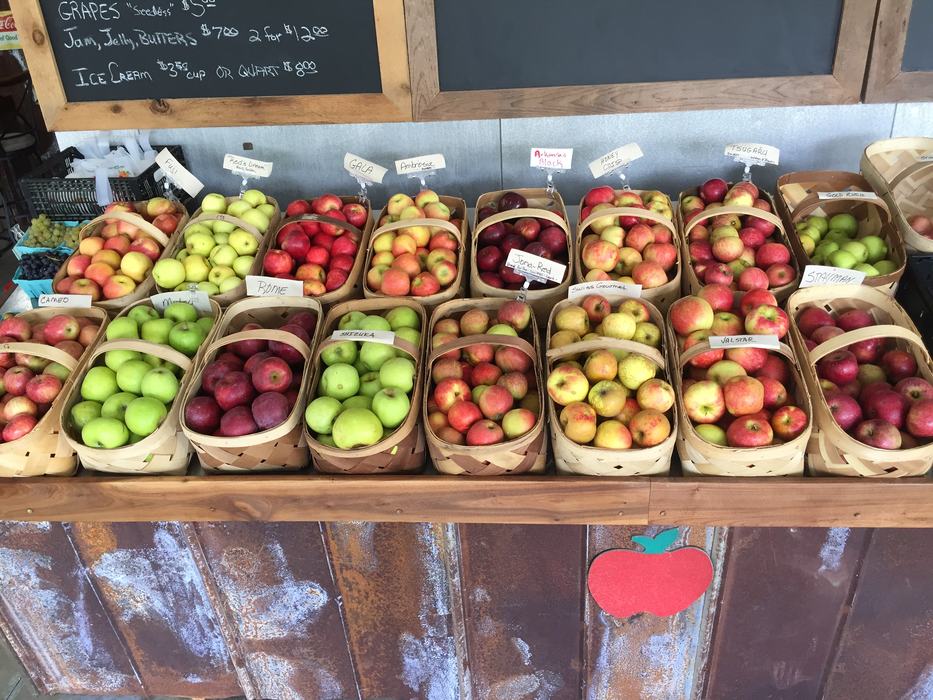
Apple Varieties There are dozens of apple varieties grown locally by apple farmers. However, the following varieties are the best eating apples to grow locally: