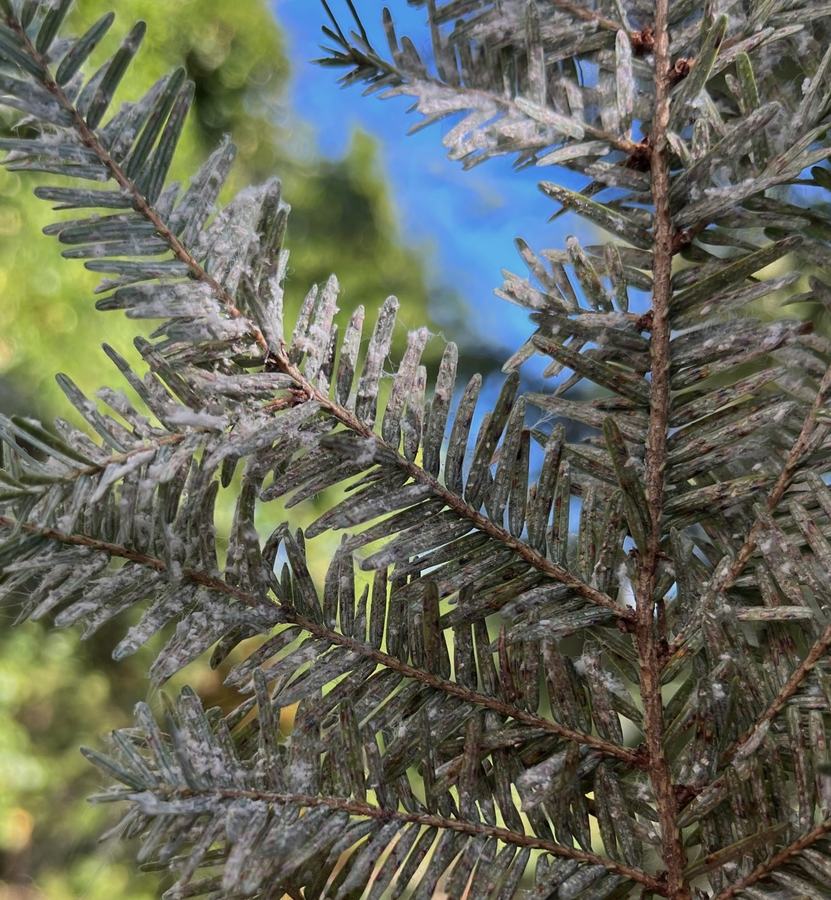
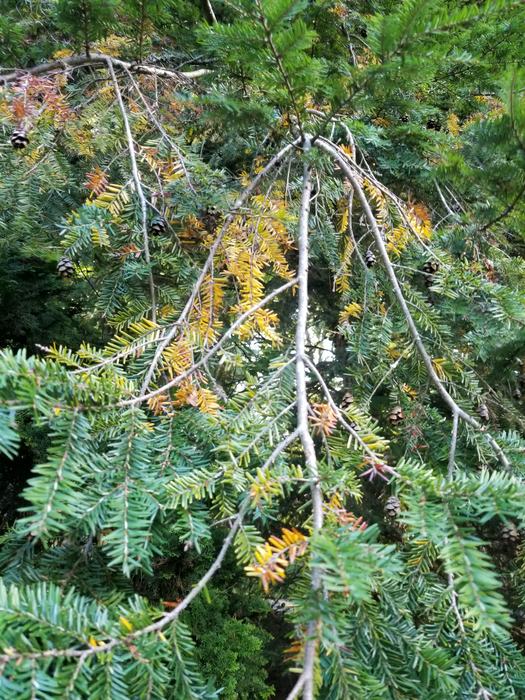
Hemlocks have been nearly wiped out by Hemlock Wooly Adelgid (HWA) insect. Hundreds of millions of the trees were killed over the last few decades by HWA from Maine to Georgia. The few hemlocks that are left should be protected.
Hemlock Wooly Adelgid isn't the only pest of hemlocks. The rosellina blight fungal disease, spider mites, and Elongate Hemlock Scale are all parasitic organisms that weaken hemlock trees in landscapes.
Feeding
Elongate Hemlock Scale (EHS) is a sucking insect. Adults insert a needle-like mouthpart into the tree tissue and drink the sugary liquid. The insects live on the underside of the needles.
Signs
Often scale feeding is associated with sooty mold, a black fungus that grows on the sugary droppings of scale insects. Another sign of the insects is a white fuzz created by adult males. Finally, needles can turn yellow and start to drop off.
Treatment
According to the
NC State Publication on EHS, "Materials that control EHS include...
Safari (dinotefuran) ...Safari... provided the most consistent and long lasting control."
Safari is a systemic insecticide. It can be applied as a soil drench or bark spray for home gardeners with large trees. Also, good control with combining a Safari (dinotefuran) bark spray early spring and a horticulture oil foliar spray in the winter to coat any existing egg masses. See the product label for rates and instructions.
*Inclusion of product names neither implies effectiveness, nor endorsement by the author or NC State University. Not all products described may be locally available, and the active ingredient content may be changed by manufacturers. Read the label CAREFULLY and follow all label instructions whenever using any pesticides as required by the EPA.