The first siting of an armadillo in Henderson County was in 2008 according to a local news article. Another article from a few years later states, "State officials began asking the public for help documenting North Carolina armadillo sightings in 2013, noting there had been confirmed sightings in some counties along the southwestern border of the state." Today armadillos are showing up in Henderson County in the mountains of western North Carolina recently. Check out this article from NC Wildlife on armadillos.
Pest Alert - Armadillos in Henderson County
(Updated: June 22, 2026, 3:18 p.m.)
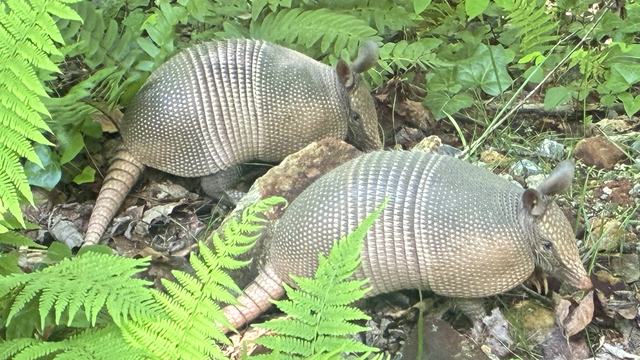
Nine Banded Armadillo
Armadillos are unlike most North Carolina wildlife; they are related to sloths and anteaters. According to a UGA publication, "At the start of the 20th century, the nine-banded armadillo was present in Texas. By the 1930s, they were in Louisiana and by 1954 they had crossed the Mississippi River heading east. In the 1950s, they were introduced into Florida and began heading north." Armadillos are not supposed to survive freezing temperatures but with a series of mild winters it seems armadillos are moving north.
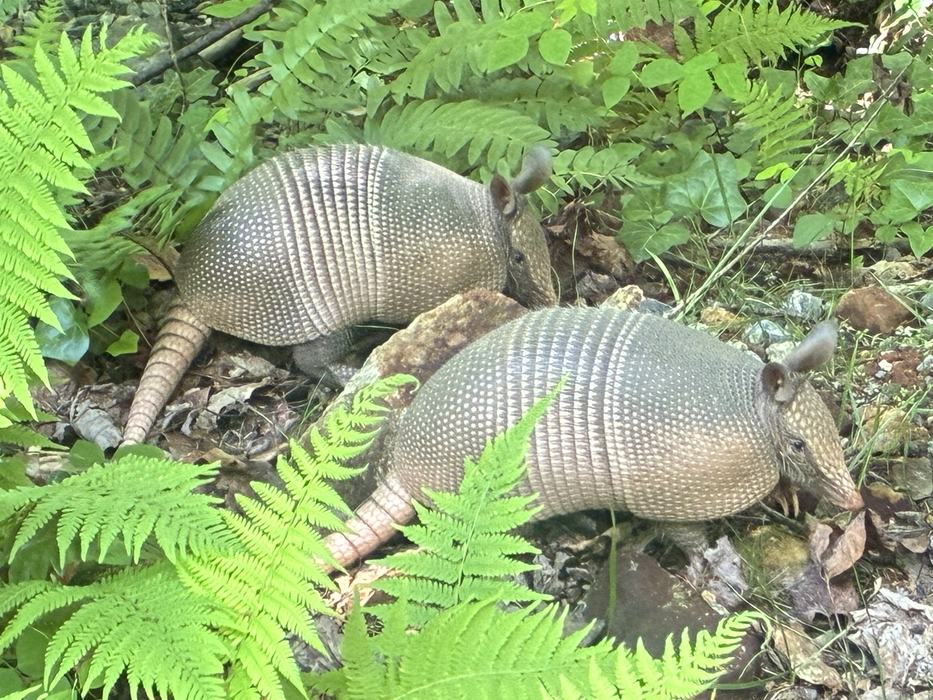
Armadillos are highly destructive digging up wild areas destroying habitats for native plants and wildlife and eating the eggs of ground nesting birds.
Armadillos Are Considered A Pest. Nine-banded armadillos are mostly nocturnal and are not dangerous. However, North Carolina wildlife officials warn residents not to approach the animals in the wild. Armadillos in rare instances can carry the bacteria that can lead to leprosy. In the US there have been only two known cases in which humans contracted leprosy from wild armadillos. Like many other wildlife armadillos can spread ticks.
They spend days sleeping in underground burrows and come out in the evening to feed. In their search for underground invertebrates they can dig up entire landscapes or forests. They also dig deep burrows that can undermine foundations of buildings. In the wild they can damage forest ecosystems by disrupting forest soils for threatened plants. Armadillos can disrupt ground nesting bird nests and will sometimes even eat their eggs.
Dealing With Armadillos Trapping is the simplest way to deal with armadillos. Live traps placed along fences or other barriers can catch the animal. Once the cage is scented with one armadillo others will be attracted to it. Armadillos also can be dispatched without a permit.
Join our mailing list!
Enter your email address to receive updates.
Written By

More About