All bees are in the order Hymenoptera. Native simply means that the bee evolved in the geographic area in which it now lives. Traditional honey bees, the ones that are cultivated by beekeepers, are native to Europe. They were brought to America by the colonists in 1622 and have since established themselves in the wild.
Some of our native bees are bumble bees, sweat bees, carpenter bees, leaf cutter bees and orchard mason bees. Like honey bees, some bumble bees are cultivated and kept in greenhouses to buzz pollinate crops like tomatoes. Whether natives or honey bees, those that are not managed and are nesting on their own in nature, are considered wild bees.
There are about 4,000 native bee species in the United States. And North Carolina is home to more than 500 of them! Most people can recognize bumble bees but might be surprised to learn that we have 13 known species of them right here.
Native bees have no need to collect honey to store for winter survival. More than 90% of native bees live solitary lives, with each female constructing and provisioning for her nest individually. Some native bees, like bumble bees, do live in annual colonies during the summer. However at the end of the season, most of the worker bees die off and the fertilized queen burrows and spends the winter in hibernation like the other native bees and will emerge when warm spring temperatures appear.
Adult bees eat a little pollen and a lot of nectar. Pollen is an excellent source of protein, so like any good mother, the queen makes certain her larvae have a lot of it mixed with just a little nectar.
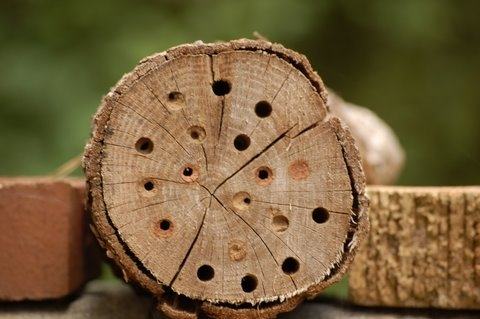
Mason bee females nest in natural cavities that can be replicated in multiple ways including drilling holes in the end of a log.
DO NATIVE BEES STING?
About 75% of all bee species sting. Of those that do, it is only the females. The males are usually smaller than the females and have no stingers. One of the great things about native bees is that they are not aggressive. They have no hive or queen to protect and will not sting in groups. And unlike honey bees, they do not have a barbed stinger. Basically, most native bees only sting in self defense, as when they are squished or get caught in clothing. Stings from gentle bees like the mason bees or leaf cutter bees may barely register.
WHERE DO NATIVE BEES LIVE?
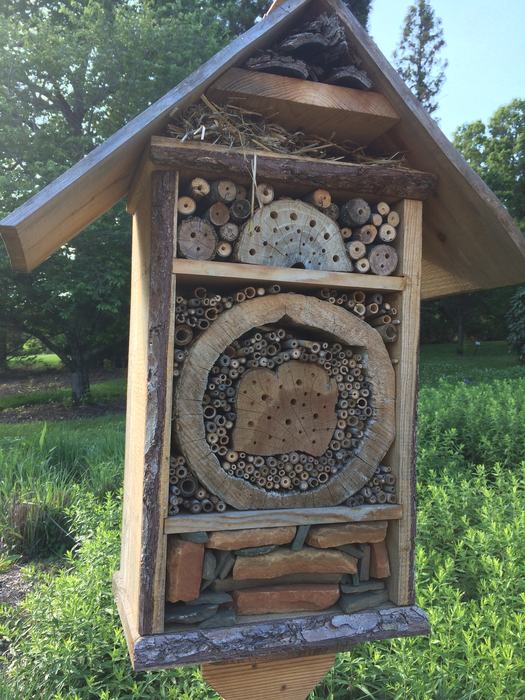
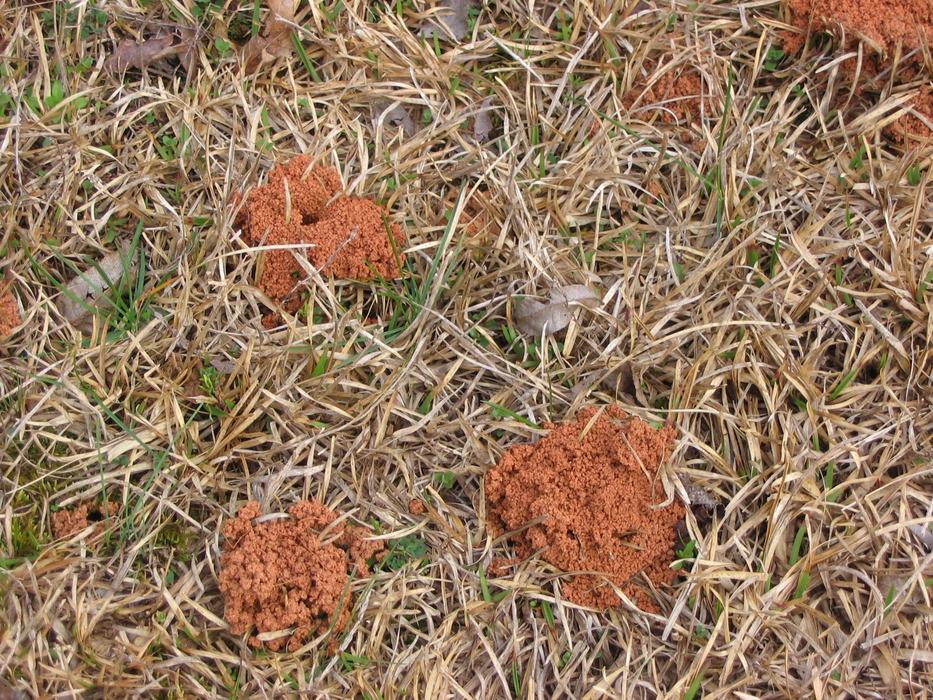
The majority of native bees, roughly 70%, are ground nesters. They dig tunnels in bare or sparsely vegetated, well-drained soil. Other bees live in the hollow stems of plants like elderberry, raspberry, blackberry and sumac or in holes that have already been bored into wood by various creatures such as woodpeckers. Carpenter bees like to drill in soft wood and plant stems. Today, gardeners can buy or make bee houses for solitary bees.
Bee houses can be decorative as well as functional.
WHY ARE NATIVE BEES IMPORTANT?
Nearly 75% of the earth’s flowering plants rely on pollinators. And while there are many pollinators like hummingbirds, flies, butterflies, beetles and so on, bees are the superior pollinator. Whole ecosystems depend on this keystone species to pollinate flowers that provide food for wildlife. One third of our food supply depends on them. Bees pollinate not just fruits and vegetables, but trees, shrubs and wildflowers. On the economic side, North Carolina has a $78 billion agricultural economy that relies on pollinators. Imagine, if all bees were to go extinct, we would lose over 90% of our plants worldwide!! It would be a very different world.
Studies have found that native bees are efficient pollinators. The NC Wildlife Federation states that only 2% of wild bee species do 80% of the pollination. Native bees work longer hours, foraging at light levels and temperatures too low for honey bees. The Xerces Society Guide shows that in a 5 day period, mason bees put in 33 hours foraging compared to 15 hours by honey bees.
Many native bees live in cavities in the ground.
ARE NATIVE BEES DECLINING LIKE HONEY BEES?
While most of our native bees are solitary and do not suffer from colony collapse disorder like honey bees, make no mistake, they are in decline. The reasons are many and varied, systemic neonicotinoids and overuse of other pesticides, genetically modified plants, and poor land management techniques. Native bees must also contend with loss of habitat, invasive species, loss of nesting sites and materials, the decrease of native plants, and climate change.
While some bees are generalists, and as such, enjoy a wide range of flowers, other bees are specialists. These specialists tend to use a single plant family or genus for their pollen needs, and could be negatively impacted—as could the plant that relies on the particular bee for pollination. If the plant does not bloom in tandem to the arrival of its pollinator, both suffer. The bee does not get its pollen and the plant does not get sufficient pollination, which could be a death spiral for both of them.
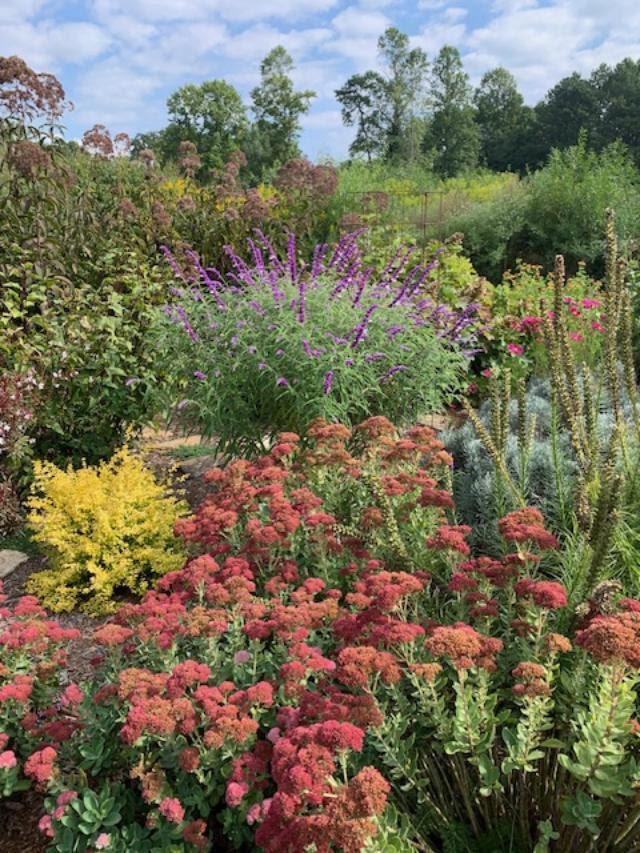
Each can start in one’s own backyard. Can you spare a bit of that lawn for a few extra plants or maybe a tree for the bees? Can you use less pesticide or try to keep it off the flowers when you spray? You can assist bees with plants that produce lots of flowers, blue flowers if the bees could choose, or yellow.
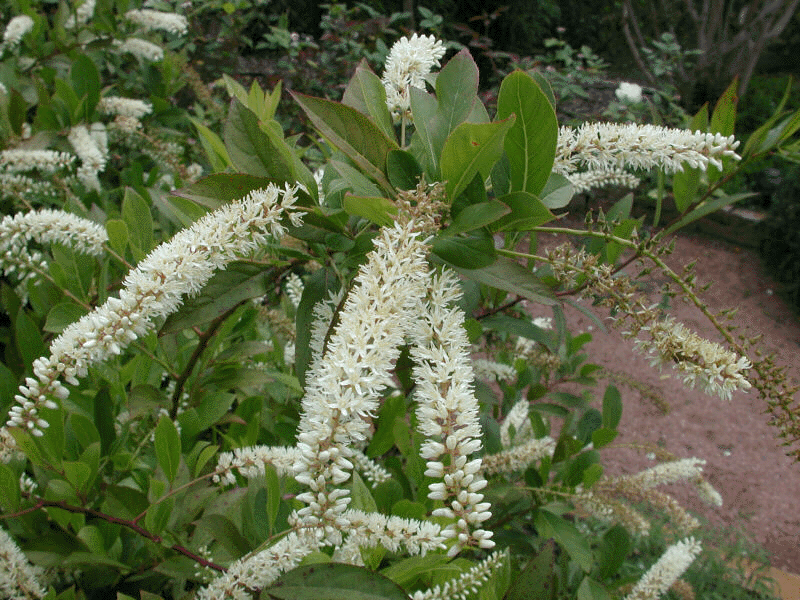
Plant some fragrant plants like lavender and thyme, which draw bees. According to The Xerces Society Guide, “Native plants are four times more likely than nonnative plants to attract native bees, and native plant genera support three times as many species of butterflies and moths as introduced species do.” So try some natives, perhaps a tulip poplar or magnolia tree, or how about blueberry bushes or Virginia sweetspire?
Native shrubs like Virginia sweetspire should be included in pollinator gardens.
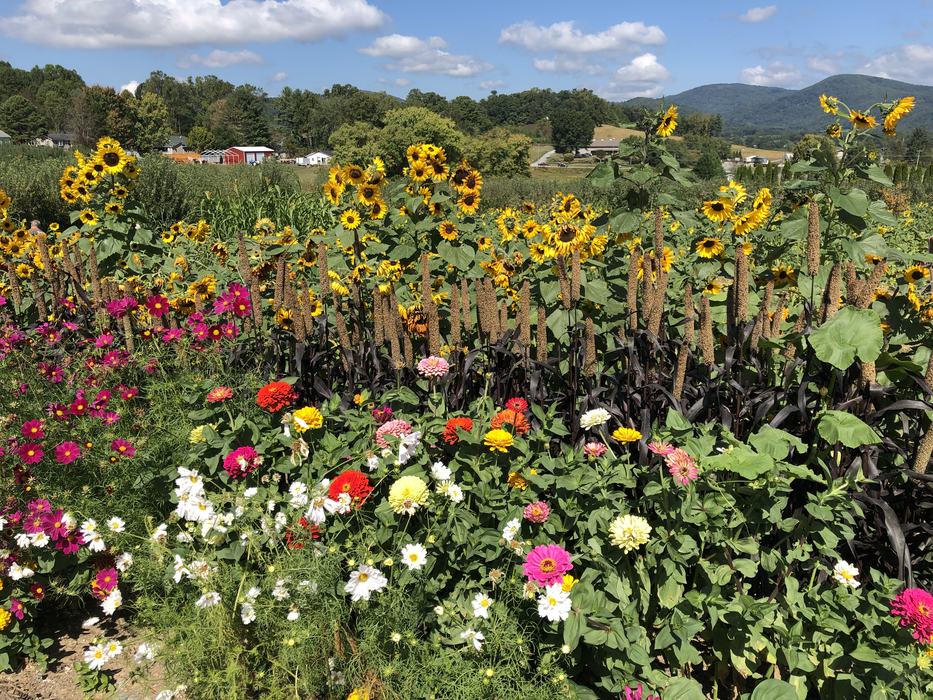
There are many beautiful native perennials to choose from: bee balm, beardtongue, blanket flower, black-eyed Susan, Joe Pye weed and blazing star to name just a few. Passion flower vine is a beauty that bees love. Native bees tend not to travel far from where they emerge, and could stay right in your backyard all season. So try to have flowers blooming from April through October to give them a continual food source.
Other habitat improvements for nesting and hibernating include leaving some compacted paths or bare patches of soil near garden plants, providing a mound of undisturbed soil or make a sand pit and leave snags or dead trees. Pollinators need water so provide a bird bath with stones to prevent drowning and encourage rain puddles. No yard? Check out a community garden plot in your neighborhood. Even if you live in an apartment, put out a few boxes of flowers that you enjoy, and probably the native bees will visit. If you plant it, they will come.
This article was originally written by Elizabeth Costlow, Henderson County Extension Master Gardener Volunteer.