Planting trees properly will help them live long healthy lives. Poorly planted trees do not live as long as their properly planted counterparts.
The number one reason I see landscape trees dying is that they are improperly planted. Usually, trees that are planted too deep or that have packaging materials intact will last about five years then start falling apart. That is when I get the call to diagnose the issue.
Fall is the best time to plant a tree. So let’s learn how to properly plant trees so that they will last. Let’s invest in the future.
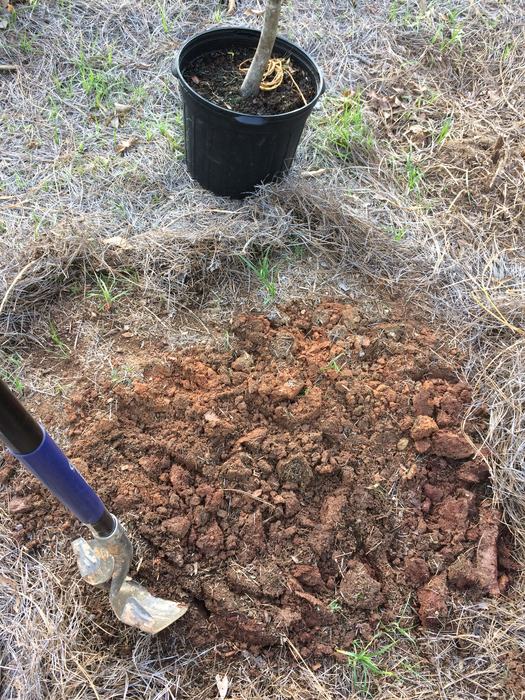
Proper site Selection and preparation Ideally, you planting site comprises an area at least two to three times the diameter of the calculated root spread of the tree to be planted. NC soils are rich so concentrate your efforts on producing a soil environment that contains adequate space for tree roots. To improve the soil, the entire planting site should be tilled or spaded as deep as possible (at least eight inches). The soil of the planting site needs to be broken up and aerated. A well-prepared tree site is essential to tree establishment and survival.
Factor in potential tree growth Where will this tree be 10 to 15 years from now? Be conscious of telephone lines and power wires as well as the proximity of this tree to your home, streets or neighboring properties. In other words, do not plant trees in spaces too small for their mature size.
Select a proper tree With these thoughts in mind, comes the process of selecting a tree! Do your research to find out what trees grow best in our area. Native trees are adapted to local soil, moisture, climate, and pests. Native plants perform better over the long run. Here is an article that lists some of the great native trees available to gardeners in western North Carolina. Choosing straight species trees over cultivars chosen for small size can provide more shade in the future.
Use Proper Tree PlantingProcedures
There are a number of planting procedures that help ensure proper tree establishment. Here are some basic steps to follow.
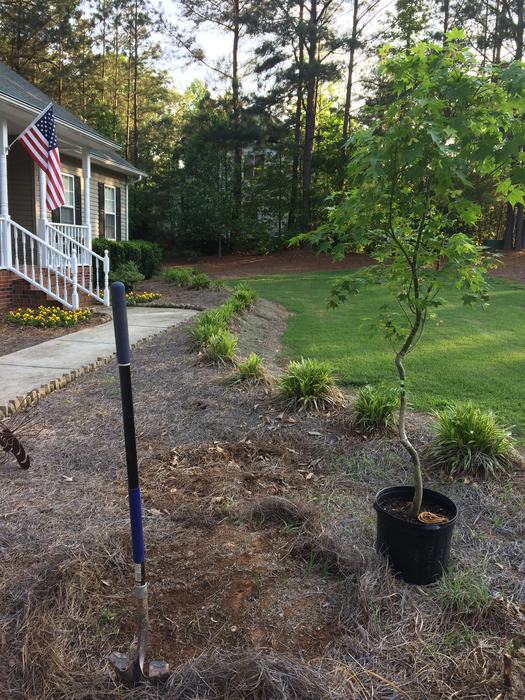
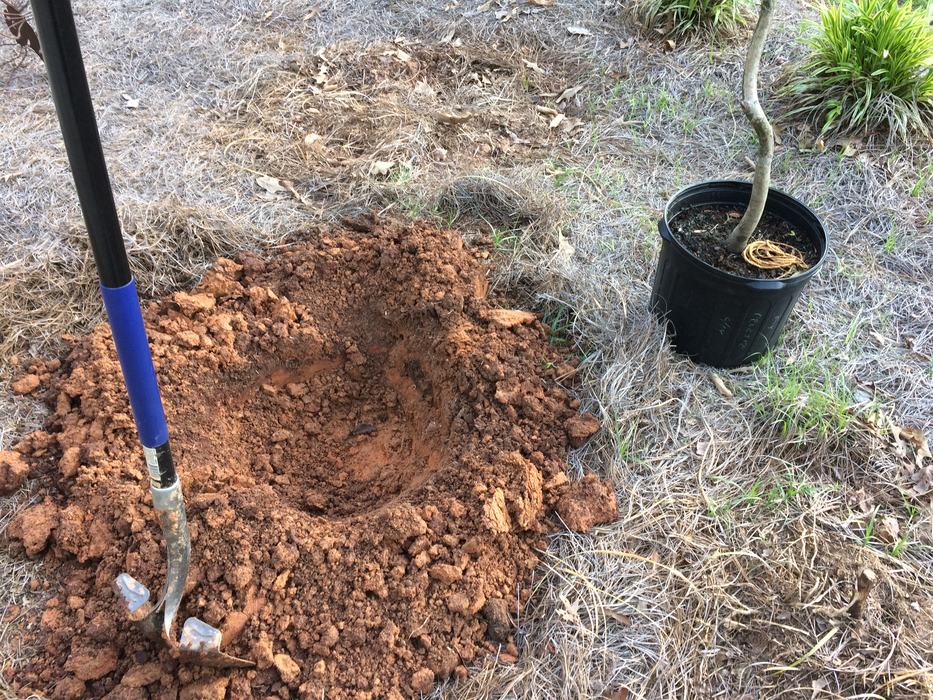
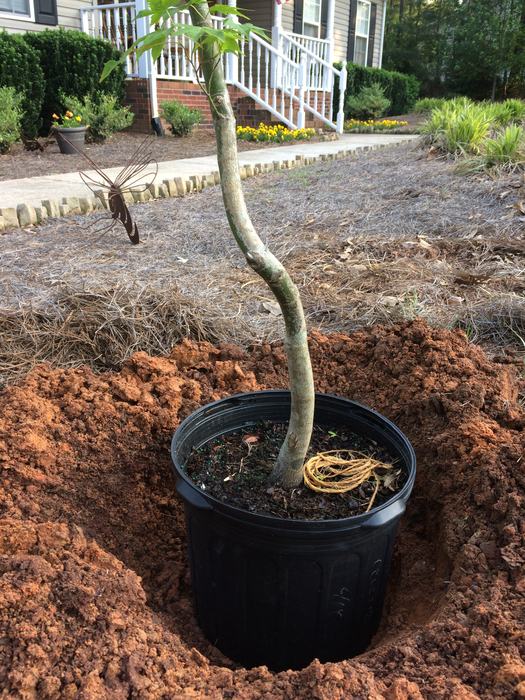
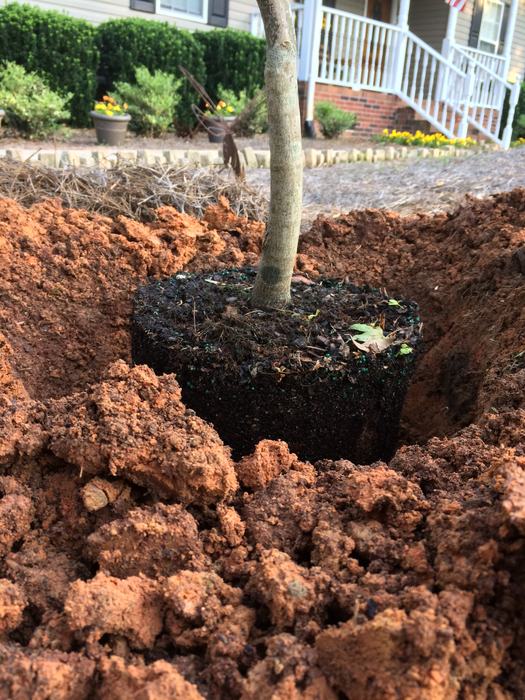
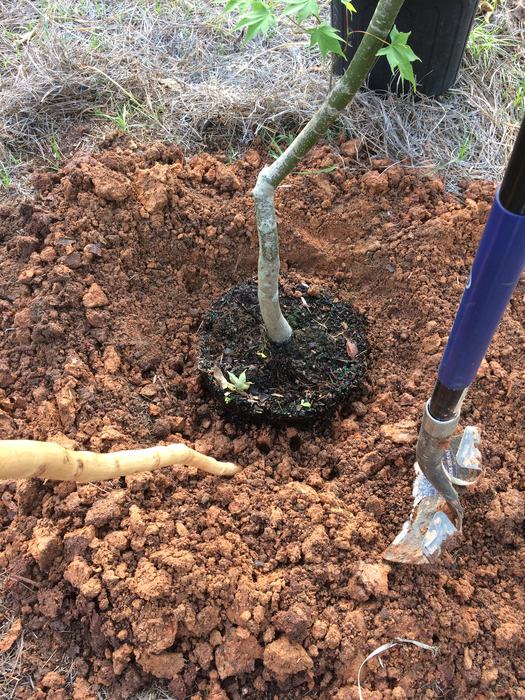
Dig the hole as deep as the rootball and at least three times as wide. Within the hole, create a slightly higher, raised pedestal of soil upon which the rootball should sit. Position the tree so that the top of the rootball will be slightly above grade.
Planting hole should be slanted in at a 45-degree angle from the ground surface. Slanted sides of the hole allow and encourage roots to spread out and grow into native soil. Place the tree in the hole and then carefully untie the burlap. Remov e as much of the wire basket and burlap as possible. Do not leave any strapping or string wrapped around the trunk.
Fill in around the rootball with soil dug out from the hole and pack the soil with your hands and feet to make sure that there are no air pockets.
Make a little dam around the base of the tree as wide as the hole with left over soil to hold in the water.
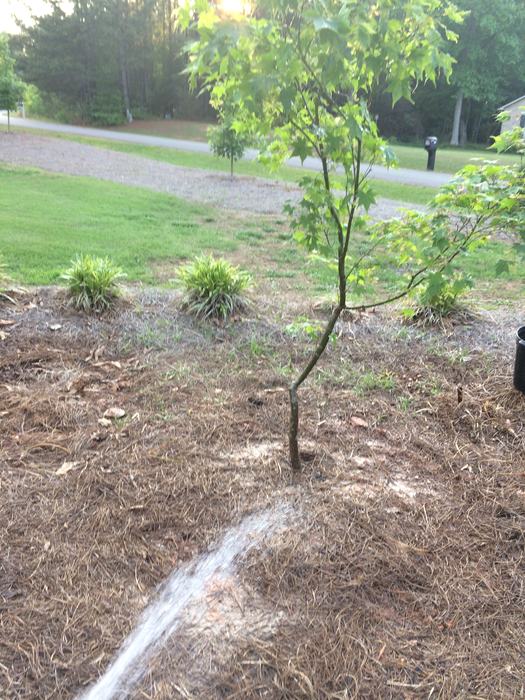
Give your new tree a good soaking of water to help settle it into its new home.
As our population increases locally, our tree canopy cover will decrease. Let’s plant as many native straight species trees as possible. Properly planted trees and shrubs can last for generations. Straight species trees will provide more shade in the future.