The Golden Orb Weaver or Joro Spider has invaded western North Carolina. In the last five years, these giant spiders have spread to multiple counties in north Georgia and now are being found in South Carolina and North Carolina including Henderson County.
I began receiving reports of sightings in Henderson County from residents beginning in the fall of 2024. Most of these were associated with tourist sites. The fall of 2025 reports were received from home gardeners in Saluda, Flat Rock, Hendersonville, Pisgah Forest, Edneyville, Dana, and Etowah in Henderson County. In 2026, the spiders are practically all over western North Carolina with some homeowners reporting many in their yards. The author has had three in his yard this year.
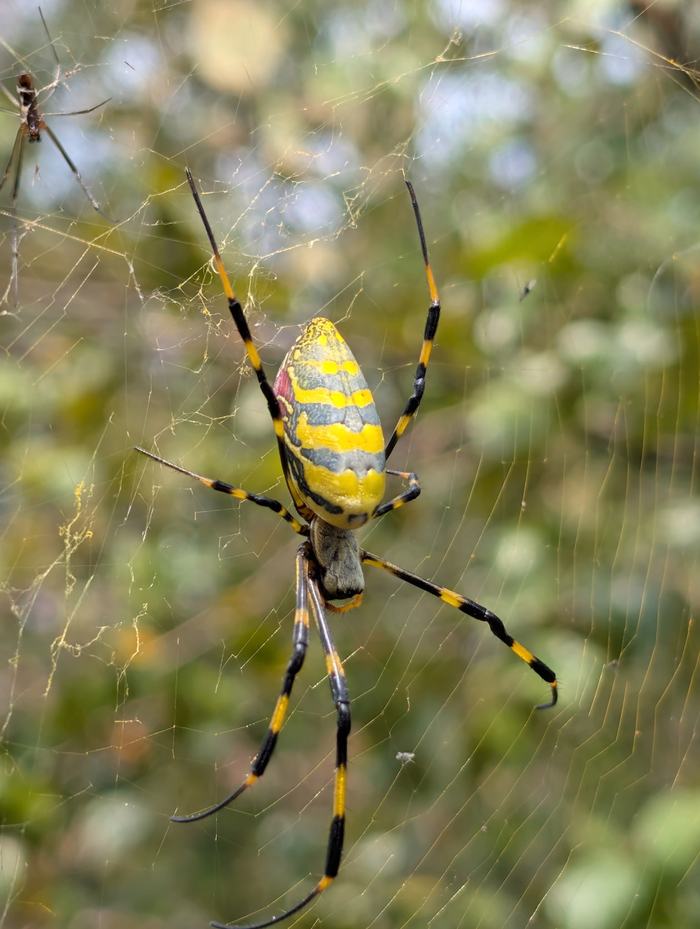
Joro spiders look pretty but can be present in high numbers on properties. The spiders do not bite but do eat native insects. We do not know what effect this might have on native insect populations in the long term. Photo authorized for publication by C.A. Hanson at KellyHansonArt.com .
What is the Big Deal? Where Joros have established themselves these enormous spiders make walking outdoors in the late summer creepy, to say the least. The fall is when these spiders are the most noticeable because this when the females hanging on the webs achieve their full adult size.
Outdoor recreation can be seriously hampered by the robust webs when they are blocking hiking trails and near fishing waters. Fly lines will get tangled in these webs. Hikers and bikers are going to be unhappy about running into these enormous spiders and their robust webs!
Immature female Joro spiders do not have well developed silver and yellow stripes but you can identify them by their golden silk and disorganized webs.
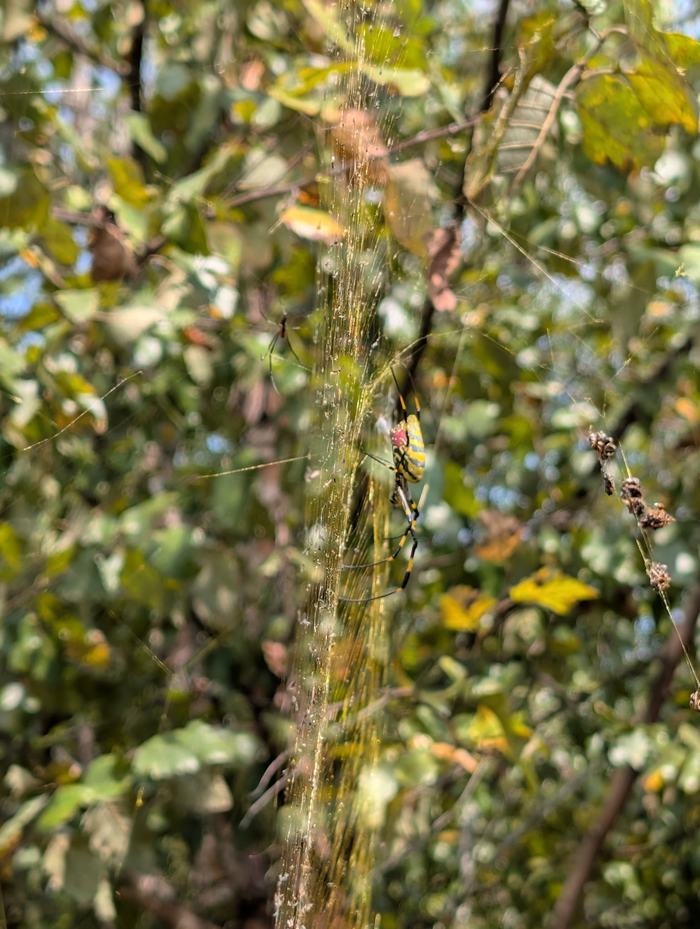
Golden Webs The Joro Spider is called the Golden Orb Weaver because the silken threads they spin are gold colored. The spiders spin huge webs using silk as thick as fishing line. Walking into a web as big as a person that houses a spider as big as your hand can be unnerving. Fortunately, these spiders do not bite people or pets. Joro spiders have been reported near ponds, on the sides of houses, in the tops of trees, in power lines, field edges, home gardens and in forest trees.
The Joro Spider is called the Golden Orb Weaver because the silken threads they spin are gold colored. The spiders spin huge webs using silk as thick as fishing line. Photo authorized for publication by C.A. Hanson at KellyHansonArt.com .
Personal Experience This author experienced these spiders on a camping trip to Northeast Georgia. The sheer number of spiders was incredible. I counted a half dozen of the webs and spiders within 50 feet of each other. Their presence was noted every 20-30 feet down trails and along woodland edges. Walking around at night was a harrowing experience trying to avoid getting one of the spiders in the face. Power lines in the area were covered in the webs for miles. Arborists in the area have reported to me that the spiders infest tree tops as well.
In 2026 I have had three Joro spiders on my small property.
Controlling Joro Spiders Joro spiders can lay egg sacs with up to 500 spiderlings 4 times per year per female. The spiderlings hatch in the spring and use a web to float on breezes and spread.
To prevent the spiders from establishing populations on your property, use insecticides to kill each Joro spider you see. Avoid killing native orb weaver spiders as they are beneficial to humans and the environment. Insecticide sprays that include pyrethroids such as wasp sprays or flying insect sprays have proven to be effective per research done at UGA. Learn more about the Joro spider from this UGA publication.
Joro spiders capture honey bees, native bees and native butterflies and moths. There are even reports of birds being impacted by the webs. Who knows what the ultimate ecological result of this invasive spider will eventually be?
Report Joro Sightings If you do see a Golden Orb Weaver/Joro Spider in Western North Carolina, please let me know by emailing me at steve_pettis@ncsu.edu . These spiders are distinguishable from our native orb weavers by their golden spider webs, the webs being high off the ground, and their coloration. Joro Spiders have distinguishable yellow stripes across their abdomen.
This is the top of a Joro spider. Photo by Joseph Wyse.
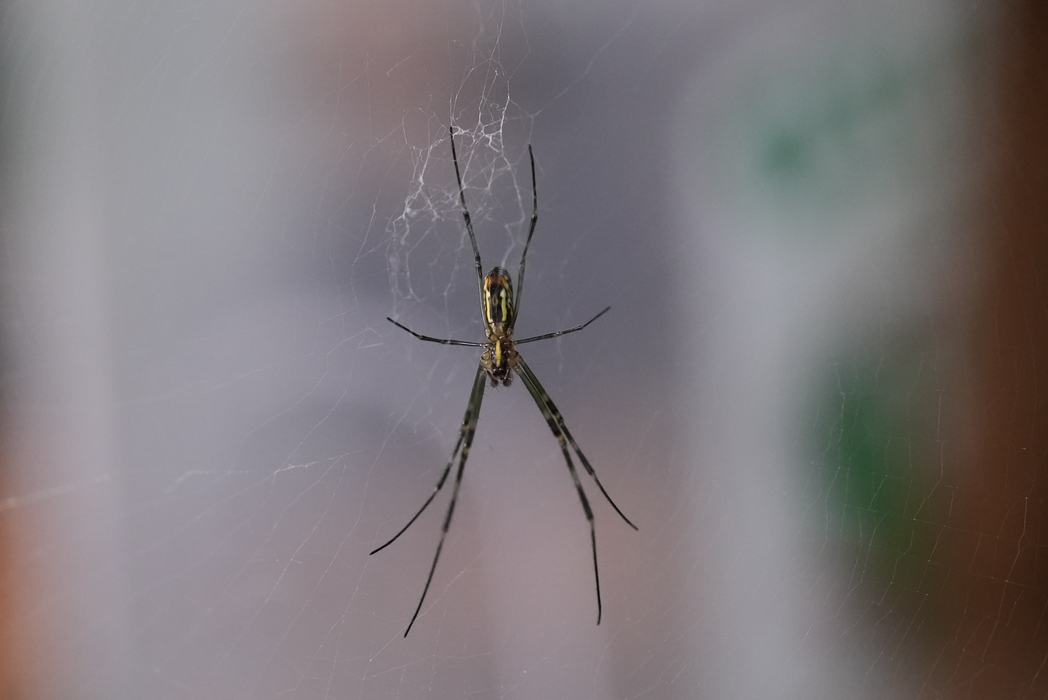
This is the underside of a Joro spider. Photo by Joseph Wyse.
Protect Native Spiders There are many wonderful native spiders here in western NC. Let's do not mistake these for Joros. Avoid killing native orb weaver spiders as they are beneficial to humans and the environment. Here are just a couple of our native orb weaver spiders that we should protect:
GOOD SPIDER: native orb weaver
GOOD SPIDER!!!
GOOD SPIDER! Native orb weavers are good spiders, capturing moths and other insects that can be pests to humans. Notice orb weavers are mostly black where Joro spiders are mostly yellow.
joro vs good native spiders
MORE PICTURES OF JORO SPIDERS
This Joro Spider was spotted on a farm near Columbus, NC in Polk County on September 19, 2024.
Joro Spiders spin webs higher than native spiders spanning up to 20 feet at times.
The Joro Spider can be identified by black legs with yellow-orange stripes and a bright yellow body with bluish-green stripes on its back and red markings on its underside. Photo by Stephan Brown, UGA